

Cats are masters of mystery. One minute they are sprinting through the hallway like tiny panthers, and the next they are sitting motionless with the tip of their tongue hanging out like they forgot how mouths work. If you have ever caught your cat doing this, you are definitely not alone. Cat owners across the world are constantly searching for answers to one surprisingly common question: Why does my cat stick out his tongue?
Sometimes it is cute. Sometimes it is hilarious. Other times, it can feel worrying, especially if the behavior suddenly appears out of nowhere. The truth is that a visible tongue in cats can mean many different things. It may signal total relaxation, an intense scent investigation, dental discomfort, breathing trouble, or absolutely nothing at all. The challenge is figuring out which situation applies to your cat.
Veterinary experts explain that many cats occasionally display a “blep,” the internet-famous term for a cat sitting with its tongue slightly protruding. In many cases, this behavior is harmless. Yet research also shows that dental disease affects between 50% and 90% of cats over four years old, making oral health one of the biggest medical reasons behind abnormal tongue positioning.
To understand what your cat is trying to communicate, you need to look beyond the tongue itself. Body posture, breathing patterns, eating habits, grooming behavior, and overall energy levels all provide clues. Think of the tongue like a warning light on a car dashboard. Sometimes it simply flickers for harmless reasons. Other times, it points toward something under the hood that needs attention.
Why Cats Use Their Tongues Differently Than Humans
A cat’s tongue is one of the most fascinating tools in the animal kingdom. While humans mostly use their tongues for taste and speech, cats rely on theirs for grooming, temperature regulation, scent analysis, eating, and communication. That rough sandpaper feeling you notice when a cat licks your skin comes from tiny backward-facing hooks called papillae. These structures are made of keratin, the same protein found in human fingernails.
Those tiny hooks act like a built-in hairbrush and cleaning system. Cats use them to untangle fur, remove dirt, spread natural oils, and even scrape meat from bones in the wild. Because the tongue is such an active and multifunctional organ, it is constantly moving during a cat’s day. Sometimes, after intense grooming or sensory activity, the tongue simply remains slightly exposed for a moment.
Cats also use their tongues to gather information about their environment in ways humans cannot fully appreciate. Imagine having a second nose hidden inside your mouth. That is essentially what cats possess through their vomeronasal organ, often called Jacobson’s organ. When a cat sticks out its tongue while smelling something strange or interesting, it may be transferring scent particles into this specialized sensory system.
This is why a visible tongue does not automatically mean something is wrong. In many cases, the tongue is simply part of the cat’s incredibly advanced toolkit for interacting with the world. Understanding how important the tongue is to feline behavior helps explain why small tongue movements can reflect such a wide range of emotions, instincts, and health conditions.
Relaxation and Contentment in Resting Cats
One of the most common and completely harmless reasons a cat sticks out its tongue is simple relaxation. Cat owners often call this a “blep,” and it usually happens when a cat becomes so calm and comfortable that the muscles around the jaw loosen. The tongue slips forward slightly, creating that goofy yet adorable expression that fills social media feeds everywhere.
Think about how humans sometimes sleep with their mouths open after an exhausting day. Cats experience something similar. During deep sleep or intense relaxation, the muscles supporting the jaw and tongue become less tense. If the cat has been grooming beforehand or resting in a particularly awkward position, the tongue may remain partially visible without the cat even noticing.
Kittens and senior cats tend to do this more frequently. Younger cats are still developing muscle coordination, while older cats may experience natural muscle relaxation or missing teeth that reduce tongue support. Certain breeds with flatter faces, such as Persians, are also more likely to display tongue protrusion because of their facial structure.
The key detail here is context. A relaxed cat with a tiny visible tongue usually looks peaceful, comfortable, and alert when awake. Their breathing remains normal, their appetite stays healthy, and their behavior does not change dramatically. In these situations, the visible tongue is often no more concerning than a human smiling in their sleep. It is simply one of the quirky little behaviors that make cats endlessly entertaining companions.
Flehmen Response and Scent Exploration Explained
If you have ever seen your cat freeze with its mouth slightly open, tongue partially visible, and face twisted into what looks like disgust, congratulations; you have witnessed the Flehmen response. Despite the funny appearance, your cat is actually performing an advanced chemical analysis of a scent.
Cats possess a specialized scent organ called the vomeronasal organ, located on the roof of the mouth behind the front teeth. When a cat encounters an especially interesting smell; perhaps another animal’s scent, a strange object, or pheromones; it may curl its lip and slightly stick out its tongue to channel scent particles toward this organ.
This behavior is incredibly important in feline communication. Cats gather information about territory, mating status, emotional states, and environmental safety through scent analysis. To humans, it may look like the cat is making a dramatic face after smelling spoiled milk. To the cat, it is more like reading a detailed newspaper headline written entirely in chemical signals.
The Flehmen response is usually brief and harmless. Cats may pause, stare into space for several seconds, and then continue normally. Because the tongue often plays a role in directing those scent particles, it may briefly remain outside the mouth afterward.
What matters most is recognizing the difference between scent exploration and distress. During Flehmen behavior, the cat typically appears curious rather than uncomfortable. There is no coughing, wheezing, excessive drooling, or panic. It is simply another reminder that cats experience the world in ways humans can barely imagine.
Grooming Interruptions and Mid-Cleaning Tongue Moments
Cats spend an enormous portion of their lives grooming themselves. Some studies estimate that healthy cats dedicate up to half of their waking hours to cleaning their fur. With so much grooming happening every day, it is no surprise that many tongue-out moments occur during or after these cleaning sessions.
Picture a cat carefully grooming its chest when suddenly a bird flies past the window. Instantly distracted, the cat freezes mid-lick with its tongue still sticking out. This happens far more often than many people realize. Cats are intensely focused creatures, but they are also easily interrupted by sounds, movement, and environmental changes.
Sometimes the tongue remains exposed because the cat simply forgets to retract it. It sounds silly, but that is often exactly what happens. Grooming is such an automatic process that interruptions can temporarily disrupt the sequence of movements. The result is a brief and harmless “loading screen” moment where the cat stares into space with its tongue hanging out.
This behavior is especially common in playful, energetic cats that become distracted quickly. It also appears more often in homes with multiple pets, children, or active surroundings where interruptions happen constantly.
As long as the cat resumes normal grooming, eating, and behavior afterward, there is usually no reason to worry. A short-lived tongue appearance after grooming is one of the most innocent explanations possible. It is essentially the feline version of someone walking into a room and forgetting why they entered.
Dental and Oral Issues That Can Affect Tongue Position
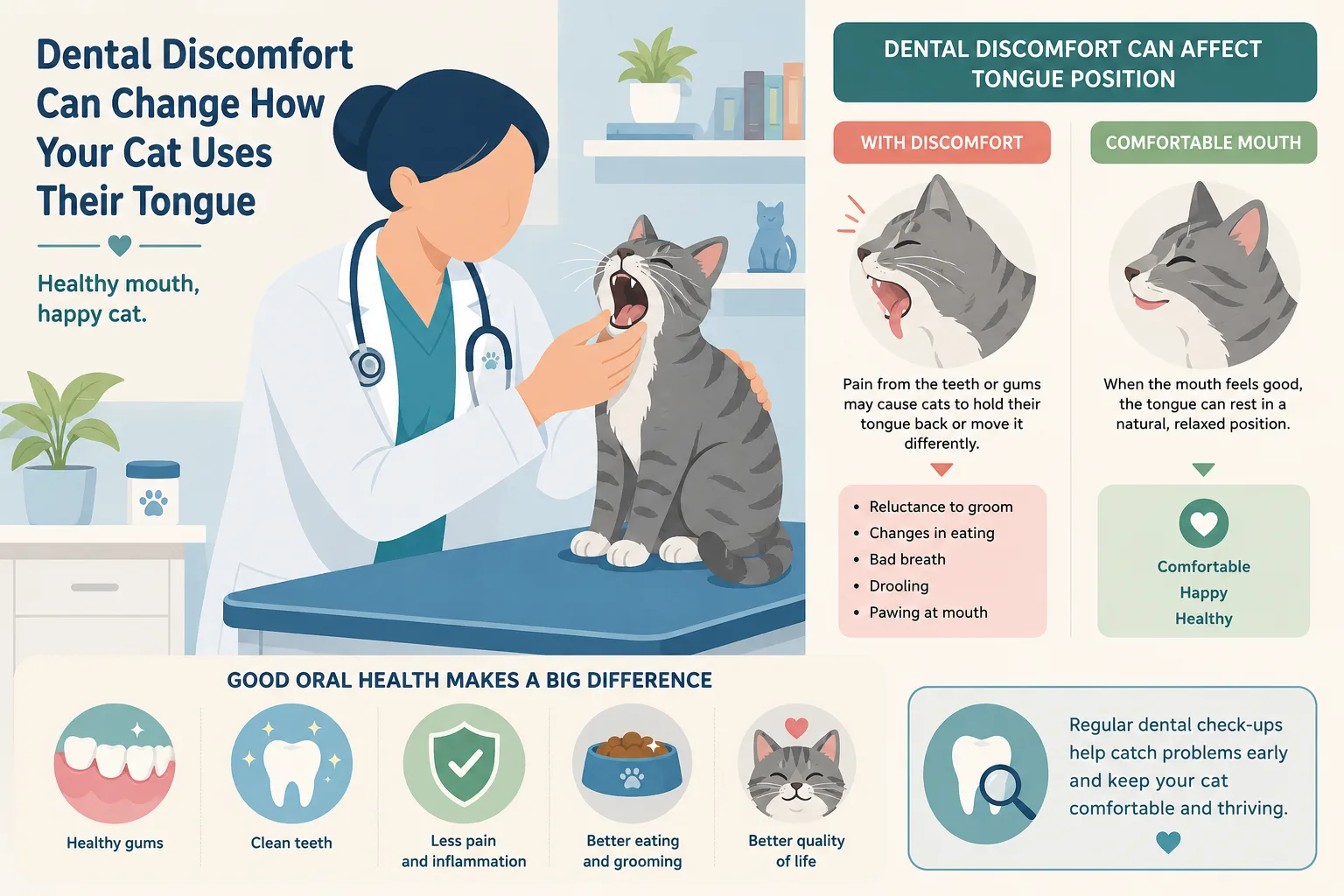
Not every visible tongue is harmless. In some cases, tongue protrusion can point toward painful dental disease or oral discomfort. This is especially important because cats are experts at hiding pain. A cat may continue eating, playing, and acting relatively normal while quietly suffering from severe mouth problems.
Veterinary experts report that between 50% and 90% of cats older than four years experience some form of dental disease. Common issues include gingivitis, periodontal disease, tooth resorption, mouth ulcers, and infections.
Here is a simple comparison of common dental conditions linked to tongue exposure:
| Condition | Common Symptoms | Possible Tongue Behavior |
|---|---|---|
| Gingivitis | Red gums, bad breath, discomfort | Tongue hanging due to pain |
| Periodontal Disease | Loose teeth, drooling, eating changes | Frequent tongue protrusion |
| Tooth Loss | Missing support for tongue | Tongue slips outward |
| Mouth Ulcers | Bleeding, pawing at mouth | Tongue visible from irritation |
| Tooth Resorption | Pain while chewing | Repeated tongue movement |
Cats experiencing oral pain may stick out their tongues because keeping the tongue inside the mouth feels uncomfortable. Some may drool excessively, chew awkwardly, paw at their faces, or avoid dry food. Others develop noticeably bad breath or begin eating more slowly.
One especially important warning sign is a sudden change. If your cat never displayed tongue protrusion before and suddenly begins doing it frequently, dental disease should move high on the list of possibilities. Cats with missing canine teeth or severe gum disease may also have trouble physically keeping the tongue inside the mouth.
This is why regular veterinary dental exams matter so much. Cats cannot tell you that their mouth hurts, but their tongues often provide valuable clues.
Breathing Problems That Should Not Be Ignored
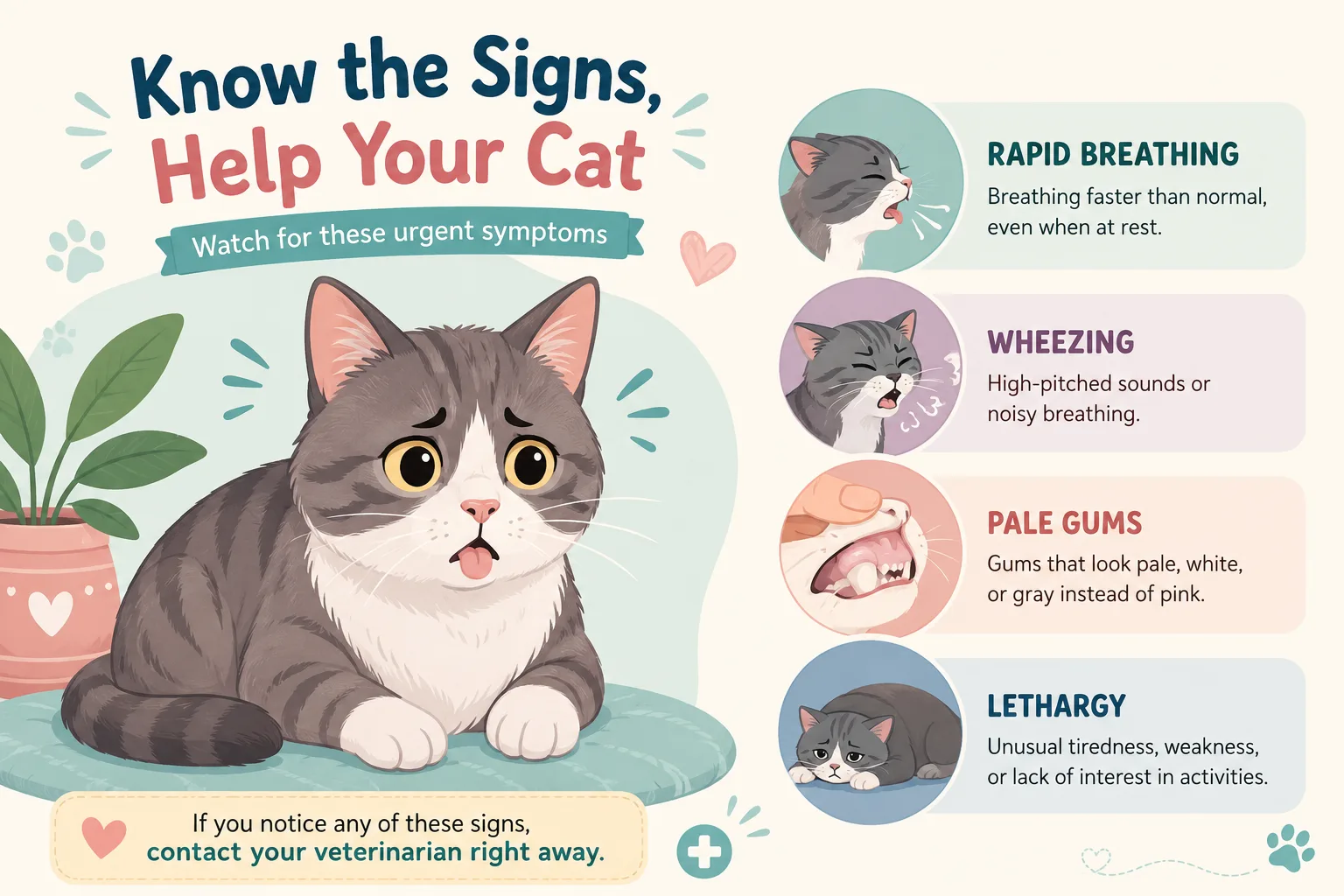
Unlike dogs, cats do not normally pant frequently. That means a cat sticking out its tongue while breathing heavily deserves serious attention. While occasional tongue exposure can be harmless, open-mouth breathing paired with rapid respiration may signal an emergency.
Cats may pant briefly after extreme stress, vigorous play, or overheating, especially in hot climates. However, persistent panting can indicate respiratory disease, asthma, heart problems, or dangerous heat stress. If a cat appears distressed while breathing, the visible tongue becomes far more concerning than cute.
Imagine running a marathon while breathing through a tiny straw. That is similar to what respiratory distress can feel like for a cat. To compensate, the cat may open its mouth and extend the tongue to increase airflow.
Watch carefully for these red flags:
- Rapid breathing
- Wheezing or coughing
- Blue or pale gums
- Extreme lethargy
- Stretching the neck while breathing
- Open-mouth panting that lasts more than a few minutes
Heatstroke is another major concern. Cats are less efficient at cooling themselves than dogs, and prolonged panting may signal dangerous overheating. This risk increases in poorly ventilated environments or during intense summer temperatures.
If your cat’s tongue exposure is paired with labored breathing, do not wait to “see if it improves tomorrow.” Breathing difficulties can escalate rapidly in cats, and immediate veterinary care may save the animal’s life.
Neurological and Medical Conditions Linked to Tongue Changes
In rarer cases, tongue protrusion may stem from neurological problems or underlying illness. The tongue depends on precise nerve and muscle coordination. When those systems malfunction, the tongue may droop, twitch, or remain exposed unexpectedly.
Neurological conditions can affect the facial nerves responsible for tongue control. Trauma, infections, seizures, toxin exposure, or brain-related disorders may interfere with normal mouth movement. Some cats with neurological problems appear confused or struggle to retract the tongue fully.
Online veterinary communities contain occasional reports of cats developing persistent tongue exposure due to seizures, nerve injuries, or illness-related muscle weakness. While these cases are less common than dental disease or relaxation-related bleps, they are important to recognize because they often come with additional symptoms.
A medically concerning tongue problem may appear alongside:
- Head tilting
- Loss of balance
- Tremors
- Sudden behavioral changes
- Weakness
- Difficulty swallowing
- Disorientation
Toxins can also trigger unusual mouth and tongue behaviors. Certain plants, chemicals, or medications may irritate the mouth or affect neurological function. Cats experiencing toxic reactions sometimes drool heavily, paw at the mouth, or repeatedly stick out the tongue.
The biggest clue is usually persistence. A harmless blep comes and goes naturally. A neurological issue often creates repeated or continuous tongue abnormalities that do not match the cat’s normal behavior.
When the Behavior Is Completely Harmless
After reading about health concerns, you might feel tempted to monitor every tiny tongue appearance like a detective searching for clues. Thankfully, many cases are entirely harmless and simply reflect normal feline quirks.
Some cats are naturally more prone to visible tongues because of anatomy. Flat-faced breeds such as Persians and Exotic Shorthairs may have shorter jaws that make tongue protrusion more common. Older cats with missing teeth may also experience relaxed tongue positioning because there is less structural support inside the mouth.
Other harmless situations include:
- Falling asleep after grooming
- Deep relaxation
- Brief Flehmen response episodes
- Temporary distraction during cleaning
- Short post-play panting that resolves quickly
The difference between harmless and concerning usually comes down to overall wellness. A healthy cat with normal appetite, energy, breathing, and grooming habits is unlikely to have a serious problem behind an occasional tongue appearance.
Cats are wonderfully strange animals. Some simply develop quirky habits that become part of their personality. One cat may chirp at birds, another may sleep upside down, and another may wander around with a tiny permanent blep that looks permanently comedic.
As long as the behavior remains stable and no additional warning signs appear, the visible tongue may simply be one more charming detail in your cat’s unique character.
Clues That Point to an Underlying Health Concern
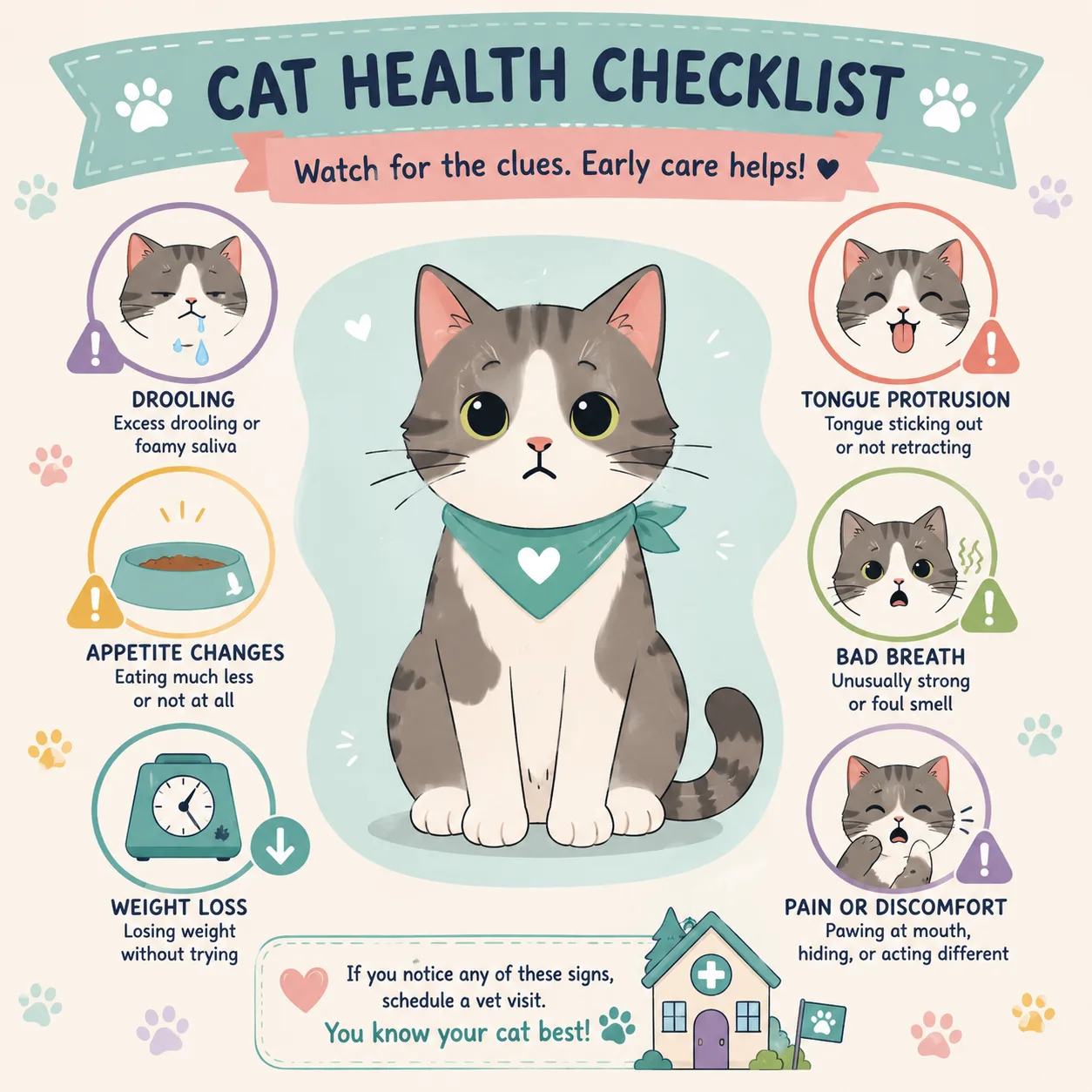
Because cats hide illness so effectively, small changes matter. A visible tongue becomes more significant when paired with other symptoms that suggest discomfort or disease.
One of the most important clues is appetite change. Cats experiencing dental pain may approach food eagerly but hesitate while chewing. Some begin dropping kibble, preferring soft food, or eating less overall. Others develop excessive drooling or foul-smelling breath due to infection.
Behavioral changes also provide valuable information. A normally social cat that suddenly hides, becomes irritable, or stops grooming may be dealing with pain. Pawing at the mouth, shaking the head, or rubbing the face against furniture can point toward oral irritation.
Here are warning signs that should never be ignored:
| Symptom | Why It Matters |
|---|---|
| Persistent drooling | May indicate pain or infection |
| Bad breath | Often linked to dental disease |
| Difficulty eating | Possible oral discomfort |
| Open-mouth breathing | Respiratory emergency risk |
| Lethargy | Could signal illness or pain |
| Swelling around mouth | Potential infection or injury |
| Sudden tongue protrusion | Important behavioral change |
Timing matters too. An occasional relaxed blep lasting a few seconds is very different from a tongue hanging out continuously for hours or days.
Think of it like listening to your car engine. One unusual sound may not mean disaster, but multiple warning signals together demand attention. Cats communicate through subtle physical clues, and the tongue is often one small piece of a larger puzzle.
Deciding When to Contact a Veterinarian
So when should you actually call the vet?
A good rule is this: if the tongue exposure seems unusual for your cat or appears alongside other symptoms, it is worth getting checked. Veterinary professionals would rather examine a harmless blep than have an owner ignore a serious medical issue.
Immediate veterinary care is important if your cat shows:
- Difficulty breathing
- Blue or pale gums
- Excessive drooling
- Inability to eat or drink
- Severe lethargy
- Signs of trauma
- Continuous open-mouth panting
- Sudden neurological symptoms
For less urgent situations, monitor patterns carefully. Does the behavior only happen during sleep? Does it disappear quickly? Is the cat otherwise healthy and energetic? Occasional harmless bleps usually remain brief and predictable.
Taking photos or videos can also help veterinarians evaluate the behavior accurately. Cats often stop displaying symptoms the moment they arrive at the clinic, making visual evidence extremely useful.
Preventive dental care is one of the best long-term strategies. Routine oral exams, professional cleanings, and monitoring for bad breath or eating changes can catch problems early before serious complications develop.
Your cat may never verbally explain why that tiny pink tongue keeps appearing, but careful observation tells you more than you might think. In many cases, the answer is harmless relaxation. In others, it is your cat’s quiet way of asking for help.
Conclusion
A cat sticking out its tongue can mean many things, ranging from pure contentment to medical discomfort. Sometimes it is simply a sleepy “blep” caused by relaxed jaw muscles. Other times, it reflects scent analysis during the Flehmen response or distraction during grooming. These situations are usually harmless and often incredibly cute.
The important part is recognizing when the behavior changes or appears alongside other symptoms. Dental disease, respiratory distress, neurological problems, and oral pain can all affect tongue position. Since cats instinctively hide weakness, subtle physical clues deserve attention.
Healthy cats generally maintain normal appetite, breathing, grooming, and energy levels even when displaying occasional tongue protrusion. If your cat suddenly develops persistent tongue exposure, drooling, bad breath, eating difficulty, or breathing abnormalities, contacting a veterinarian is the safest choice.
Cats may be mysterious creatures, but their bodies constantly communicate important information. That tiny visible tongue might be nothing more than a relaxed moment of feline happiness; or it may be a quiet signal worth investigating.

Read More: What Do Dilated Pupils Mean in Cats
FAQs
Why does my cat sleep with his tongue out?
Cats often sleep with their tongues out because their jaw muscles relax deeply during rest. This is especially common after grooming sessions or in very relaxed cats. In most cases, it is completely harmless.
Is it normal for older cats to stick out their tongues?
Yes, older cats may do this more often due to missing teeth, relaxed facial muscles, or age-related dental changes. If the cat also has drooling, bad breath, or trouble eating, a veterinary exam is recommended.
What is a cat “blep”?
A “blep” is the popular internet term for a cat sitting with the tip of its tongue sticking out slightly. It usually happens during relaxation, distraction, or after grooming and is generally harmless.
Can dental disease make a cat stick out its tongue?
Absolutely. Dental disease, gum inflammation, mouth ulcers, and tooth loss can all make tongue positioning uncomfortable or difficult. Persistent tongue exposure combined with eating problems or drooling should be evaluated by a veterinarian.
Should I worry if my cat pants with his tongue out?
Yes. Cats do not normally pant like dogs. Heavy breathing with a visible tongue can indicate overheating, respiratory disease, or heart problems and may require immediate veterinary attention.

Dorian Keene is an American content writer and blogger based in Boise, Idaho. At 31 years old, he has spent several years researching and writing practical, well-sourced articles focused on consumer guides, digital trends, and lifestyle topics. His experience working with online publications has helped him develop a clear, trustworthy writing style that prioritizes accuracy and reader value. As a contributor to furrylogic.online, he is committed to creating informative content that reflects careful research, real-world insights, and dependable editorial standards.