
Few things make a cat owner panic faster than hearing that unmistakable hacking sound right after mealtime. One minute your cat is happily devouring dinner, and the next minute there’s a mess on the floor that leaves you wondering whether something serious is going on. The truth is, cats throw up after eating for many different reasons. Some are relatively harmless and happen only occasionally, while others may point toward a digestive disorder or an underlying disease that needs veterinary care.
Cats are notorious for having sensitive digestive systems. Their stomachs and esophagi react strongly to stress, sudden diet changes, overeating, and even excitement around food. According to veterinary sources, eating too quickly is one of the most common causes of regurgitation in cats, especially in homes where multiple cats compete during feeding time. Many owners automatically assume any expelled food equals vomiting, but that is not always true. In reality, regurgitation and vomiting are completely different processes, and understanding the distinction can tell you a lot about your cat’s health.
An occasional episode may not be alarming, especially if your cat immediately returns to normal behavior afterward. Cats sometimes eat too fast, swallow excess air, or cough up a hairball that irritates the stomach lining. These situations usually resolve quickly without long-term consequences. Chronic or repeated vomiting, however, deserves closer attention because it may signal inflammatory bowel disease, food intolerance, parasites, kidney disease, or even hyperthyroidism.
The challenge is that cats are masters at hiding illness. A cat may continue eating, playing, and behaving normally while quietly dealing with an internal medical issue. That’s why paying attention to patterns matters so much. Does it happen immediately after meals? Is the food undigested? Are there hairballs involved? Is your cat losing weight or acting lethargic afterward? These details become valuable clues that help separate a minor digestive upset from a condition requiring medical treatment.
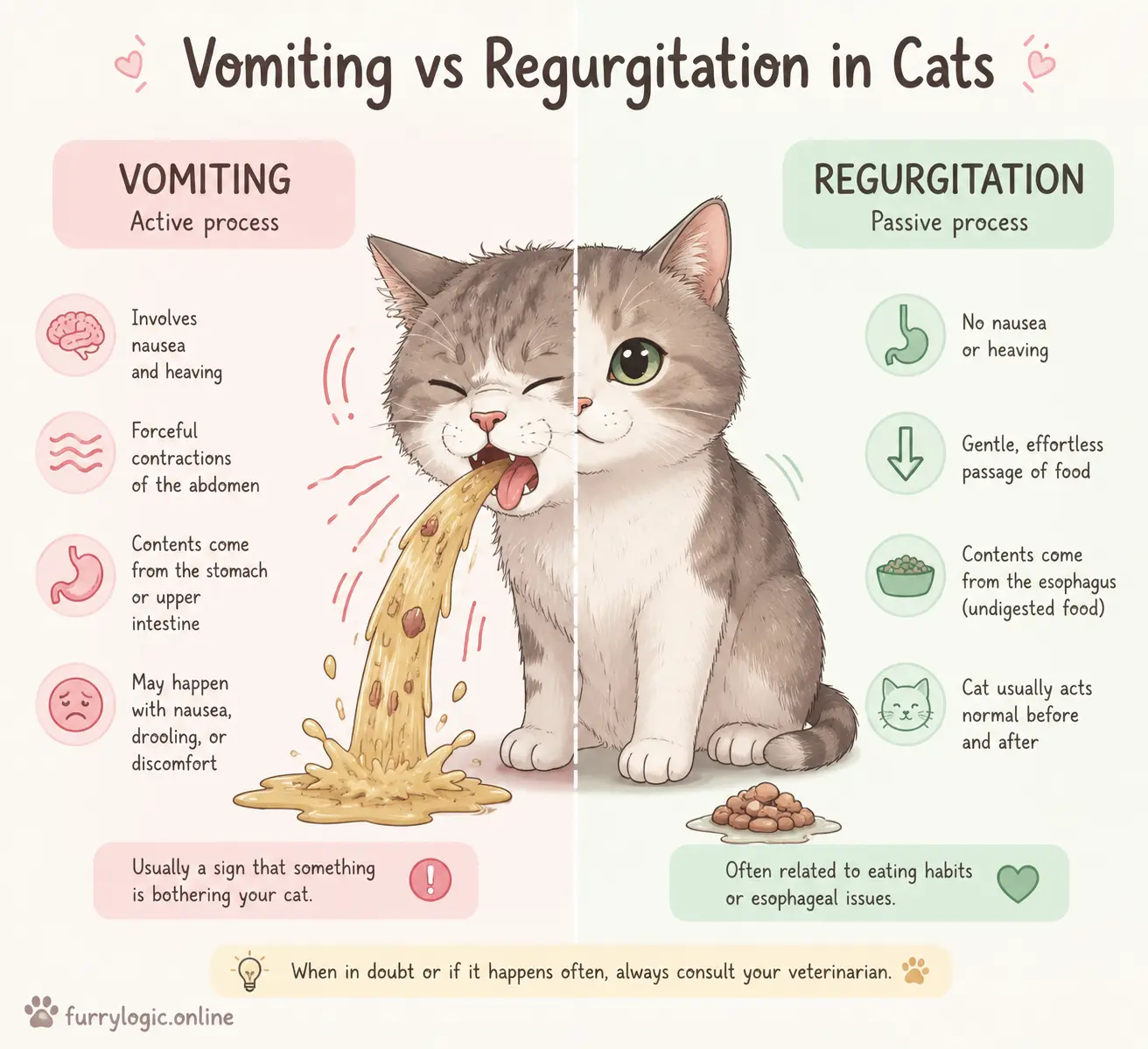
Vomiting vs Regurgitation in Cats
What True Vomiting Looks Like
True vomiting is an active process. Before vomiting, cats often show visible signs of nausea or distress. You may notice lip licking, drooling, pacing, swallowing repeatedly, crouching, or making dramatic heaving motions with the abdomen. Vomiting usually involves forceful contractions of the stomach muscles, almost like the cat’s body is trying to expel something unpleasant or irritating from deep within the digestive tract.
The material that comes up during vomiting is often partially digested because it has already reached the stomach. It may contain bile, mucus, foam, or broken-down food particles. Some vomit appears yellow or green because digestive fluids are mixed in. In more serious situations, blood or dark material resembling coffee grounds may appear, which can indicate bleeding somewhere in the digestive system.
Vomiting can stem from surprisingly broad causes. Sometimes it is something simple like dietary indiscretion, meaning your cat ate something inappropriate or irritating. Other times it may be linked to intestinal parasites, pancreatitis, kidney disease, infections, or inflammatory bowel disease. Chronic vomiting is particularly concerning because it often suggests an ongoing medical condition rather than a random upset stomach.
One tricky part about feline vomiting is that cats often recover quickly after an episode. A cat may vomit and then casually walk back to the food bowl moments later as if nothing happened. That calm behavior can fool owners into dismissing the issue entirely. Think of vomiting like a warning light on a car dashboard. One brief flicker might not mean disaster, but repeated flashing is your cue to investigate further before a bigger problem develops.
What Regurgitation Looks Like
Regurgitation is completely different from vomiting because it is passive rather than forceful. Instead of originating from the stomach, regurgitated food comes from the esophagus before proper digestion even begins. The food often looks almost identical to how it looked before your cat swallowed it. Many owners describe it as a tube-shaped pile of undigested kibble covered in mucus or saliva.
A cat regurgitating food usually shows little or no warning beforehand. There may be no dramatic retching or abdominal contractions. The cat simply lowers its head, opens its mouth, and the food comes back up with minimal effort. Because it happens so quickly after eating, regurgitation is commonly associated with eating too fast or swallowing too much air during meals.
Veterinary experts note that regurgitation often occurs in cats living with other cats because competitive eating encourages them to inhale food rapidly. Imagine someone racing through an all-you-can-eat buffet without chewing properly. The digestive system struggles to keep up, and food can end up backing into the esophagus instead of smoothly entering the stomach.
Although occasional regurgitation is common, repeated episodes should not be ignored. Persistent regurgitation may point toward esophageal disorders, narrowing of the esophagus, congenital abnormalities, or foreign objects lodged in the throat. If regurgitation becomes frequent or starts happening regardless of meal size or feeding speed, a veterinary evaluation becomes important.
Key Differences Every Cat Owner Should Know
The easiest way to remember the difference is this:
| Feature | Vomiting | Regurgitation |
|---|---|---|
| Effort involved | Forceful | Passive |
| Origin | Stomach/intestines | Esophagus |
| Food appearance | Partially digested | Undigested |
| Timing | Can happen anytime | Usually right after eating |
| Warning signs | Nausea and retching | Little warning |
| Common triggers | Illness, toxins, disease | Eating too fast |
Understanding this distinction helps owners provide better information to veterinarians, which can significantly speed up diagnosis and treatment.
Eating Too Fast and Other Common Triggers
Competitive Eating in Multi-Cat Homes
One of the biggest reasons cats throw up after eating is astonishingly simple: they eat too fast. In multi-cat households, mealtime can feel like a competitive sport. Even cats that are not truly hungry may inhale food quickly because they fear another cat will steal it. Veterinary experts frequently observe regurgitation in these environments because swallowing food too rapidly introduces excess air into the digestive tract.
Picture a vacuum cleaner sucking up dry kibble at top speed. That is essentially what happens when a cat bolts food without chewing properly. The esophagus and stomach struggle to process everything efficiently, and the body reacts by ejecting the meal shortly afterward. Many cats regurgitate within minutes of finishing food, leaving behind undigested kibble in a long cylindrical shape.
Feeding strategies can make a huge difference. Slow feeder bowls, puzzle feeders, and spreading food across a flat surface encourage cats to eat more gradually. Feeding cats separately also reduces anxiety and competition during meals. Small changes in feeding habits often solve the issue entirely without medication or expensive testing.
Overeating and Drinking Too Much Water
Some cats are simply enthusiastic eaters. They consume large meals quickly and then immediately drink excessive amounts of water, creating a digestive traffic jam. When the stomach becomes overly full, pressure builds and food may come back up. This situation is particularly common in cats fed only once or twice daily because they become excessively hungry between meals.
Cats naturally prefer smaller, more frequent meals. Their digestive systems evolved around hunting multiple tiny prey items throughout the day rather than consuming one massive portion. Feeding large meals can overwhelm the stomach, especially in cats with sensitive digestion.
Water consumption matters too. Drinking a large amount immediately before or after eating may contribute to regurgitation because it dilutes stomach contents and increases stomach volume rapidly. Splitting meals into smaller portions and spacing water intake slightly away from feeding time may help reduce episodes.
Stress and Feeding Habits
Cats are deeply affected by stress, even when it is subtle. Loud environments, unfamiliar pets, routine disruptions, or tension in the home can influence eating behavior and digestion. A stressed cat may eat too quickly, groom excessively, or develop stomach irritation that contributes to vomiting.
Sudden diet changes are another common trigger. Cats Protection warns that abrupt food transitions can upset the digestive tract and increase the likelihood of vomiting. Cats generally prefer consistency, and their stomach bacteria adapt slowly to new ingredients. Changing foods gradually over seven to ten days gives the digestive system time to adjust.
Sometimes owners unintentionally reinforce unhealthy eating habits. Free-feeding large quantities of dry food encourages grazing followed by binge eating. Establishing structured meal times with measured portions often improves digestion and reduces stomach upset dramatically.
Hairballs and Their Role in Digestive Upset
Why Grooming Leads to Hairballs
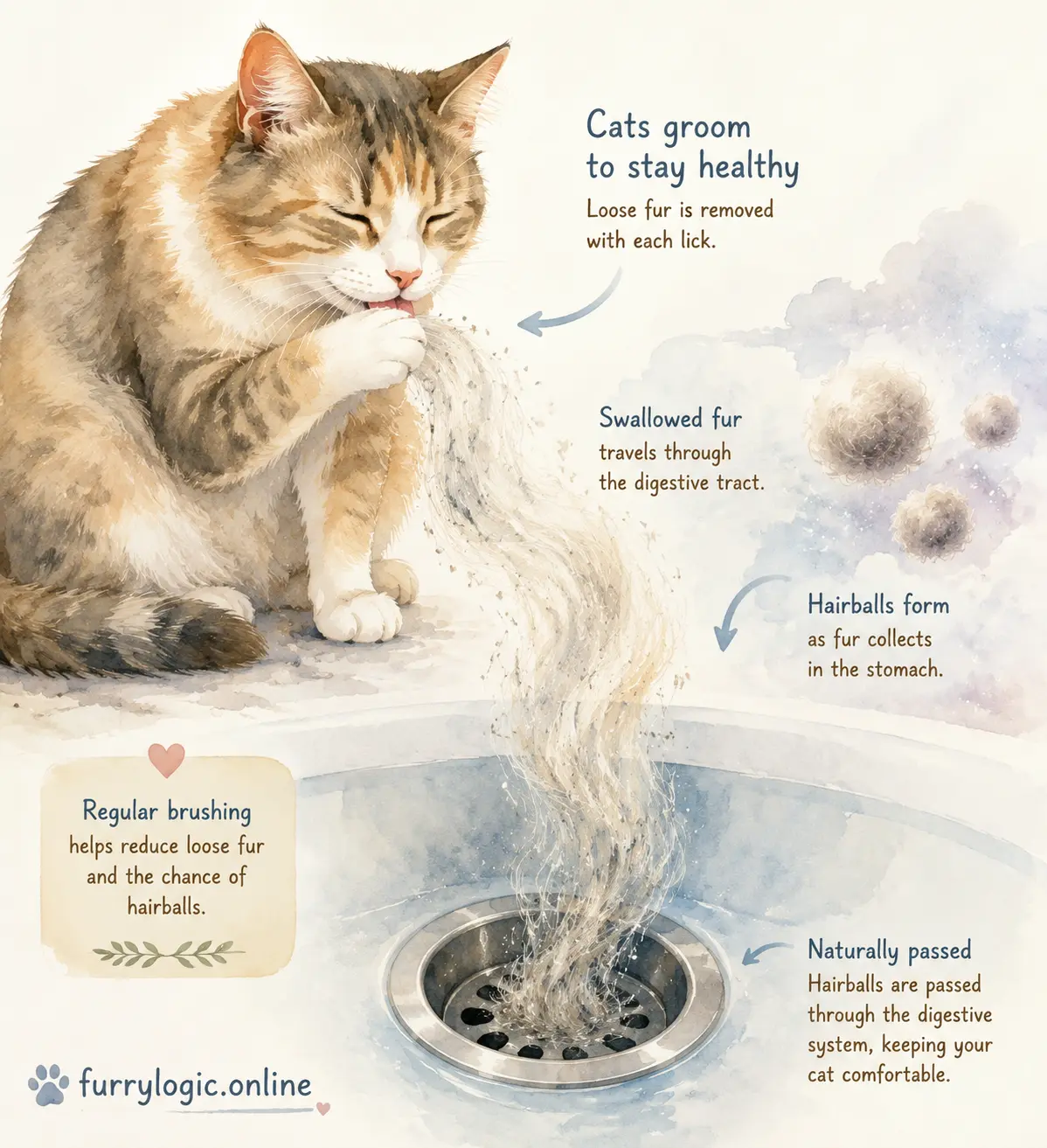
Cats spend a huge portion of their lives grooming themselves. Their rough tongues trap loose fur, which they swallow during cleaning. Most hair passes safely through the digestive tract, but some accumulates in the stomach and forms hairballs. Eventually the cat may vomit the hairball to remove the irritation.
Hairballs are especially common in long-haired breeds, heavy shedders, and cats that groom excessively due to anxiety or skin irritation. The classic hairball looks like a damp tube of compressed fur mixed with mucus or stomach fluid. While occasional hairballs are normal, frequent hairball vomiting should not automatically be dismissed as harmless.
Think of the stomach like a sink drain. A little hair occasionally passing through is manageable, but repeated buildup eventually clogs the system. Excessive hair ingestion can irritate the stomach lining and contribute to chronic digestive problems.
Regular brushing significantly reduces loose fur intake. Hairball-control diets and increased hydration may also help hair move more effectively through the intestines rather than collecting in the stomach.
When Hairballs Become a Health Concern
Hairballs become concerning when they occur frequently or accompany other symptoms. Veterinary organizations caution that repeated hairball vomiting may indicate an underlying gastrointestinal issue rather than simple grooming behavior.
Signs that hairballs may be linked to something more serious include:
- Loss of appetite
- Weight loss
- Constipation
- Lethargy
- Persistent vomiting
- Excessive grooming
- Difficulty passing stool
In rare cases, hairballs can create intestinal blockages that require emergency treatment. Reddit discussions from cat owners and veterinary communities frequently describe situations where persistent vomiting initially seemed harmless but later turned out to involve obstructions or digestive disease.
Hairballs should be viewed like smoke from a chimney. A little now and then is expected, but constant smoke suggests something deeper may be happening inside.
Food Sensitivities That May Be Contributing
Ingredients That Commonly Cause Trouble
Food sensitivities in cats are more common than many owners realize. Some cats react poorly to certain proteins, artificial additives, dairy products, or fillers in commercial foods. Unlike dramatic allergic reactions, food sensitivities often develop gradually and present as recurring vomiting, diarrhea, or chronic digestive discomfort.
The digestive tract becomes irritated when it repeatedly encounters ingredients the body struggles to process. Over time, inflammation may increase, leading to more frequent vomiting episodes after meals. Common problem ingredients include beef, fish, dairy, and heavily processed carbohydrates.
One frustrating aspect of food sensitivities is inconsistency. A cat may tolerate a food for months before suddenly developing symptoms. Owners often assume the food cannot be the problem because the cat previously ate it without issue, but sensitivities can evolve over time.
Elimination diets supervised by veterinarians are often the most reliable way to identify triggers. Switching foods randomly every few weeks usually makes the situation harder to diagnose because the digestive system never stabilizes long enough to identify patterns.
Signs of a Sensitive Stomach
Cats with sensitive stomachs often show subtle symptoms before vomiting becomes severe. These may include:
| Symptom | Possible Meaning |
|---|---|
| Frequent regurgitation | Eating intolerance |
| Vomiting after specific foods | Ingredient sensitivity |
| Loose stools | Digestive irritation |
| Excessive gas | Poor digestion |
| Lip licking and nausea | Stomach discomfort |
| Reduced appetite | Gastrointestinal inflammation |
Veterinarians frequently ask detailed questions about diet history because food-related problems are extremely common in cats with chronic vomiting. Even treats and flavored medications can contribute to digestive upset in sensitive cats.
Medical Conditions Linked to Repeated Vomiting
Digestive Disorders
Repeated vomiting can sometimes signal diseases directly affecting the digestive tract. Inflammatory bowel disease, intestinal parasites, pancreatitis, and gastrointestinal cancers are all potential causes.
Inflammatory bowel disease, often called IBD, occurs when the digestive tract becomes chronically inflamed. Cats with IBD may vomit intermittently for months while otherwise appearing relatively normal. Weight loss and appetite changes gradually develop as inflammation worsens.
Parasites remain another important possibility, particularly in outdoor cats or newly adopted kittens. Worms can irritate the stomach and intestines, leading to vomiting, diarrhea, and poor nutrient absorption.
Pancreatitis can be especially tricky because symptoms are often vague. Cats may simply appear tired, eat less, and vomit occasionally. Since feline symptoms are frequently subtle, bloodwork and imaging are often necessary for accurate diagnosis.
Kidney Disease, Hyperthyroidism, and Other Illnesses
Not all vomiting originates in the digestive system itself. Chronic diseases affecting other organs commonly trigger nausea and vomiting in cats. Kidney disease, hyperthyroidism, diabetes, and liver disease are all known contributors.
Older cats deserve especially close monitoring because vomiting may be one of the earliest signs of age-related illness. Hyperthyroidism, for example, often causes increased appetite combined with weight loss and occasional vomiting. Kidney disease may cause nausea because waste products accumulate in the bloodstream.
This is why veterinarians usually recommend blood tests for cats with chronic vomiting, particularly seniors. The stomach may simply be reacting to problems elsewhere in the body.
What to Watch for After an Episode
Warning Signs That Need Immediate Attention
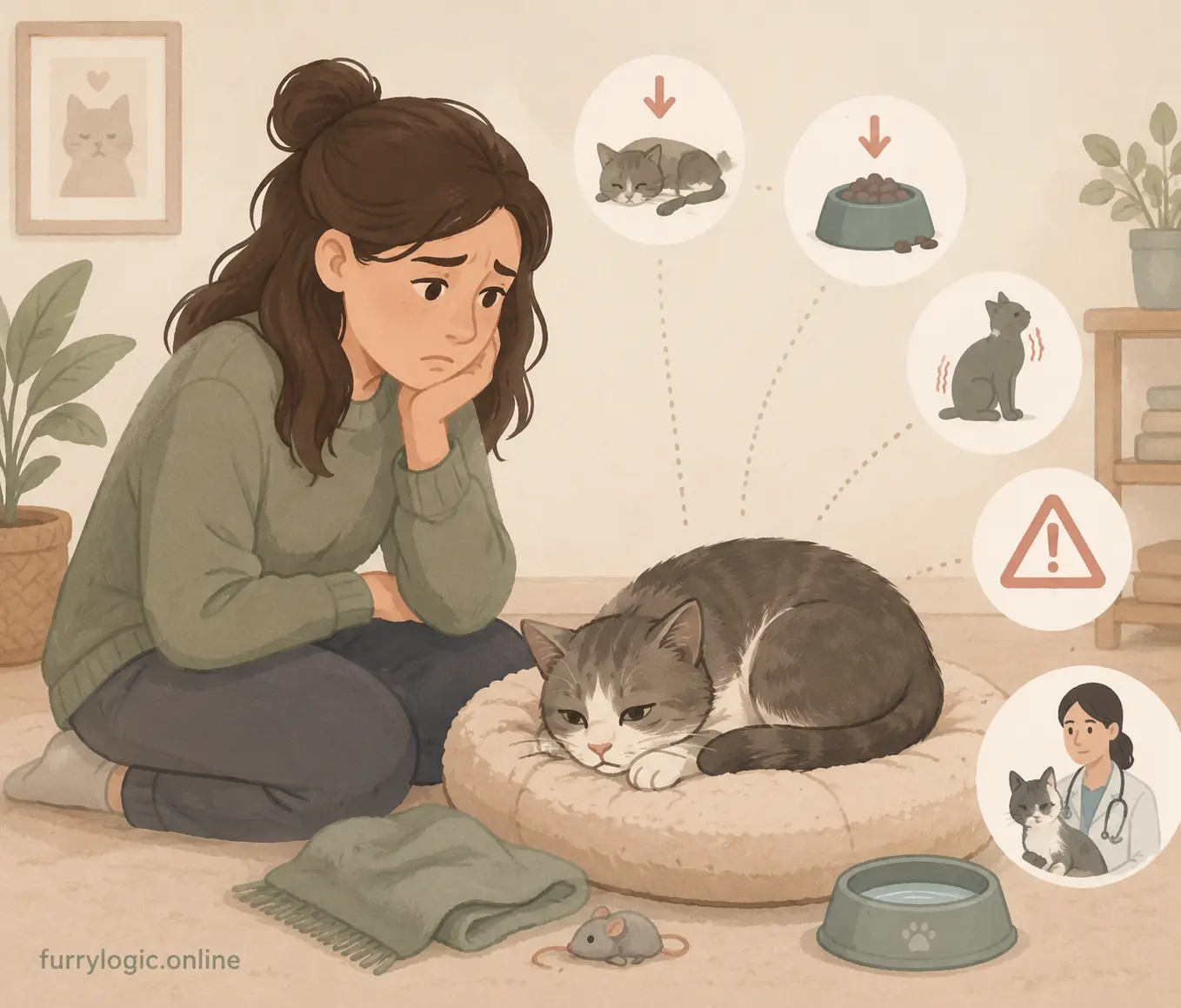
Some vomiting episodes require urgent veterinary care. Owners should seek immediate attention if a cat experiences:
- Repeated vomiting in a short time
- Blood in vomit
- Black or coffee-ground material
- Severe lethargy
- Collapse
- Difficulty breathing
- Refusal to eat
- Signs of pain
- Suspected toxin ingestion
- Possible foreign body ingestion
Healthline notes that vomiting more than once weekly may indicate chronic gastrointestinal disease requiring evaluation. Persistent vomiting can quickly lead to dehydration, electrolyte imbalances, and worsening illness.
Cats that swallow string, yarn, or other foreign objects are particularly vulnerable because intestinal obstructions can become life-threatening quickly. Several veterinary community discussions highlight cases where repeated vomiting eventually traced back to swallowed foreign material.
When Monitoring at Home May Be Enough
Not every vomiting episode is an emergency. If your cat vomits once, resumes normal behavior, continues eating, drinks water, and shows no additional symptoms, careful monitoring at home may be reasonable.
Keep track of:
- Frequency
- Timing relative to meals
- Appearance of vomit
- Appetite
- Energy levels
- Litter box habits
Videos can also help veterinarians determine whether the behavior represents vomiting, coughing, or regurgitation. Veterinary experts specifically recommend recording episodes whenever possible because descriptions alone can be misleading.
When Repeated Vomiting Requires Veterinary Attention
Diagnostic Tests Your Vet May Recommend
If vomiting becomes chronic or concerning, veterinarians may recommend several diagnostic tests. These often include bloodwork, fecal testing, X-rays, ultrasounds, and sometimes endoscopy.
Blood tests help identify organ dysfunction, infections, thyroid disease, and metabolic issues. Imaging can reveal foreign objects, intestinal thickening, tumors, or structural abnormalities. Endoscopy allows direct visualization of the digestive tract and sometimes enables tissue biopsies for definitive diagnosis.
Although testing can feel overwhelming, early diagnosis dramatically improves outcomes for many conditions. Chronic vomiting should never simply be written off as “normal cat behavior.”
Treatment Options and Prevention Strategies
Treatment depends entirely on the underlying cause. Some cats improve with simple feeding adjustments, while others require medication, prescription diets, or long-term disease management.
Common prevention strategies include:
| Prevention Method | Benefit |
|---|---|
| Slow feeder bowls | Reduces rapid eating |
| Smaller meals | Prevents overeating |
| Gradual food transitions | Limits digestive upset |
| Regular brushing | Reduces hairballs |
| Routine vet exams | Detects disease early |
| Hydration support | Improves digestion |
Cats thrive on consistency. Stable routines, appropriate diets, and stress reduction often produce significant improvements in digestive health.
Conclusion
A cat throwing up after eating can range from a harmless one-time event to an important warning sign of illness. The key is understanding the difference between vomiting and regurgitation, paying attention to patterns, and recognizing when symptoms move beyond normal digestive quirks.
Many cases stem from simple issues like eating too fast, swallowing hairballs, or reacting to dietary changes. Others involve more serious conditions such as inflammatory bowel disease, kidney disease, or gastrointestinal obstruction. Cats are incredibly skilled at hiding discomfort, which makes owner observation incredibly valuable.
When in doubt, trust your instincts. If vomiting becomes frequent, severe, or accompanied by other symptoms, a veterinary evaluation is always the safest choice. Catching problems early often means simpler treatment, lower costs, and a healthier, happier cat in the long run.
FAQs
1. Is it normal for cats to throw up occasionally?
Yes, occasional vomiting or hairballs can happen in healthy cats. Frequent or repeated vomiting, however, should be evaluated by a veterinarian.
2. How can I tell if my cat is vomiting or regurgitating?
Vomiting involves retching and abdominal contractions, while regurgitation is passive and usually happens immediately after eating undigested food.
3. Why does my cat throw up undigested food right after eating?
This often happens because the cat ate too quickly, overate, or swallowed excess air during meals.
4. Are hairballs dangerous for cats?
Occasional hairballs are usually harmless, but frequent hairballs may indicate digestive issues or excessive grooming and can sometimes lead to blockages.
5. When should I take my cat to the vet for vomiting?
Seek veterinary care if vomiting becomes frequent, contains blood, is paired with lethargy or weight loss, or if your cat cannot keep food or water down.

Dorian Keene is an American content writer and blogger based in Boise, Idaho. At 31 years old, he has spent several years researching and writing practical, well-sourced articles focused on consumer guides, digital trends, and lifestyle topics. His experience working with online publications has helped him develop a clear, trustworthy writing style that prioritizes accuracy and reader value. As a contributor to furrylogic.online, he is committed to creating informative content that reflects careful research, real-world insights, and dependable editorial standards.