
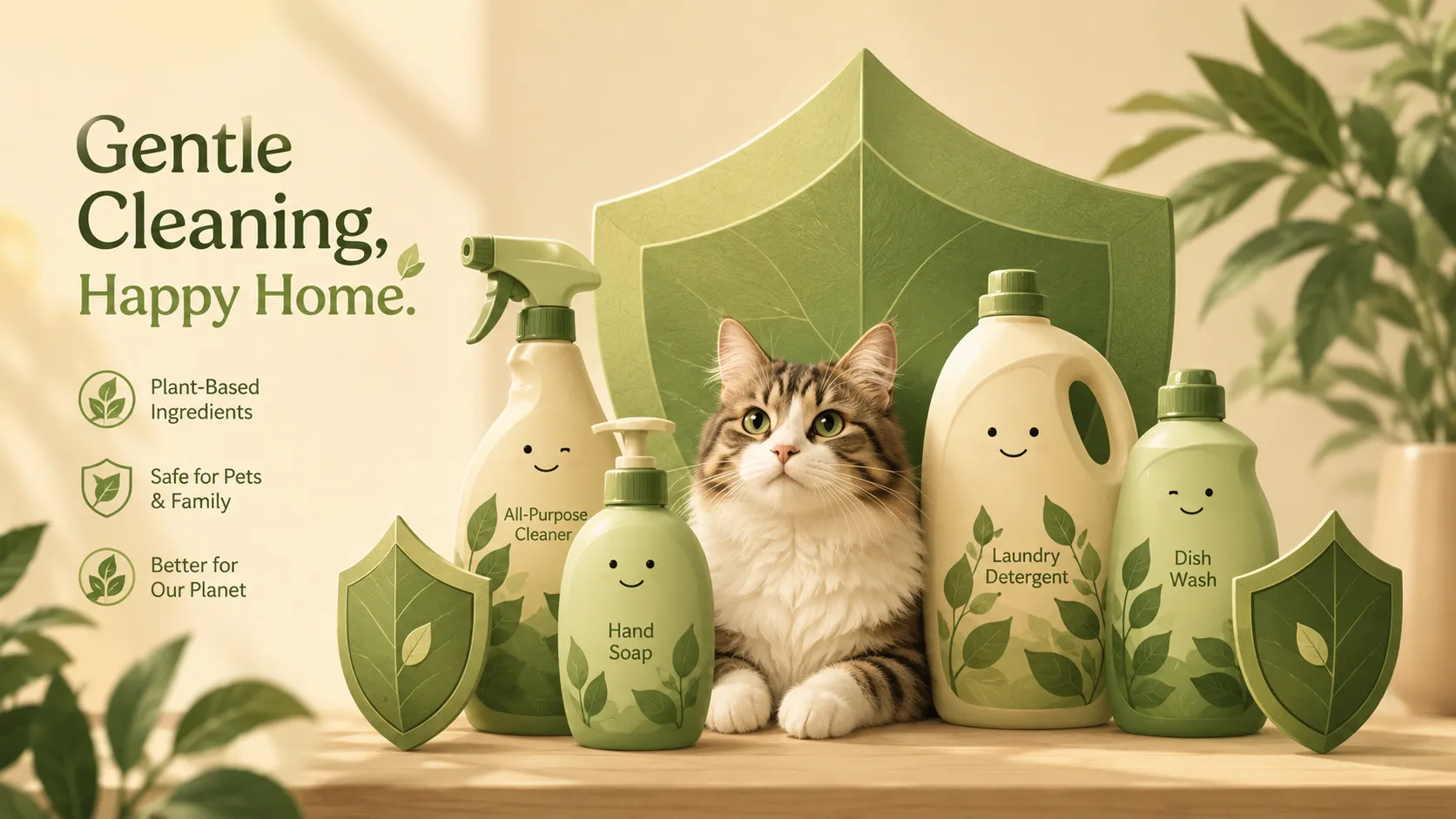
Bringing a cat into your home changes more than your furniture choices and sleeping arrangements. It also changes the way you think about cleaning products. Most people look at a bottle of floor cleaner and think about shiny tiles or a fresh citrus smell. A cat sees that same floor very differently. They walk across it with bare paws, roll on it, sniff it closely, and then spend a good part of the day licking themselves clean. Imagine cleaning your kitchen counter and then licking your hands afterward several times a day. Strange image, right? For cats, that is essentially part of their routine.
Veterinary sources have highlighted that many household cleaning chemicals become a problem because cats can inhale fumes, absorb chemicals through their skin, or ingest residue during grooming. Household cleaning products account for a notable portion of pet poison exposures each year.
How Cats Interact With Their Environment
Cats live at ground level. Humans clean and move on with their day, but cats investigate. They crawl under furniture, sit beside toilets, rub against walls, and inspect every new smell that appears. Their curiosity turns ordinary spaces into exploration zones. That adorable little nose following you while you mop the floor may look innocent, but it creates opportunities for accidental chemical exposure.
Cats also groom obsessively. A tiny residue left behind on a floor can end up being swallowed later. Because of this behavior, substances considered only mildly irritating to humans can become a larger issue for felines. Their bodies simply process some chemicals differently.
Why Cats Are More Sensitive Than Humans
Cats are like highly tuned sports cars; they are efficient and impressive but can be sensitive to the wrong fuel. Their livers have limited ability to process certain compounds compared with many other animals. Certain ingredients, particularly compounds such as phenols and some essential oils, can become difficult for cats to metabolize.
This biological difference means cat owners cannot rely on a simple rule like, “If it is safe for me, it is safe for my pet.” Human products are designed around human exposure patterns, not around animals that spend hours grooming fur and walking on freshly cleaned surfaces.
Why Certain Household Cleaners Can Be Dangerous
Many cleaning products are designed to attack bacteria, dissolve grease, remove mold, and cut through dirt. To accomplish these jobs, manufacturers often use strong chemical ingredients. The problem is that the same ingredients that destroy stains can also irritate sensitive tissues.
Common Harmful Ingredients Found in Homes
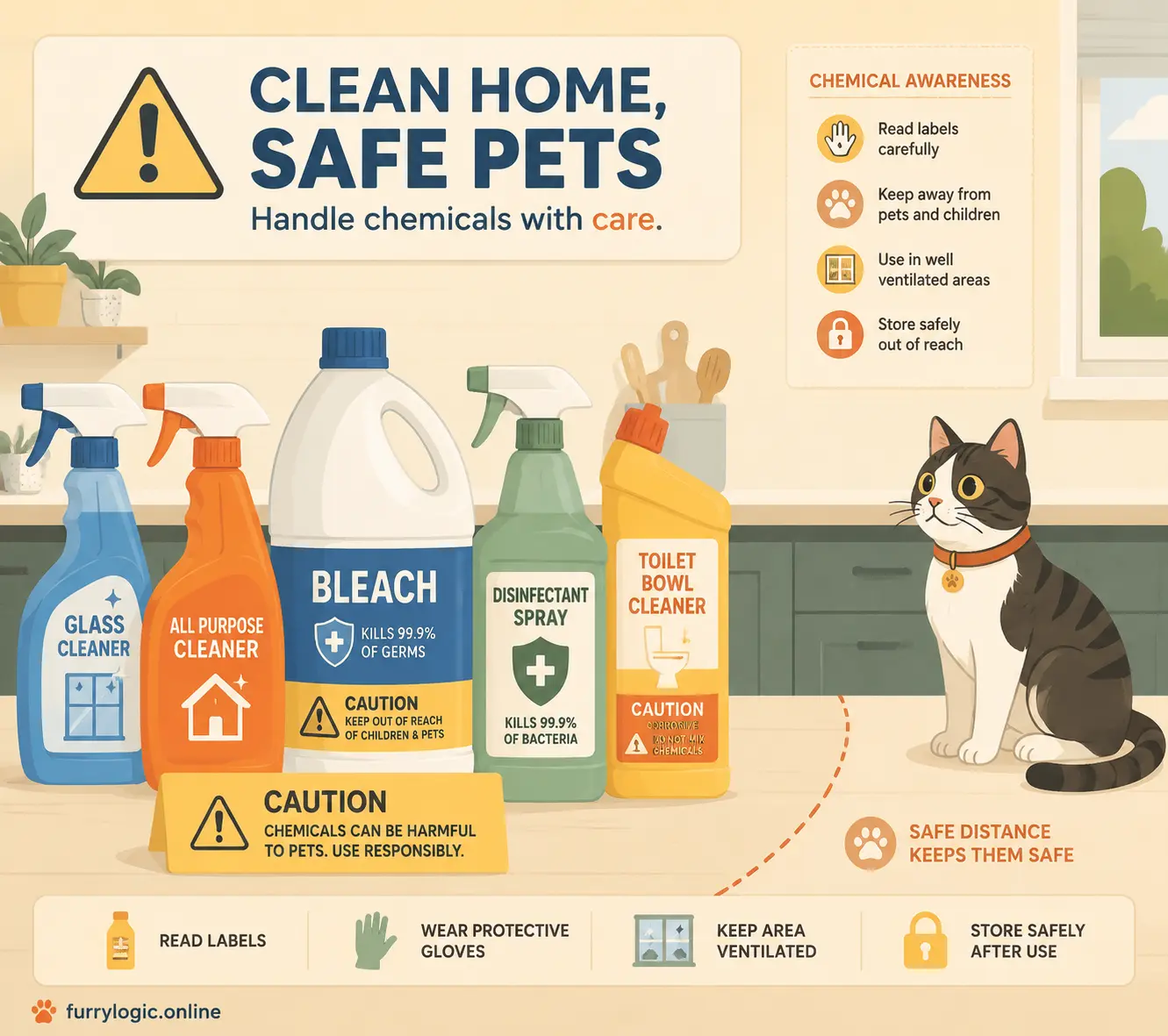
Recent veterinary guidance repeatedly points to several ingredients as higher-risk concerns around pets:
| Ingredient | Potential Concern for Cats |
|---|---|
| Bleach | Respiratory irritation and digestive upset |
| Ammonia | Eye and respiratory irritation |
| Phenols | Toxicity concerns in cats |
| Isopropyl alcohol | Irritation and poisoning risk |
| Formaldehyde | Respiratory effects |
| Strong fragrances | Potential sensitivity reactions |
Bleach, Ammonia, and Strong Disinfectants
Bleach often sits under the kitchen sink like a trusted household warrior. It fights stains and disinfects surfaces effectively. Yet effectiveness and safety are not always identical. Bleach fumes may irritate cats, and concentrated forms create higher risks. Ammonia-based products bring similar concerns because of strong odors and irritating vapors.
Essential Oils and Fragrance Chemicals
One of the biggest surprises for many pet owners is learning that “natural” does not automatically equal “safe.” Essential oils are frequently marketed as gentle, plant-derived solutions. The marketing sounds peaceful: lavender fields, lemon freshness, pine forests. Nature itself seems to be whispering safety into your ear.
Reality is more complicated. Cats can react poorly to some essential oils and concentrated fragrance compounds. Even inhalation exposure may become problematic in some situations.
Exposure Pathways Inside the Home
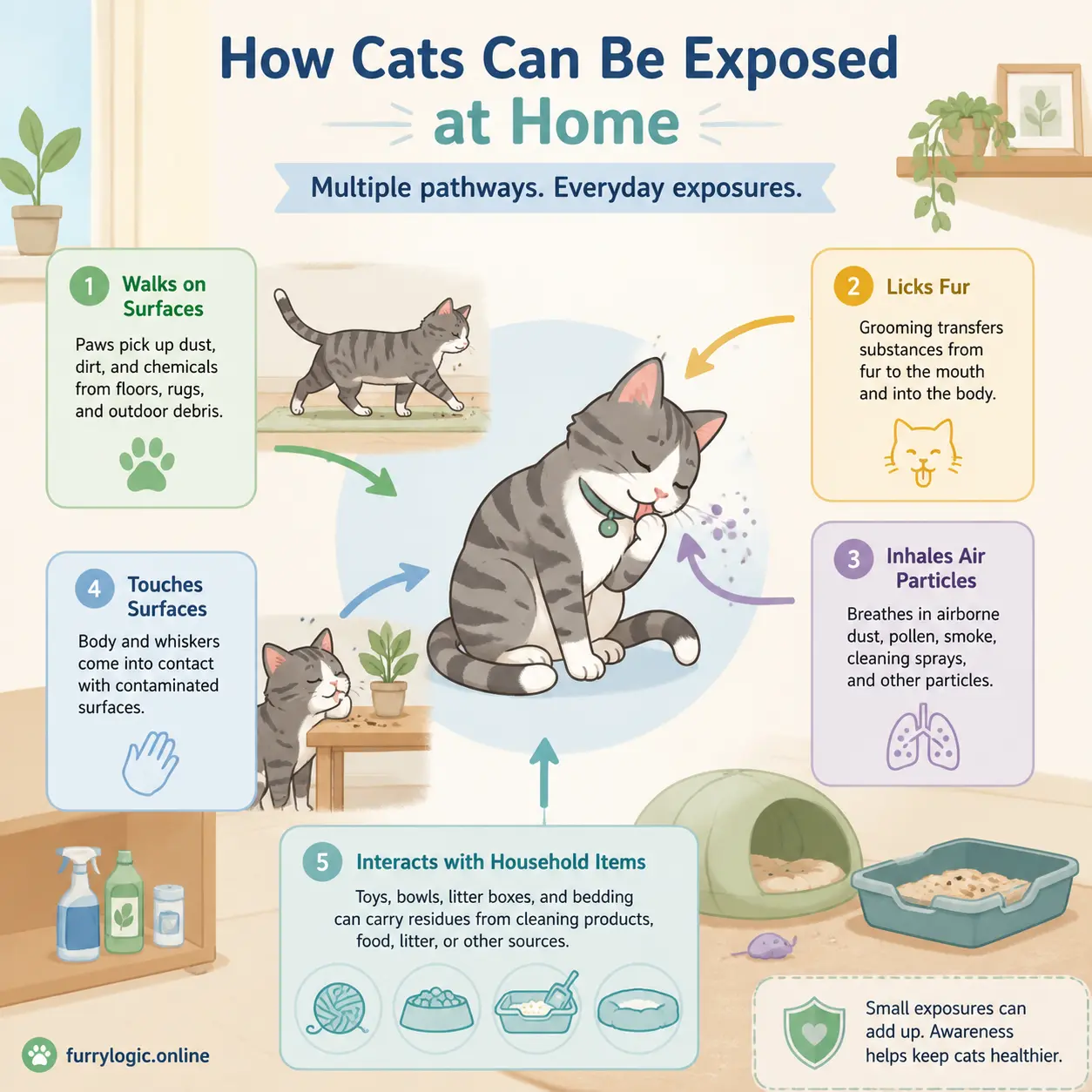
Chemical exposure does not require a cat drinking from a bottle of cleaner. Exposure can happen through:
- Walking across wet floors
- Licking contaminated fur
- Inhaling airborne fumes
- Touching sprayed surfaces
- Chewing product containers
Veterinary experts report these as common exposure routes in household settings.
Ingredients Considered Lower Risk Around Cats
Cat-safe cleaning is not about abandoning hygiene. It is about selecting products thoughtfully.
Mild Soap-Based Cleaners
Gentle soap-based products and mild detergents generally create fewer concerns than highly concentrated disinfectants when used properly. Low-risk does not mean risk-free. Concentration still matters, and even mild products should be stored securely.
Think of cleaning strength like seasoning food. A pinch of salt can improve dinner, while an entire container poured onto a plate creates a disaster.
Unscented and Pet-Specific Formulas
Unscented products often reduce unnecessary exposure to fragrance chemicals. Pet-focused cleaners may also remove certain harsh ingredients commonly found in standard household products.
The label “pet-safe,” though, should not switch off critical thinking. Read ingredient lists carefully. Some products marketed toward pet owners still contain fragrance ingredients or essential oils.
Areas of the Home That Need Extra Caution
Not all rooms create equal risks.
Kitchen and Food Preparation Spaces
Kitchens are chemical crossroads. Degreasers, oven cleaners, disinfectants, and food spills all coexist in one space. Strong oven cleaners especially deserve caution because they often contain aggressive ingredients and powerful fumes.
Bathrooms and Laundry Rooms
Bathrooms hide some of the strongest chemicals in the house. Toilet cleaners, drain products, and mold removers frequently contain powerful substances. Laundry rooms introduce detergents and pods that may look surprisingly attractive to curious pets.
Laundry detergent exposures have specifically raised concern in veterinary guidance because concentrated formulas may produce more severe symptoms.
Floors and Carpets
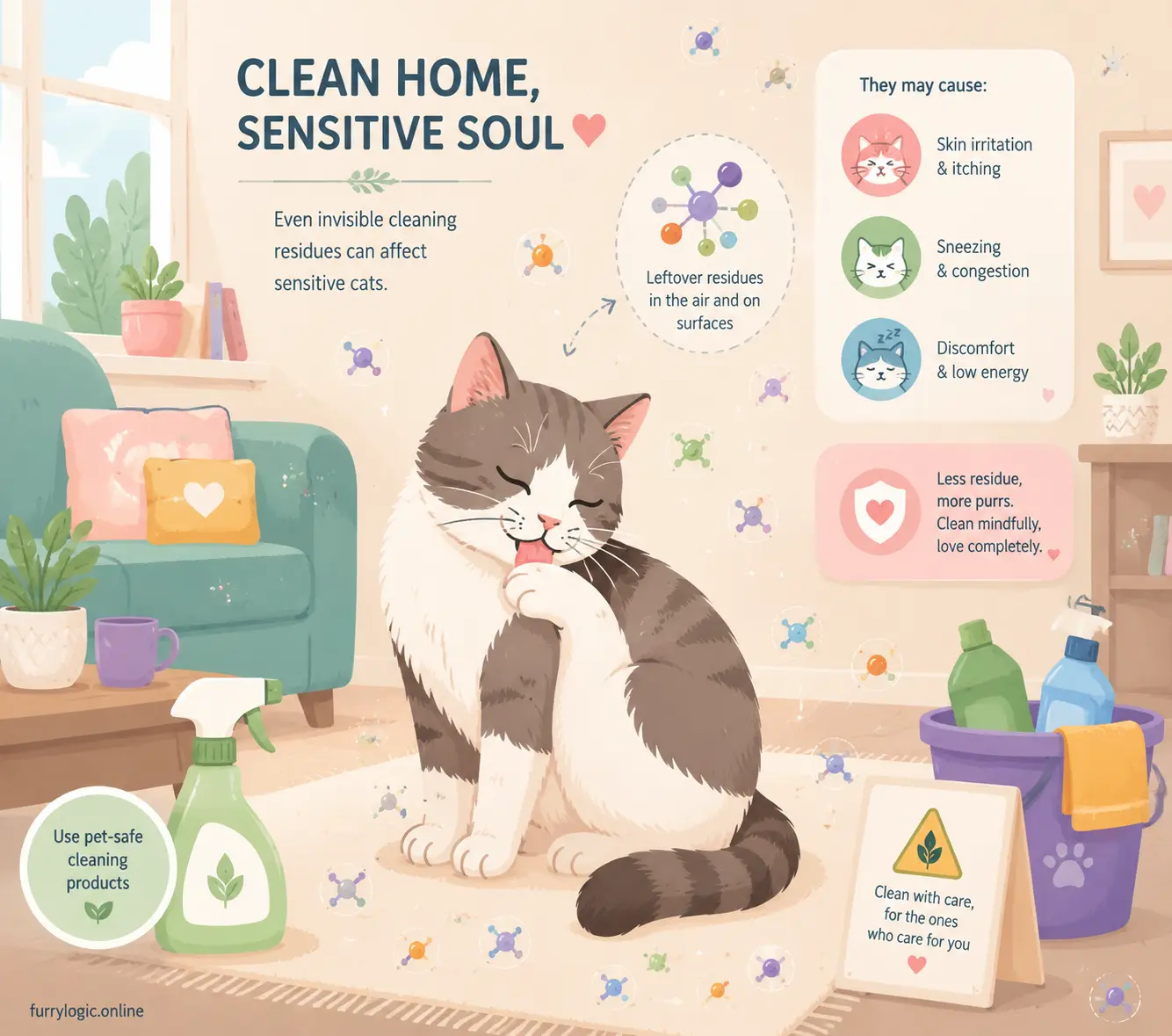
Floor surfaces deserve special attention because cats practically live on them. A floor cleaner residue can turn into a silent issue because cats later groom their paws.
Carpet treatments and heavily scented sprays may create similar concerns.
Safe Cleaning Practices for Pet Owners
Choosing safer products matters, but habits matter too.
Reading Labels Properly
Start becoming an ingredient detective. Scan labels for:
- Strong fragrance chemicals
- Bleach
- Ammonia
- Phenols
- Concentrated disinfectants
- Essential oils
You do not need a chemistry degree. Even recognizing a few high-concern ingredients improves decision-making.
Ventilation and Drying Time
Open windows. Use fans. Keep cats out of recently cleaned areas until surfaces fully dry and odors dissipate.
Veterinary advice commonly recommends preventing access during active cleaning and drying periods.
Recognizing Signs of Chemical Exposure
Sometimes exposure occurs even with careful planning.
Physical Symptoms
Possible warning signs include:
- Excessive drooling
- Vomiting
- Coughing
- Rapid breathing
- Skin redness
- Loss of appetite
- Watery eyes
These symptoms appear frequently in veterinary guidance discussing household cleaner exposure.
Behavioral Changes
Cats also communicate through behavior. A normally social cat suddenly hiding under furniture may be signaling discomfort. Lethargy, confusion, unusual vocalization, or sudden restlessness can all matter.
Cats are masters at hiding illness. Think of them as actors who rarely break character. Small changes deserve attention.
Natural Alternatives and Their Limitations
Natural cleaning advice floods social media. Vinegar solutions, baking soda mixtures, and homemade recipes appear everywhere.
Natural products can sometimes reduce exposure to harsh ingredients, but “natural” is not a universal safety guarantee. Arsenic exists naturally too. Nature creates beautiful things and dangerous things.
Some homemade solutions also lack strong disinfecting ability. Others include essential oils that create additional concerns for cats.
Common Myths About Natural Products
Myth: Natural means harmless.
Reality: Natural ingredients can still irritate or poison cats.
Myth: Strong smells equal stronger cleaning.
Reality: Fragrance does not necessarily improve cleaning effectiveness.
Myth: Pet-safe means unlimited exposure is acceptable.
Reality: Proper use still matters.
Creating a Cat-Friendly Cleaning Routine
Living with cats does not require turning your home into a sterile laboratory or abandoning cleanliness. It means balancing sanitation with awareness.
Build habits such as keeping products locked away, choosing simpler formulations, ventilating rooms well, cleaning while cats stay elsewhere, and waiting for surfaces to dry fully before allowing access.
Small habits create large safety margins. Think of these routines as invisible guardrails around your cat’s daily life. Most of the time your cat will never realize these precautions exist. That is perfectly fine. The safest routines are often the ones that quietly work in the background.
Conclusion
Keeping a clean home and protecting a cat’s health are not competing goals. Household cleaners can become dangerous when harsh chemicals, strong fumes, and lingering residues enter spaces where curious pets live and explore. Understanding higher-risk ingredients, recognizing warning signs of exposure, and building safer habits create a healthier environment without sacrificing cleanliness.
A cat-friendly cleaning routine is less about fear and more about informed choices. Read labels carefully, prioritize lower-risk products, ventilate your space, and remember that the smallest paws often touch the most surfaces.
FAQs
1. Is bleach safe around cats?
Diluted household bleach creates lower risks than concentrated products, but cats should still stay away from treated areas until surfaces are completely dry and odors disappear.
2. Are essential oils safe in cleaning products?
Some essential oils may create concerns for cats, particularly concentrated forms or airborne exposure. Use caution and read product ingredients carefully.
3. What should I do if my cat licks a cleaning product?
Remove access immediately and contact a veterinarian or poison assistance service promptly for guidance. Avoid inducing vomiting unless instructed by a professional.
4. Can cats get sick from inhaling cleaning fumes?
Yes. Certain fumes can irritate a cat’s respiratory system and cause symptoms such as coughing or rapid breathing.
5. Are pet-safe cleaners completely risk-free?
No. Pet-safe products generally reduce risk but still require correct usage, proper storage, and drying time before pets return to treated areas.

Dorian Keene is an American content writer and blogger based in Boise, Idaho. At 31 years old, he has spent several years researching and writing practical, well-sourced articles focused on consumer guides, digital trends, and lifestyle topics. His experience working with online publications has helped him develop a clear, trustworthy writing style that prioritizes accuracy and reader value. As a contributor to furrylogic.online, he is committed to creating informative content that reflects careful research, real-world insights, and dependable editorial standards.