
Cat litter may seem like one of those everyday household products nobody thinks about too deeply; until your cat refuses to use the box, your home starts smelling strange, or dust clouds rise every time you scoop. Then suddenly, that bag of litter becomes surprisingly important. Modern clumping cat litter is a carefully engineered product designed to absorb moisture, trap odors, simplify cleanup, and keep both cats and humans comfortable. But what exactly creates that magical clumping effect?
The answer lies in chemistry, mineral science, moisture absorption, and increasingly, environmental innovation. Traditional clay litters still dominate the market, but plant-based alternatives like tofu, corn, wood, walnut, and paper are rapidly gaining popularity as cat owners search for safer and more eco-friendly options. According to recent market research, clay-based litter still accounts for over 58% to 80% of the global cat litter market, while demand for sustainable alternatives continues to grow every year.
Before choosing a litter for your furry companion, it helps to understand what happens inside the litter box after your cat does its business. The science behind clumping litter is far more fascinating than most people realize.
The Origins of Clumping Cat Litter
How Cat Litter Evolved From Sand to Engineered Minerals
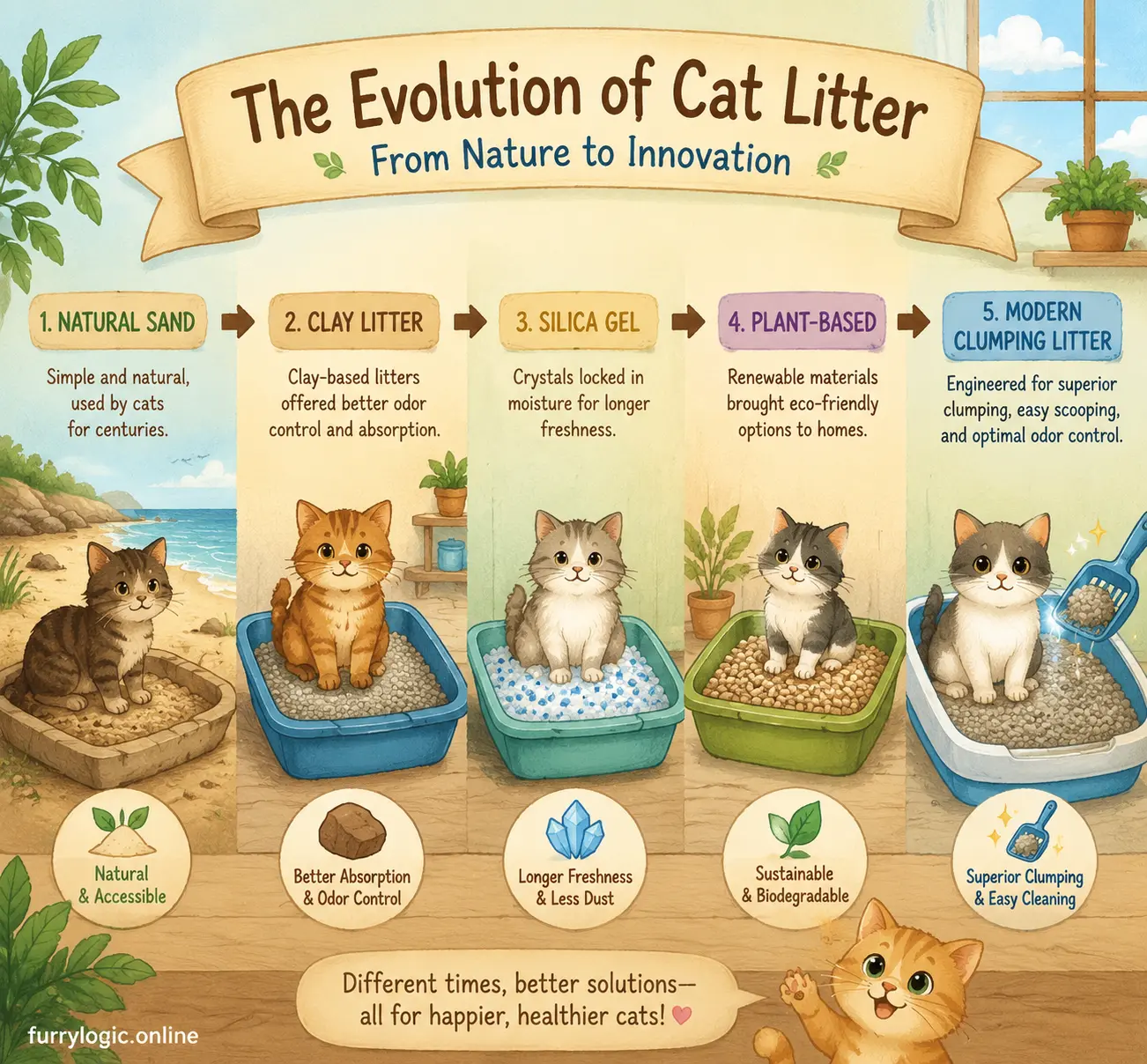
Believe it or not, cat litter hasn’t always looked like the finely processed granules we dump into litter boxes today. Decades ago, many cat owners simply used sand, dirt, shredded newspaper, or ash. Those materials absorbed moisture poorly, smelled terrible after a short time, and required constant replacement. The introduction of clay-based litter in the mid-20th century changed indoor cat care forever because clay could absorb liquids far better than plain dirt or paper.
The real revolution came when manufacturers discovered the unique swelling properties of sodium bentonite clay. This naturally occurring clay expands dramatically when exposed to moisture, forming tight clumps that can be scooped out easily. Suddenly, cat owners no longer had to throw away the entire litter box every day. Instead, they could remove only the waste while keeping the remaining litter relatively clean. That single innovation transformed the entire pet care industry.
Today, clumping litter dominates store shelves worldwide. Recent market data shows clumping formulas account for over 75% of cat litter product sales globally. The reason is simple: convenience. Nobody enjoys scraping sticky sludge from the bottom of a litter pan or dealing with overpowering ammonia odors after just one day.
At the same time, concerns about mining, dust, respiratory health, and sustainability pushed manufacturers to experiment with alternatives. That’s why modern litter products now include corn fibers, recycled paper, tofu, walnut shells, wheat, pine, silica gel crystals, and bamboo blends. Cat litter has quietly evolved into a surprisingly advanced household product where chemistry and environmental science intersect.
The Main Ingredients Found in Clumping Cat Litter
Sodium Bentonite Clay and Why It Dominates the Industry
If clumping litter had a superstar ingredient, it would unquestionably be sodium bentonite. This absorbent clay is the backbone of most traditional clumping litter products because it performs one job exceptionally well: absorbing liquid and turning it into scoopable clumps. Sodium bentonite can absorb many times its own weight in moisture while swelling up to fifteen times its original volume.
That swelling behavior happens because bentonite contains microscopic layered mineral structures. When moisture enters these layers, the particles expand like tiny sponges. Instead of turning into soupy mud, the particles bind together into dense clusters. Those clumps isolate urine and trap odors before they spread through the entire litter box. It’s a little like watching instant cement form around liquid waste.
Clay remains the dominant raw material in the cat litter industry because it’s affordable, reliable, and widely available. Recent industry reports estimate clay-based litter still controls between 58% and 81% of the global market. For households with multiple cats, strong clumping power is especially important because waste accumulates quickly.
Still, clay litter comes with drawbacks. It’s heavy to carry, dusty in some formulas, and environmentally controversial because bentonite mining involves large-scale excavation. Some cat owners also worry about respiratory irritation from fine particles. These concerns explain why alternative litters continue gaining momentum even though clay still dominates store shelves.
Silica Crystals and Moisture Absorption Technology
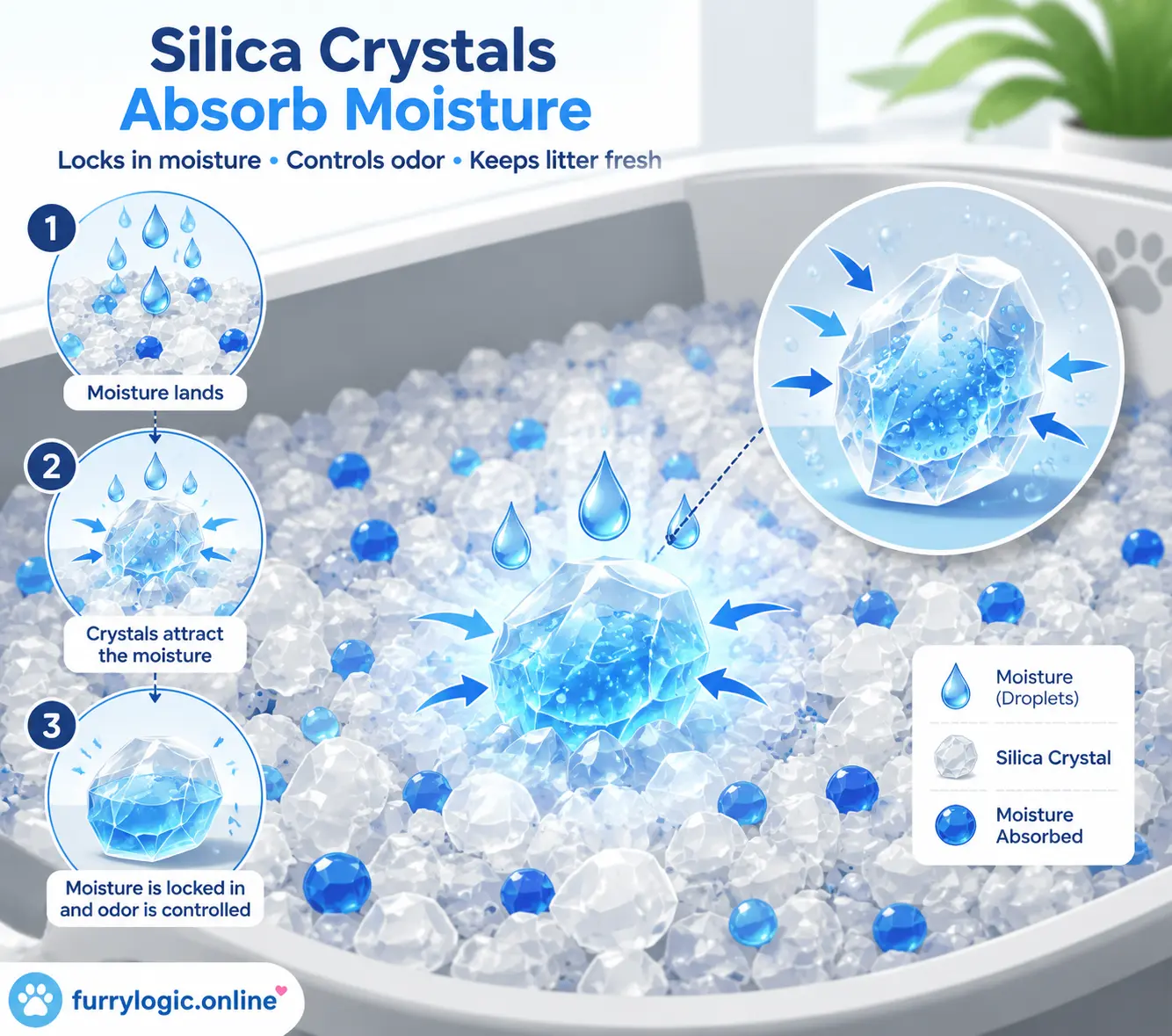
Silica litter looks completely different from clay litter. Instead of soft granules, it usually appears as translucent beads or crystals. These crystals are made from silica gel, a porous form of silicon dioxide designed to trap moisture inside microscopic holes. If you’ve ever found those “Do Not Eat” moisture packets inside shoe boxes or electronics packaging, you’ve already seen silica gel in action.
Unlike bentonite clay, silica crystals don’t always form hard clumps. Instead, they absorb urine internally while slowly evaporating moisture over time. This helps reduce odor because bacteria thrive in wet environments. Silica litter is often praised for lasting longer between full litter changes and producing less tracking around the house.
There’s also ongoing discussion about silica safety. Many concerns online confuse silica gel with crystalline silica dust, which are chemically different materials. Discussions among chemistry experts note that silica gel is generally considered less hazardous than crystalline silica, though excessive dust exposure of any kind may irritate sensitive lungs. That distinction matters because misinformation often spreads quickly in pet communities.
Silica products also tend to be lighter than clay litter, making them easier to transport and pour. Industry reports indicate silica-based litter products continue growing steadily because consumers increasingly prioritize lightweight and low-maintenance formulas.
Plant-Based Ingredients Used in Natural Litters
Walk into a pet store today and you’ll find cat litter made from materials that sound more like grocery items than pet supplies. Tofu litter, corn litter, wheat litter, walnut litter, pine pellets, bamboo fibers, and recycled paper all compete for attention in the growing natural litter market.
These products rely on natural fibers and starches to create clumping behavior. Corn and wheat litters, for example, use plant starches that swell when wet and bind together into scoopable masses. Tofu litter often uses soy pulp fibers, which absorb moisture quickly while remaining biodegradable. Wood and pine products usually rely more on moisture absorption than rock-solid clumping, though newer blends have improved dramatically.
Plant-based litters appeal strongly to environmentally conscious households because many formulas are biodegradable or compostable under proper conditions. Research comparing litter life-cycle impacts suggests plant-based litters generally produce lower greenhouse gas emissions than mined mineral litters.
But natural litter isn’t perfect either. Some users report weaker clumps, higher costs, or issues with insects and humidity in damp climates. Real-world cat owners discussing tofu litter online frequently mention challenges during rainy weather, where moisture can lead to bugs or softer clumps. Choosing the right litter often becomes a balancing act between performance, safety, price, and environmental values.
The Science Behind the Clumping Effect
How Moisture Activates Clumping
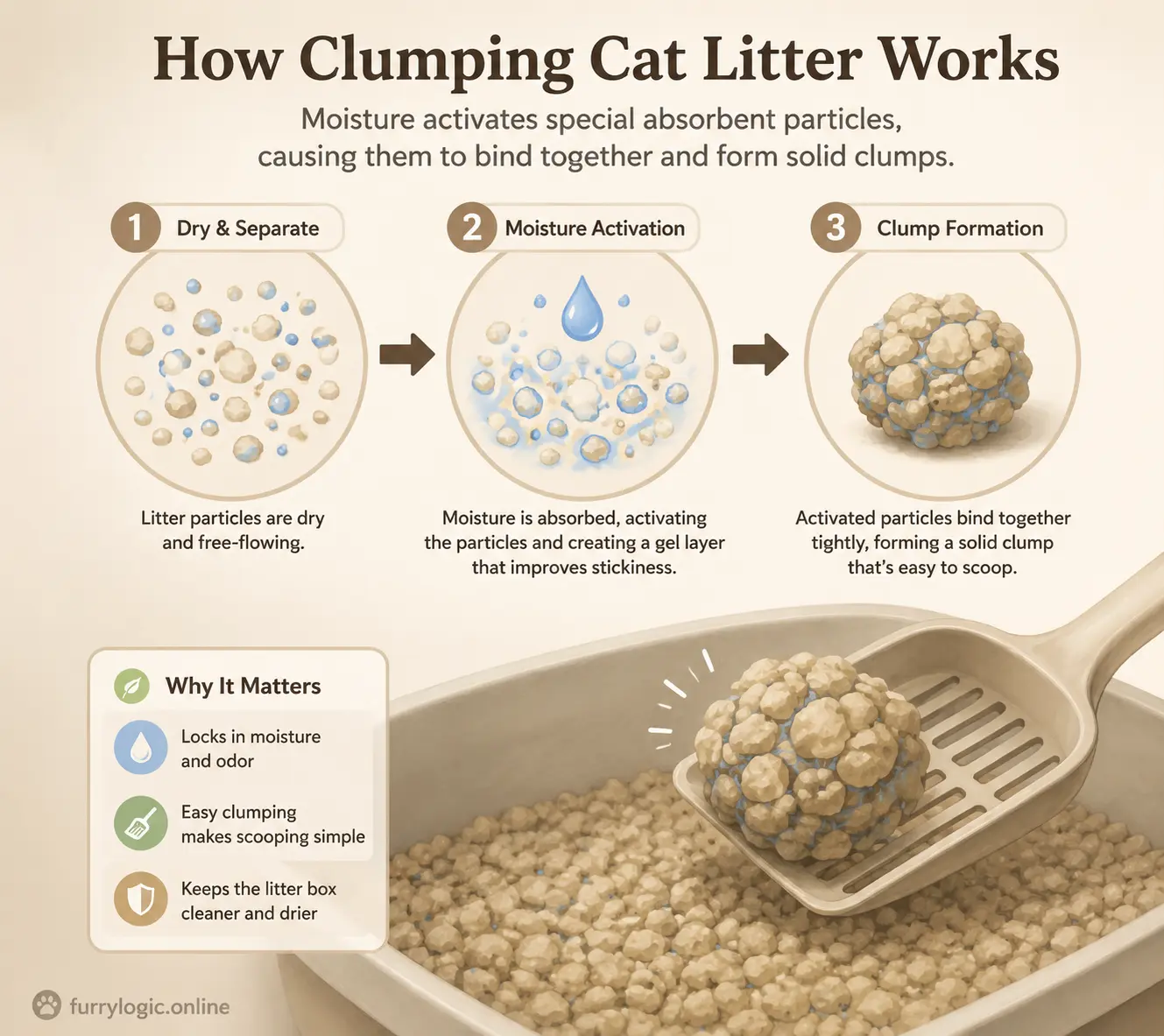
The magic of clumping litter begins the moment liquid touches the surface. Urine rapidly penetrates the top layer of litter particles, triggering physical and chemical reactions depending on the material used. In bentonite clay, moisture slips between mineral sheets, causing them to expand and stick together. In plant-based litter, starches and fibers absorb liquid and bind into compact masses.
Think of it like adding water to dry flour while making dough. Tiny particles suddenly begin attaching to one another, transforming loose powder into a unified structure. Cat litter operates under a similar principle, except manufacturers carefully engineer the particle size, absorbency, and density to maximize clump formation while minimizing mess.
Good clumping litter must strike a delicate balance. If absorption happens too slowly, urine sinks to the bottom of the box and forms sticky sludge. If particles bind too aggressively, clumps may become rock hard and adhere to the pan like concrete. Many cat owners online complain about low-quality litter forming “wet cement” instead of clean scoopable balls.
Modern litter manufacturers constantly adjust formulas to improve performance. Some products include activated charcoal for odor absorption, antimicrobial agents for bacterial control, or blended fibers for better texture. The humble litter box is actually a tiny chemistry lab where moisture, minerals, bacteria, and airflow interact every single day.
Why Solid Clumps Form Instead of Mud
One fascinating aspect of clumping litter is how it manages to create distinct solid masses rather than turning the entire box into sludge. The answer lies in controlled absorption. Only the particles directly surrounding the liquid become activated initially. Those particles bind tightly together while the surrounding dry litter remains loose.
This selective clumping creates what scientists might call a localized moisture containment system. Instead of allowing urine to spread everywhere, the litter isolates it into concentrated clusters. That isolation is critical for odor control because bacteria responsible for ammonia smells thrive in moist conditions.
Particle size also plays a huge role. Fine granules pack together tightly, improving clump strength but often increasing dust. Larger particles reduce dust but may form weaker clumps. Manufacturers constantly experiment with blends to find the sweet spot between durability, cleanliness, and airflow.
Environmental humidity influences performance too. In humid climates, litter may absorb moisture from the surrounding air even before the cat uses the box. Some users in tropical regions report that tofu or plant-based litter can soften prematurely during rainy seasons. That’s why one litter type may perform beautifully in Arizona but struggle in Singapore or Florida.
What Happens Inside the Litter Box Over Time
Odor Control and Ammonia Management
The litter box becomes a surprisingly active ecosystem after repeated use. Urine initially contains urea, but bacteria quickly break it down into ammonia, producing the sharp smell most cat owners recognize instantly. Effective litter must control both moisture and bacterial growth to prevent odors from taking over the room.
Clay litter traps moisture efficiently, slowing bacterial spread by isolating waste inside dense clumps. Some products also add activated charcoal, baking soda, or deodorizing minerals to neutralize smells chemically. Silica gel works differently by continuously pulling moisture away from bacteria-friendly environments.
Odor control becomes especially important in smaller apartments where ventilation may be limited. Recent market research shows consumers increasingly prioritize low-odor and low-dust formulas due to urban living trends and multi-cat households. Nobody wants their living room smelling like a poorly maintained animal shelter.
Cats themselves are also extremely sensitive to odors. Strong artificial fragrances that humans enjoy may overwhelm feline noses. Many veterinarians and experienced cat owners recommend unscented litter because some cats avoid heavily perfumed boxes altogether. A litter box should smell clean; not like a chemical factory trying desperately to hide unpleasant odors.
Bacteria Growth and Moisture Retention
Even the best litter eventually reaches saturation. Tiny leftover particles remain after scooping, gradually accumulating bacteria and odor compounds over time. This explains why litter boxes still require full replacement and cleaning despite daily scooping.
Moisture retention becomes particularly problematic in multi-cat households. More cats mean more urine, faster bacterial growth, and higher ammonia concentrations. In poorly maintained boxes, lingering moisture can create ideal conditions for microbial buildup, leading to odors that no deodorizer can fully mask.
Texture changes are another clue that litter needs replacement. Fresh litter feels dry and loose, while old litter often becomes sticky, dusty, or compacted. Some plant-based litters begin breaking apart after repeated exposure to moisture, reducing clump quality significantly.
Regular maintenance matters more than many people realize. A premium litter ignored for days will perform worse than a budget litter scooped consistently. The best litter system combines quality materials, frequent scooping, proper ventilation, and enough box space for the number of cats in the household.
Differences Between Clay-Based and Alternative Litters
Texture and Cat Preference
Cats can be surprisingly picky about litter texture. Some prefer soft fine granules resembling outdoor soil, while others dislike coarse pellets or unusual textures. Clay litter often wins on familiarity because its sandy feel closely mimics natural digging environments.
Alternative litters vary dramatically in texture. Tofu pellets feel smooth and lightweight, pine pellets feel chunky and woody, and silica crystals may feel strange under sensitive paws. Transitioning too quickly between litter types can confuse or stress some cats, especially older animals accustomed to one specific texture for years.
Cat preference may seem trivial, but it strongly affects litter box behavior. If a cat dislikes the feel or smell of litter, accidents outside the box become more likely. Veterinarians often recommend gradual transitions when changing products to help cats adjust comfortably.
There’s also a behavioral side to litter preference. Cats instinctively bury waste to avoid attracting predators in the wild. Litters that fail to provide adequate digging satisfaction may frustrate them. In many ways, choosing litter resembles choosing bedding or flooring for humans; comfort matters more than people assume.
Dust Levels and Tracking Around the Home
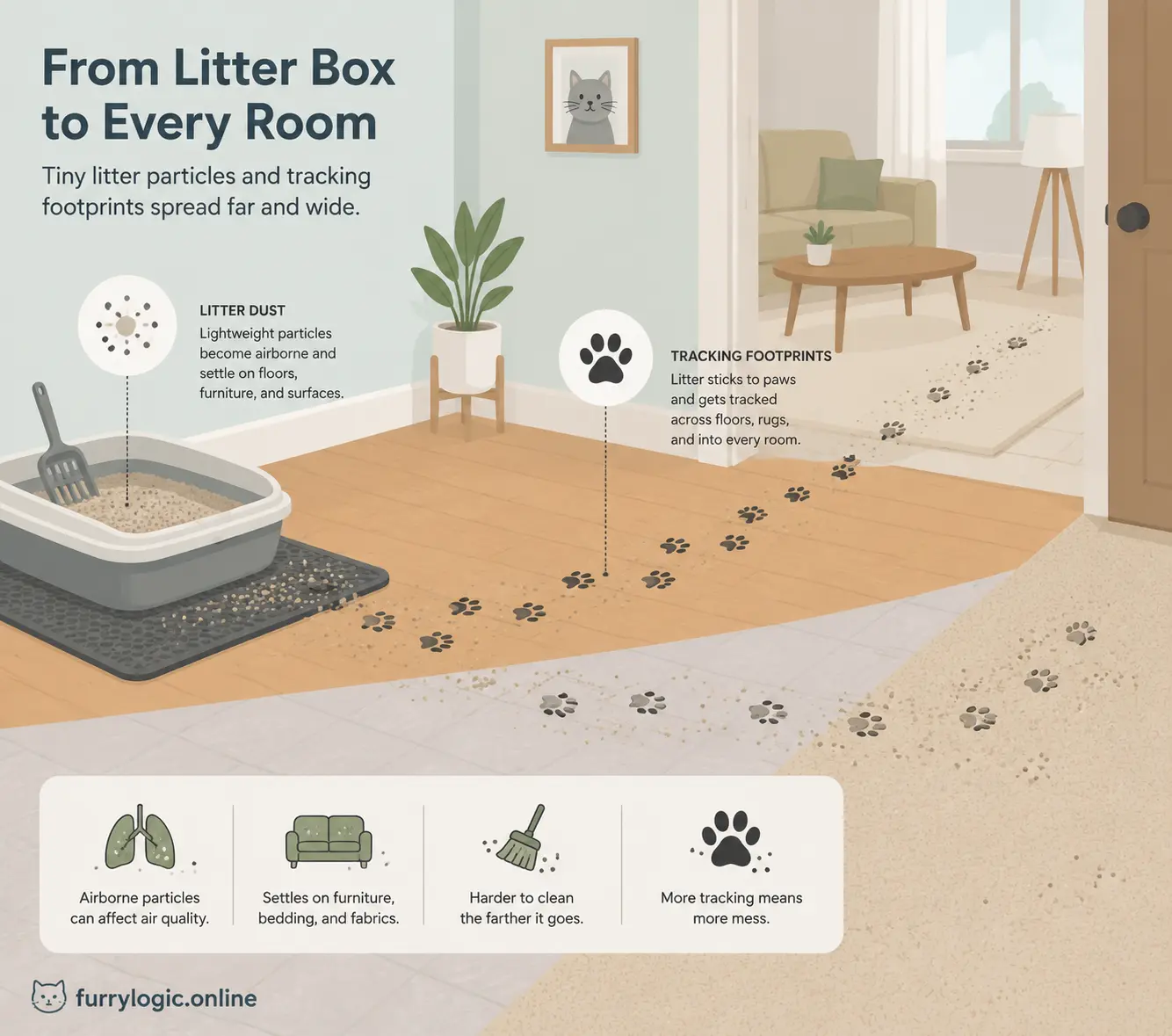
Dust is one of the biggest complaints associated with traditional clay litter. Fine particles become airborne during pouring, digging, or scooping, potentially irritating both feline and human respiratory systems. Online discussions among cat owners frequently focus on finding low-dust formulas because excessive dust can coat furniture and linger in enclosed spaces.
Tracking is another issue. Tiny litter particles cling to paws and spread across floors like glitter after a craft project. Some lightweight litters track less, while others scatter easily around the house.
Natural litters often produce less mineral dust but may create crumbs or lightweight debris instead. Pine pellets tend to stay near the box, while tofu litter may crumble after use. Silica crystals usually track less than fine clay granules, although some cats dislike their texture.
No litter is completely mess-free. The goal is finding the best compromise for your home layout, cleaning habits, and cat’s behavior.
Weight, Absorbency, and Cleanup
Anyone who has carried a large container of clay litter upstairs understands one major disadvantage immediately: weight. Bentonite clay is extremely dense. Lightweight formulas reduce some burden, but plant-based litters and silica crystals are generally easier to transport.
Absorbency differs dramatically too. Clay forms strong clumps quickly, while silica absorbs moisture internally over time. Plant-based litters vary widely depending on ingredients and manufacturing quality.
Cleanup preferences often come down to lifestyle. Busy households may prioritize long-lasting odor control, while environmentally conscious owners may prefer biodegradable materials despite slightly weaker clumping performance.
Choosing litter becomes similar to choosing a car. Some prioritize reliability, others efficiency, others comfort, and others environmental impact. No single litter formula dominates every category.
Safety Considerations for Cats and Humans
Respiratory Concerns From Dust Exposure
Dust exposure remains one of the most debated aspects of cat litter safety. Excessive dust may irritate lungs, especially for cats with asthma or households with respiratory sensitivities. Some online cat owners specifically switched away from bentonite litter after noticing breathing issues or heavy dust clouds during scooping.
The level of risk often depends on dust concentration, ventilation, and litter quality. Premium low-dust products generally perform better than cheap formulas with excessive fine particles.
Cats face unique exposure because they dig directly inside the box, placing their noses close to airborne particles. That’s why many veterinarians recommend avoiding extremely dusty products, especially for kittens or cats with respiratory conditions.
Proper litter box placement also matters. A cramped unventilated bathroom traps airborne particles far more than an open, ventilated room. Even the best litter performs poorly in unhealthy conditions.
Scented Litters and Chemical Sensitivities
Humans often associate strong fragrance with cleanliness, but cats experience smell far more intensely than we do. Some scented litters contain perfumes that may irritate sensitive cats or discourage litter box use entirely.
Fragrances can also mask underlying hygiene problems temporarily instead of solving them. A clean litter box should not require overwhelming perfume clouds to smell acceptable.
Sensitive households sometimes report headaches or irritation from heavily scented products as well. Unscented formulas are increasingly popular because they focus on moisture control and odor absorption rather than fragrance overload.
Risks for Kittens and Multi-Cat Homes
Kittens occasionally ingest litter accidentally while exploring. Clumping products that swell dramatically may pose concerns if consumed in large amounts, which is why many experts recommend non-clumping litter for very young kittens until they mature.
Multi-cat households face additional challenges because higher waste volume increases odor, moisture saturation, and bacterial buildup. Larger boxes, more frequent scooping, and stronger odor-control formulas become essential in these environments.
Monitoring litter box habits also provides valuable health insights. Changes in urine volume, stool consistency, or litter avoidance can signal medical problems early. Some advanced silica litters even incorporate color-changing technology designed to highlight urine abnormalities.
Environmental Impact of Cat Litter Materials
Mining Effects of Clay-Based Litters
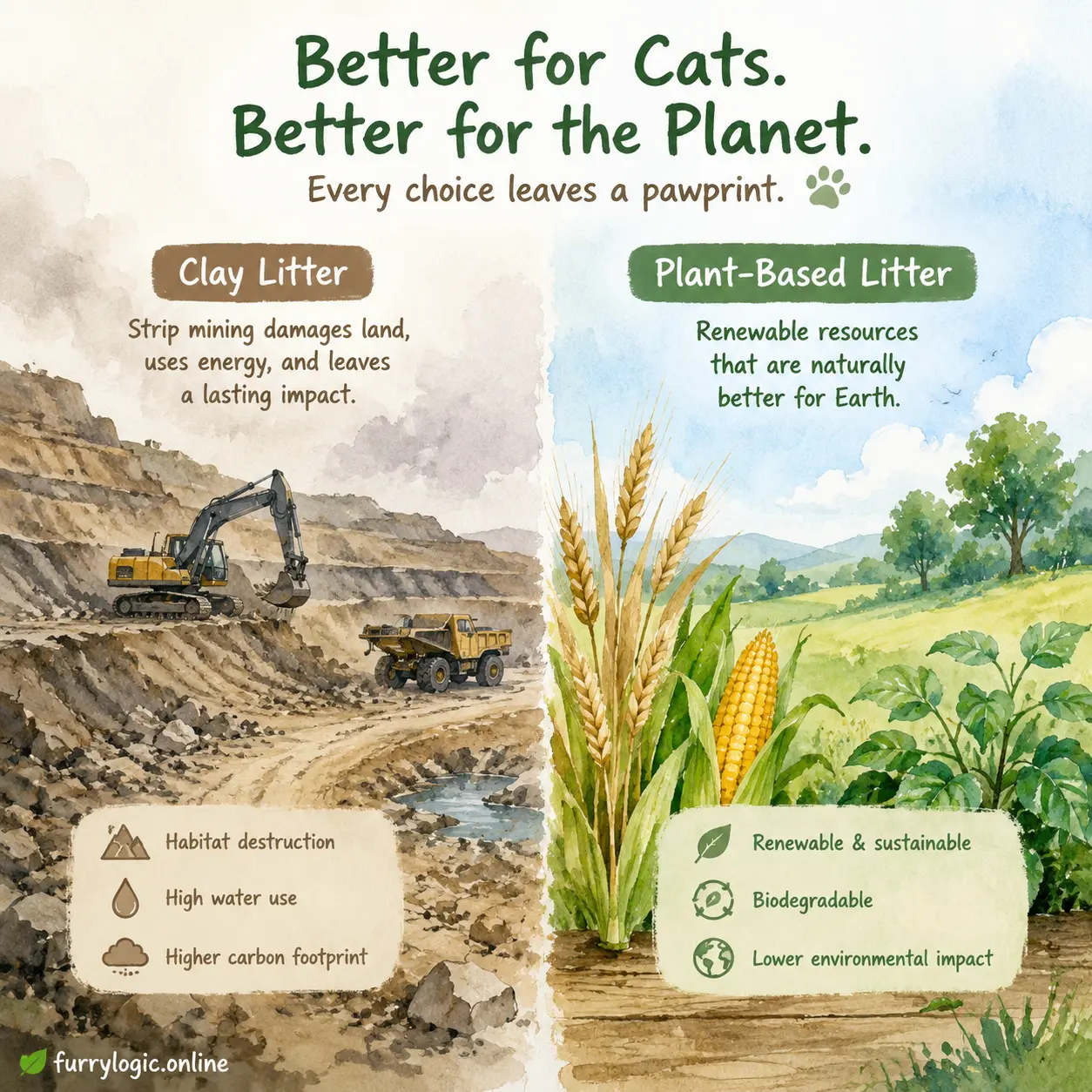
Traditional clay litter depends heavily on strip mining and mineral extraction. Bentonite mining requires removing large quantities of earth, consuming energy, and transporting extremely heavy materials long distances. Environmental studies comparing litter materials consistently show mineral-based litters produce higher emissions than many plant-based alternatives.
Transportation also adds environmental costs because clay litter is so heavy. Freight fuel consumption becomes significant when millions of tons of litter move worldwide every year.
These environmental concerns increasingly influence consumer choices. Many households now seek renewable or biodegradable alternatives that reduce mining dependence.
Biodegradable and Renewable Alternatives
Plant-based litters offer compelling environmental advantages because many use agricultural by-products or renewable materials. Corn husks, tofu pulp, walnut shells, bamboo fibers, and recycled paper all reduce reliance on mined minerals.
Research suggests plant-based litters generally produce lower greenhouse gas emissions and consume fewer non-renewable resources than clay products. Some biodegradable litters can even be composted under appropriate conditions, though local regulations vary widely.
Still, eco-friendly doesn’t always mean perfect. Agricultural production also consumes water, land, and energy. Some biodegradable products require intensive drying or processing. Sustainability often depends on manufacturing practices as much as raw materials themselves.
The future of cat litter likely involves hybrid innovation: formulas blending strong clumping performance with lower environmental impact.
How to Choose the Right Cat Litter
Matching Litter to Your Cat’s Behavior
Choosing litter starts with your cat, not marketing claims. Some cats care deeply about texture, while others prioritize cleanliness or odor levels. Older cats may prefer softer litter on sensitive paws, while long-haired cats benefit from low-tracking formulas.
Observe how your cat interacts with the litter box. Excessive digging, hesitation, or accidents outside the box may indicate dissatisfaction. Sometimes the solution is as simple as changing texture or reducing fragrance.
Cats with respiratory conditions may benefit from ultra-low-dust or natural formulas. Multi-cat households often require high-performance odor control and strong clumping ability.
The “perfect” litter is ultimately the one your cat consistently uses comfortably.
Choosing Based on Lifestyle and Budget
Lifestyle matters just as much as feline preference. Apartment dwellers may prioritize odor control and tracking reduction. Eco-conscious households may value biodegradability. Busy owners may prefer longer-lasting silica formulas.
Budget plays a role too. Clay litter generally remains the most affordable option upfront, while premium natural or crystal products often cost more initially but may last longer.
Here’s a quick comparison table:
| Litter Type | Main Material | Clumping Strength | Dust Level | Environmental Impact | Typical Cost |
|---|---|---|---|---|---|
| Clay/Bentonite | Sodium bentonite clay | Excellent | Medium to High | Higher due to mining | Low |
| Silica Crystal | Silica gel | Moderate | Low | Moderate | Medium to High |
| Tofu | Soy pulp fibers | Good | Low | Low | Medium |
| Pine/Wood | Wood fibers | Moderate | Low | Low | Medium |
| Corn/Wheat | Plant starches | Good | Low to Medium | Low | Medium |
The best choice often comes from testing a few products gradually rather than expecting one universal solution immediately.
Conclusion
Clumping cat litter is far more sophisticated than it appears at first glance. Behind those simple granules lies a carefully balanced mix of mineral science, moisture control, odor management, and environmental engineering. Traditional bentonite clay remains dominant because of its exceptional clumping power and affordability, but growing concerns about dust, mining, and sustainability continue driving innovation toward plant-based and lightweight alternatives.
Understanding how litter works helps cat owners make smarter decisions for both their pets and households. Moisture absorption, particle structure, bacterial control, dust production, and texture all influence whether a litter succeeds or fails in daily life. What works beautifully for one cat may frustrate another completely.
The good news is that modern cat owners have more choices than ever before. Whether you prioritize low dust, strong odor control, sustainability, affordability, or feline comfort, there’s now a litter formula designed for your specific needs. The trick is finding the balance that keeps both you and your cat happy every single day.
FAQs
1. What ingredient makes cat litter clump together?
The primary ingredient responsible for clumping in traditional litter is sodium bentonite clay. It expands dramatically when exposed to moisture, binding particles together into solid scoopable clumps.
2. Is clumping cat litter safe for cats?
Most clumping litters are considered safe when used properly, but excessive dust or ingestion may pose concerns for sensitive cats or young kittens. Low-dust and unscented formulas are often recommended.
3. Why does some litter create more dust than others?
Dust levels depend on particle size, manufacturing quality, and material type. Fine clay granules generally create more airborne dust than larger pellets or silica crystals.
4. Are plant-based cat litters better for the environment?
Plant-based litters are often considered more environmentally friendly because they use renewable materials and reduce mining impacts associated with bentonite clay extraction.
5. How often should clumping litter be fully replaced?
Even with daily scooping, most litter boxes require complete replacement and cleaning every 2 to 4 weeks depending on the number of cats, litter quality, and odor buildup.

Dorian Keene is an American content writer and blogger based in Boise, Idaho. At 31 years old, he has spent several years researching and writing practical, well-sourced articles focused on consumer guides, digital trends, and lifestyle topics. His experience working with online publications has helped him develop a clear, trustworthy writing style that prioritizes accuracy and reader value. As a contributor to furrylogic.online, he is committed to creating informative content that reflects careful research, real-world insights, and dependable editorial standards.