
Dreams have a strange way of sticking with us. You wake up, make your coffee, try to move on with your day, and then suddenly the image returns: a cat staring at you from the shadows, a kitten curled up in your lap, or maybe an angry cat scratching at the door. Dreams about cats are surprisingly common, and people across cultures have spent centuries trying to figure out why these mysterious animals appear in our subconscious so often.
Psychology researchers studying dream patterns have found that animals appear regularly in dreams, with cats showing up especially often among people who either own cats or strongly associate emotional meaning with them. Cats are powerful dream symbols because they already carry emotional and cultural weight in everyday life. They are independent yet affectionate, calm yet unpredictable, comforting yet mysterious. That contradiction gives the human mind plenty of material to work with while dreaming.
Some people believe cat dreams are spiritual messages. Others see them as reflections of stress, intuition, emotions, relationships, or hidden fears. The truth is probably less magical and more personal. Dreams tend to borrow symbols from our waking life and reshape them into emotional stories. A cat in a dream often says less about the animal itself and more about what the cat represents to you.
Before diving into interpretations, one thing matters most: context. A peaceful cat dream feels entirely different from a nightmare involving an aggressive animal. Your emotions during the dream are often the biggest clue to understanding what your subconscious might be processing.
Why Cats Appear in Dreams So Often
The Psychological Connection Between Cats and Emotions
Cats occupy a unique place in the human imagination. Dogs are usually associated with loyalty and openness, but cats feel more mysterious. They move quietly, disappear unexpectedly, and behave according to their own rules. That emotional complexity makes them ideal dream symbols. According to multiple dream interpretation studies and psychological analyses, cats are commonly linked to intuition, independence, hidden emotions, and personal boundaries.
The human brain loves symbols because symbols simplify complicated emotions. Instead of directly dreaming about trust issues, loneliness, or emotional uncertainty, your brain may transform those feelings into the image of a cat. Think of dreams as emotional theater. The brain casts objects, people, and animals into symbolic roles that communicate feelings more effectively than direct explanations.
Cats also represent contradictions that humans deeply relate to. A cat can be affectionate one moment and distant the next. Many people unconsciously identify with that emotional duality. You might crave closeness while still wanting independence. You may trust your instincts while also doubting yourself. Cats naturally mirror those emotional tensions, which is why they appear so frequently in dreams.
Psychologists studying dreams often refer to the “continuity hypothesis,” the idea that dreams reflect waking life experiences and unresolved emotional concerns. If cats already hold emotional meaning in your real life, they become convenient symbols during sleep. The subconscious mind is practical in that way. It uses emotionally loaded images because they quickly communicate deeper feelings without words.
Why the Brain Uses Familiar Symbols During Sleep
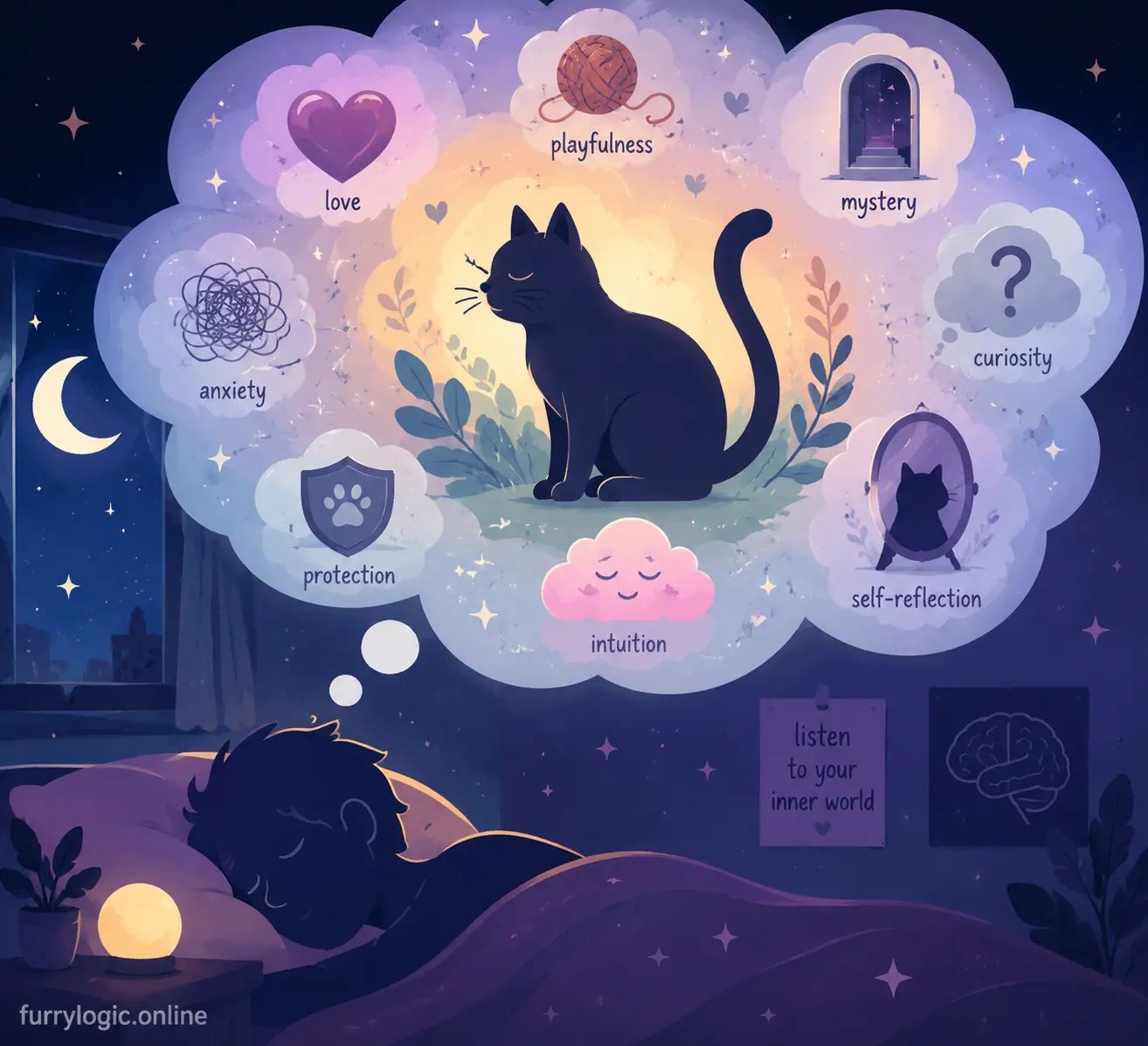
Dreams rarely invent entirely new material. Instead, they remix what already exists in your memory. Your brain pulls images, emotions, conversations, fears, and experiences together like a film editor creating a strange late-night movie. Cats appear often because they are emotionally memorable creatures. Even people who do not own cats usually have strong opinions about them.
Neuroscientists still debate the exact purpose of dreams, but some theories suggest dreams help process emotions and organize memory. During sleep, the brain appears to test emotional scenarios, replay experiences, and explore possible reactions in a safer mental environment. In that sense, a dream about a cat may not predict the future at all. It may simply reflect your brain trying to make sense of emotional tension.
Imagine the subconscious as a storyteller working with limited props. If the feeling involves independence, caution, curiosity, comfort, or unpredictability, the “cat” symbol becomes incredibly useful. A snake might communicate danger. A dog might symbolize trust. A cat exists in the middle ground between comfort and uncertainty, which is exactly where many human emotions live.
This is also why recurring dream symbols often feel deeply personal. Two people can dream about identical cats and experience completely different meanings. For one person, a cat may represent childhood safety and affection. For another, it could symbolize betrayal or emotional distance. The symbol matters less than the emotional connection attached to it.
The Emotions Surrounding the Dream Matter Most
Fear, Comfort, Curiosity, and Anxiety in Cat Dreams
One of the biggest mistakes people make with dream interpretation is focusing only on the object instead of the emotion. The emotional atmosphere of the dream usually matters more than the actual cat itself. A calm white cat sitting beside you creates a very different emotional experience from a hissing cat chasing you through a dark hallway.
If the dream felt peaceful, your subconscious may be reflecting emotional balance, trust in your instincts, or growing self-confidence. Friendly cats in dreams are often associated with emotional comfort and healthy independence. They can symbolize intuition working properly, emotional healing, or the desire for calm companionship.
Aggressive cat dreams tend to carry emotional tension. An attacking cat may reflect stress, conflict, hidden anger, mistrust, or unresolved fear. Sometimes the “threat” in the dream is not another person at all. It may represent your own ignored emotions demanding attention. Dreams are not always subtle. Sometimes the subconscious scratches at the door until you finally notice what has been bothering you.
Curiosity is another important emotion in cat dreams. Cats naturally inspire fascination because they seem both familiar and unknowable. If the dream involved following a cat, watching one silently, or trying to understand it, your subconscious may be encouraging exploration. That could mean emotional growth, personal discovery, or confronting uncertainty in waking life.
How Emotional Tone Changes Dream Interpretation
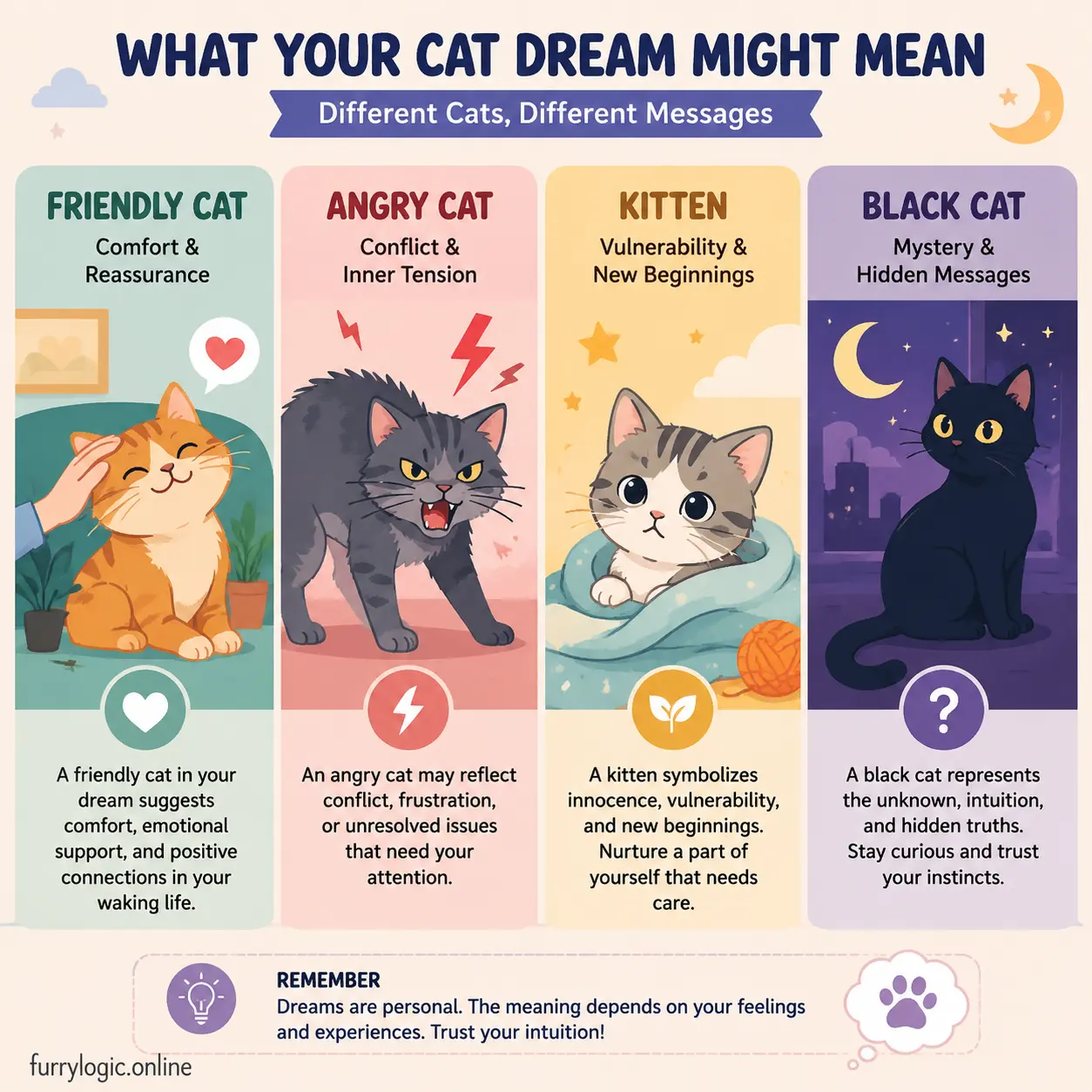
Here is where dream interpretation becomes less like science and more like emotional detective work. Context changes everything. A black cat in a joyful dream may symbolize confidence in uncertainty or trust in intuition. The same black cat in a nightmare could represent anxiety, fear of betrayal, or hidden worries. The emotional tone acts like lighting in a movie scene. It changes how every symbol feels.
This is why generic dream dictionaries can sometimes be misleading. They often treat symbols as fixed meanings instead of emotional experiences. Real dreams are messier than that. Your personal feelings shape the meaning more than any universal rule ever could.
For example, someone who grew up loving cats may dream of kittens during periods of emotional vulnerability or comfort. Someone who had frightening experiences with cats may interpret identical dreams as warnings or emotional danger. Neither interpretation is objectively wrong because dreams operate through personal association rather than strict logic.
When trying to understand a dream, it helps to ask simple questions instead of searching for mystical certainty. Did the dream leave you anxious or calm? Did the cat feel protective or threatening? Did you wake up feeling comforted, confused, guilty, nostalgic, or fearful? Those emotional clues often reveal far more than the visual details alone.
Common Dream Scenarios and Their Possible Meanings
Dreaming About Friendly Cats
Friendly cats are usually connected to emotional balance, intuition, and comfort. A calm cat sitting beside you may symbolize trust in yourself or satisfaction with your emotional life. Some interpretations also connect friendly cats with creativity and self-expression because cats are often associated with curiosity and independence.
If the cat in your dream approaches you willingly, the subconscious message may involve openness to emotional connection. It could also reflect healing after stress or emotional exhaustion. Dreams often exaggerate feelings, so even a small sense of inner peace in waking life may appear symbolically as a warm, affectionate animal during sleep.
Dreams About Aggressive or Attacking Cats
Aggressive cat dreams tend to feel intense because cats are physically small but emotionally unpredictable. A hissing, scratching, or attacking cat can symbolize emotional conflict, mistrust, fear, or suppressed frustration. Sometimes these dreams occur during periods of interpersonal tension when someone feels emotionally cornered or misunderstood.
The dream may also represent conflict with your own instincts. Many people ignore gut feelings during stressful situations. An attacking cat can symbolize intuition demanding attention in an uncomfortable way. In simpler terms, your subconscious may be saying, “You already know something is wrong. Stop pretending you don’t.”
Seeing Kittens in Dreams
Kittens usually symbolize vulnerability, innocence, emotional needs, or new beginnings. They may appear during times of emotional transition, especially when someone feels protective, uncertain, or hopeful about the future. Kittens can also represent neglected emotional needs that require attention and care.
A dream involving abandoned kittens often connects to feelings of emotional responsibility. Meanwhile, playful kittens may symbolize optimism, emotional healing, or rediscovering curiosity after stress. Much depends on the emotional tone of the dream itself.
Dreams About Stray Cats
Stray cats often symbolize independence mixed with emotional uncertainty. Unlike domestic cats, stray cats carry associations of survival, caution, and emotional distance. Dreaming of feeding or rescuing a stray cat may reflect compassion, loneliness, or a desire to reconnect with neglected parts of yourself.
Some dream interpretations connect stray cats with feelings of being emotionally disconnected from others. Others interpret them as symbols of resilience and adaptability. The subconscious loves layered metaphors, and stray cats fit perfectly into that pattern.
Black Cats in Dreams
Black cats are probably the most misunderstood dream symbols because cultural superstition heavily influences interpretation. In some traditions, black cats symbolize mystery, protection, intuition, or spiritual awareness. In others, they are associated with bad luck or hidden danger.
The important thing is not the superstition itself but your emotional response to it. If black cats feel comforting to you, the dream may symbolize confidence in uncertainty or trust in your instincts. If they trigger anxiety, the dream may reflect hidden fears or emotional insecurity.
Injured or Sick Cats in Dreams
Dreams involving injured animals often feel emotionally powerful because they tap directly into empathy. An injured cat may symbolize emotional exhaustion, ignored intuition, damaged trust, or vulnerability. In some cases, these dreams happen during periods when someone feels emotionally neglected or overwhelmed.
The dream may also reflect concern for someone else. The subconscious often disguises emotional pain through symbolic imagery because direct emotional confrontation can feel too intense during waking life.
How Personal Experiences Shape Dream Symbols
Childhood Memories and Emotional Associations
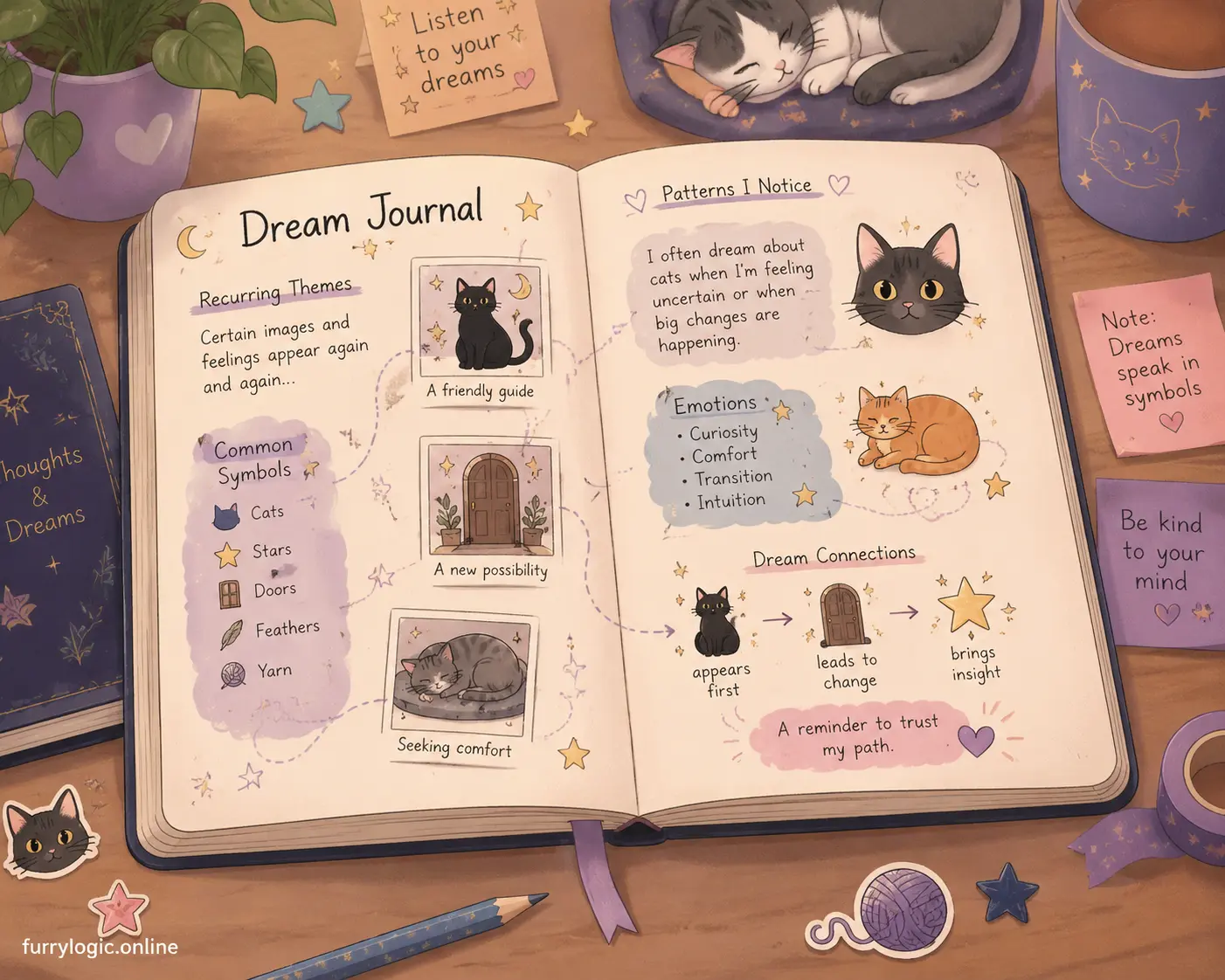
Dream interpretation becomes much more meaningful when personal history enters the conversation. Childhood experiences strongly shape how symbols appear in dreams. A person raised around affectionate cats may associate them with warmth, safety, and companionship. Someone scratched or frightened by cats as a child may attach fear or unpredictability to the same symbol.
This is why universal dream meanings rarely tell the whole story. Dreams are built from emotional memory, not objective definitions. Your subconscious creates symbols from your own experiences, relationships, fears, and desires.
Memory also explains why certain dreams feel emotionally stronger than others. A seemingly ordinary dream about a cat can trigger deep nostalgia because it unconsciously connects to childhood emotions. The brain stores emotional associations for years, sometimes decades. Dreams often reopen those emotional files unexpectedly.
Why Cat Owners Dream About Cats More Frequently
Research suggests people who interact closely with animals are more likely to dream about them. That probably sounds obvious, but it reinforces an important point: dreams are heavily influenced by waking life experiences.
Cat owners often describe dreams where their pets behave symbolically rather than realistically. A calm pet cat may suddenly talk, disappear, multiply, or guide the dreamer somewhere strange. These unusual behaviors usually matter more than the animal itself because dreams operate emotionally rather than logically.
In some recurring dreams shared online, people describe cats appearing repeatedly during stressful periods, emotional transitions, or moments of uncertainty. That repetition may reflect the brain using a familiar emotional symbol to process ongoing feelings.
Cultural Views of Cats in Dream Interpretation
Ancient Egyptian Beliefs About Cats
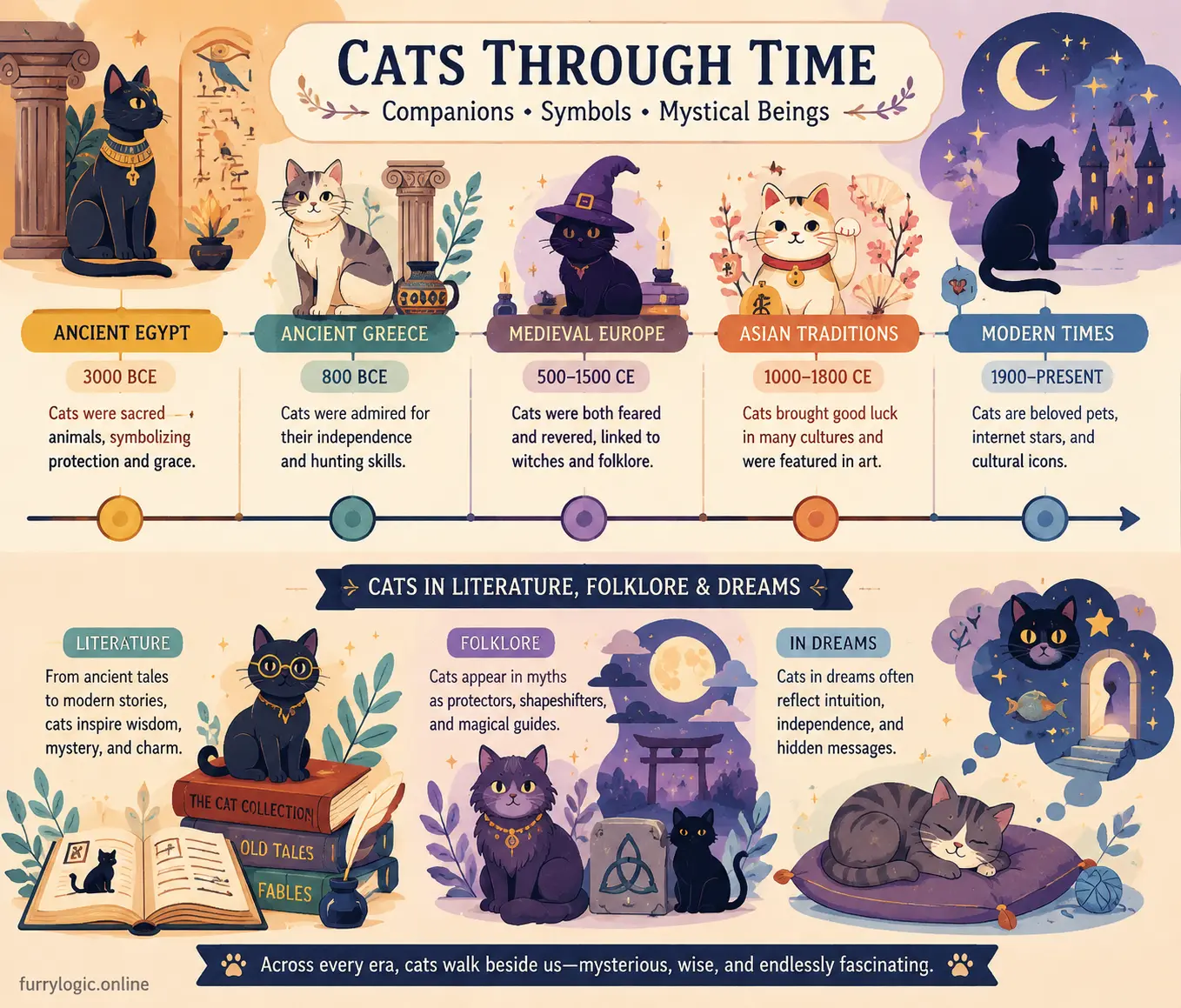
Ancient Egyptians viewed cats with extraordinary respect. Cats were associated with protection, fertility, grace, and divine energy. The goddess Bastet, often depicted with feline features, symbolized home, protection, and feminine strength. Because of that cultural background, dreams involving cats were sometimes interpreted as spiritually meaningful or protective.
Even today, traces of those beliefs remain in modern symbolism. Cats still carry associations of mystery and spiritual awareness partly because ancient civilizations elevated them beyond ordinary animals.
Islamic Perspectives on Cat Dreams
In many Islamic traditions, cats are viewed positively because of their cleanliness and historical association with kindness and companionship. Some Islamic dream interpretations suggest cats can symbolize personal relationships, responsibility, financial concerns, or emotional caution depending on the dream’s details.
As with all dream interpretation traditions, context matters heavily. A peaceful cat and an aggressive cat would not carry identical meanings. The emotional atmosphere shapes the interpretation more than the symbol alone.
Western Superstitions and Symbolism
Western culture often treats cats as symbols of mystery, independence, femininity, and intuition. Black cats especially became linked to superstition during medieval periods, influencing modern dream interpretation even today.
Movies, books, folklore, and social media continue reinforcing these symbolic associations. The subconscious absorbs cultural imagery constantly, which means modern dream symbolism is influenced not just by personal experience but by collective storytelling as well.
Patterns Worth Noticing Over Time
Repeating Cat Dreams and Recurring Themes
Recurring dreams deserve extra attention because repetition usually signals unresolved emotional material. If cats appear repeatedly in your dreams, the subconscious may be circling around a specific emotional issue that has not fully been processed.
Patterns matter more than isolated dreams. Maybe the same cat keeps appearing whenever you feel emotionally overwhelmed. Maybe aggressive cats appear during conflict-heavy periods in your life. Maybe kittens show up whenever you begin something emotionally new or uncertain.
Recurring dreams do not necessarily predict the future. More often, they reflect emotional repetition in waking life. The subconscious tends to repeat symbols until the emotional issue behind them changes or resolves.
Keeping a Dream Journal for Better Insight
Dreams fade quickly after waking, which makes patterns difficult to notice without recording them. Keeping a simple dream journal can help reveal emotional trends over time. You do not need to write pages of analysis. Even brief notes about the dream’s emotions, symbols, and atmosphere can become useful later.
Over time, certain themes often emerge. You may notice cat dreams appearing during stressful work periods, emotional uncertainty, relationship changes, or moments requiring independence and intuition. Patterns reveal more than isolated interpretations because they connect dreams to real emotional cycles.
Making Sense of the Message Behind the Dream
Questions to Ask Yourself After the Dream
Dream interpretation becomes more useful when approached thoughtfully instead of superstitiously. Instead of asking, “What does this symbol universally mean?” try asking more personal questions.
- What emotions stood out most in the dream?
- Did the cat feel comforting, threatening, mysterious, or familiar?
- Does the dream connect to any current stress, relationship, or emotional conflict?
- Have similar dreams appeared during specific periods of your life?
- What personal associations do you already have with cats?
These questions encourage self-awareness rather than magical thinking. Dreams are often emotional mirrors, not prophecies.
When a Dream Is Probably Just a Dream
Not every dream contains hidden wisdom. Sometimes the brain is simply recycling random material from the day. If you spent hours watching cat videos, visited a friend with pets, or scrolled through social media before bed, your dream may not carry deeper symbolic meaning at all.
Humans naturally search for patterns because the brain is built to create meaning. That instinct can be helpful, but it can also lead people toward exaggerated interpretations. A dream about a cat does not automatically predict danger, spiritual awakening, or life transformation.
Sometimes the dream simply reflects stress, memory, emotion, or imagination mixing together during sleep. And honestly, that is already fascinating enough.
Conclusion
Dreams about cats remain popular because cats themselves are emotionally layered creatures. They symbolize independence, mystery, intuition, comfort, unpredictability, and emotional complexity all at once. The meaning behind a cat dream depends far less on fixed superstition and far more on your personal emotions, memories, and experiences.
A peaceful cat may reflect emotional balance or trust in your instincts. An aggressive cat could symbolize unresolved tension, fear, or ignored emotions. Kittens may represent vulnerability or emotional renewal. Stray cats can point toward loneliness, resilience, or independence. The emotional tone surrounding the dream changes everything.
The most useful way to interpret dreams is not to treat them as magical fortune cookies. Dreams are emotional reflections shaped by memory, culture, stress, imagination, and subconscious processing. Paying attention to recurring themes and emotional patterns can sometimes reveal insights about your waking life, but interpretation works best when grounded in self-awareness instead of superstition.
Cats appear in dreams so often because they already occupy a powerful symbolic space in human psychology. They are familiar enough to feel personal and mysterious enough to carry emotional depth. In many ways, they are the perfect dream symbol: impossible to fully explain and strangely unforgettable.
FAQs
1. Are dreams about cats always symbolic?
Not always. Some dreams are emotionally meaningful, while others are simply random combinations of memory and imagination. If the dream feels emotionally intense or recurring, it may hold more personal significance.
2. What does it mean if a cat attacks you in a dream?
Aggressive cat dreams are often linked to emotional conflict, stress, fear, mistrust, or ignored intuition. The emotional atmosphere of the dream matters more than the attack itself.
3. Why do black cats appear in dreams so often?
Black cats carry strong cultural symbolism tied to mystery, intuition, fear, and superstition. Your personal feelings about black cats heavily influence what the dream may represent emotionally.
4. Do cat owners dream about cats more frequently?
Yes. Research suggests people who spend more time around animals are more likely to dream about them because dreams often reflect waking life experiences and emotional familiarity.
5. Should recurring cat dreams worry me?
Recurring dreams are usually signs of unresolved emotions or repeated stress rather than supernatural warnings. Tracking patterns and emotional triggers may help you better understand why the dreams keep appearing.

Dorian Keene is an American content writer and blogger based in Boise, Idaho. At 31 years old, he has spent several years researching and writing practical, well-sourced articles focused on consumer guides, digital trends, and lifestyle topics. His experience working with online publications has helped him develop a clear, trustworthy writing style that prioritizes accuracy and reader value. As a contributor to furrylogic.online, he is committed to creating informative content that reflects careful research, real-world insights, and dependable editorial standards.