
Cats are mysterious little creatures. One minute they are sprinting through the house like furry race cars, and the next they are curled up in places that make absolutely no sense to humans. One behavior that often alarms cat owners is when a cat suddenly starts laying or sleeping in the litter box. At first glance, it might look strange, funny, or even harmless. But in many cases, it is your cat’s way of waving a tiny red flag and saying, “Something isn’t right.”
Veterinarians and feline behavior experts agree that cats usually avoid resting where they eliminate waste. That is why a cat choosing the litter box as a resting place deserves attention. Sometimes the reason is emotional. Sometimes it is medical. And sometimes it is simply because the litter box feels familiar and secure during stressful moments. According to recent veterinary resources, stress-related urinary issues such as Feline Idiopathic Cystitis (FIC) are among the most common urinary conditions in cats, and stress is considered a major contributing factor.
Before panic sets in, it helps to understand why cats do this behavior in the first place. The litter box may represent safety, scent familiarity, privacy, or physical necessity. Your cat is not trying to annoy you. In many cases, she is trying to cope with discomfort, fear, or confusion the only way she knows how.
Why the Litter Box Can Feel Like a Safe Space
Familiar Scents Create Emotional Security
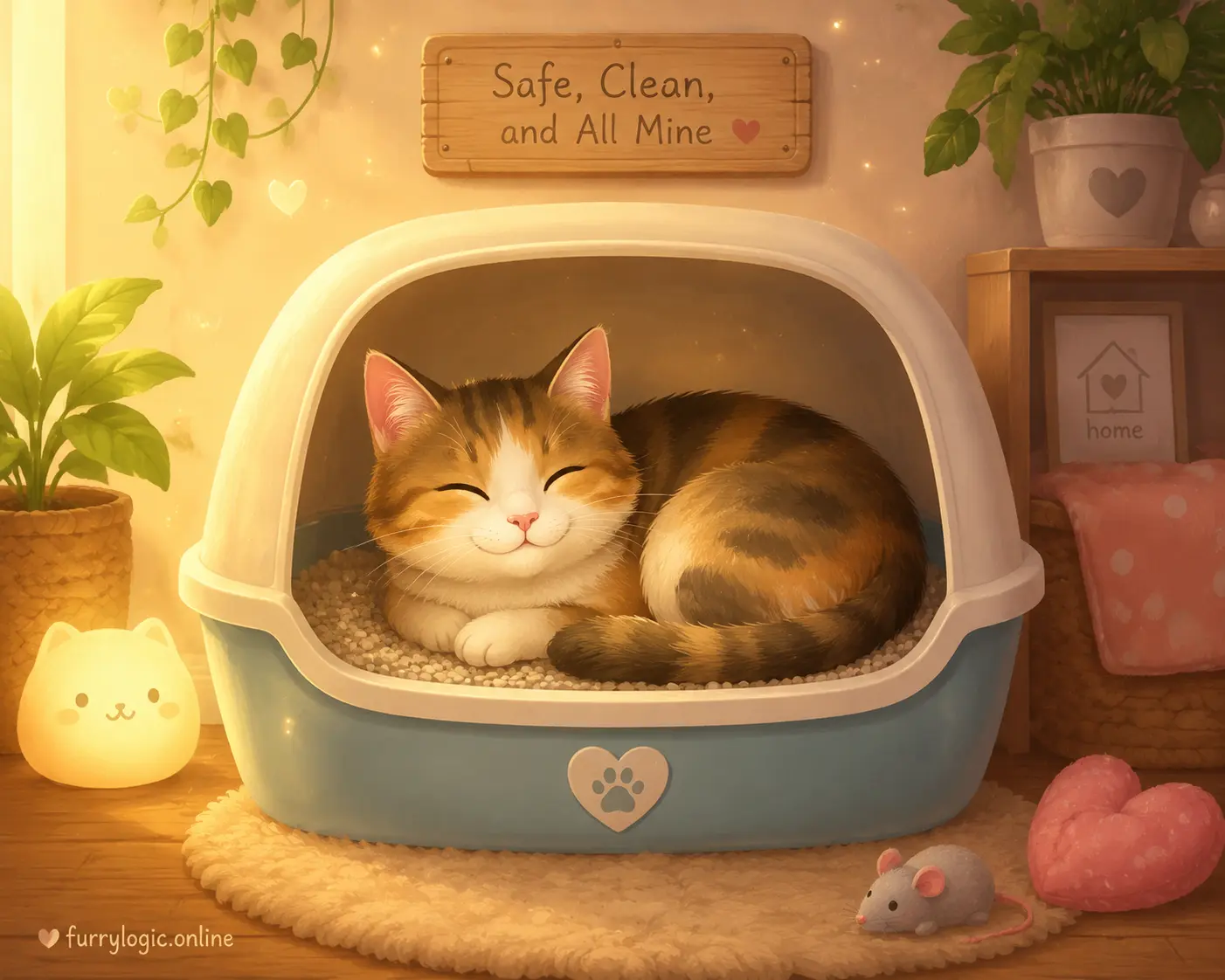
To humans, a litter box is a cleaning chore. To a cat, it is a deeply familiar scent zone loaded with personal information. Cats rely heavily on scent to understand the world around them. Their smell acts almost like an emotional GPS system. When a cat feels overwhelmed, anxious, or threatened, she may seek out areas that smell strongly like herself because those scents feel predictable and comforting. The litter box carries her strongest scent markers, making it feel like a secure emotional anchor in moments of uncertainty.
Imagine being dropped into a crowded airport in a foreign country. Suddenly you hear your native language spoken nearby. That tiny bit of familiarity instantly makes you feel calmer. Cats experience something similar with scent. If the home environment changes suddenly, the litter box may become the only place that still smells exactly the same. This is especially common after moving homes, introducing a new pet, or rearranging furniture.
Some cats also prefer covered litter boxes because they resemble enclosed hiding places. An enclosed litter area can feel shielded from outside stressors. According to recent feline behavior discussions and veterinary resources, fearful or anxious cats often retreat to confined areas that feel private and controllable.
This behavior becomes more understandable when you remember that cats are both predators and prey animals. Even domestic cats retain instincts that encourage them to seek safety when they feel vulnerable. The litter box may simply become a temporary emotional bunker during stressful situations.
Enclosed Spaces Reduce Anxiety
Cats love enclosed spaces because they provide visual protection and limit surprise attacks from behind. That explains the obsession with cardboard boxes, laundry baskets, closets, and hidden corners. A covered litter box checks many of the same psychological boxes. It offers boundaries, quietness, and familiarity all at once.
An anxious cat may spend extra time inside the litter box because it temporarily lowers her stress level. Kittens especially may lounge in litter boxes while adjusting to a new home because the space feels sheltered and secure. Veterinary behavior experts note that younger cats often experiment with resting locations during adaptation periods.
Still, there is an important distinction between occasional comfort-seeking and ongoing abnormal behavior. If your cat consistently sleeps in the litter box for extended periods, that behavior deserves closer evaluation. Cats naturally prefer cleanliness. Prolonged resting in waste areas can indicate that emotional comfort is overpowering their normal instincts, which often signals deeper stress or physical discomfort.
Stress and Anxiety as Potential Factors
Changes in Routine That Trigger Stress
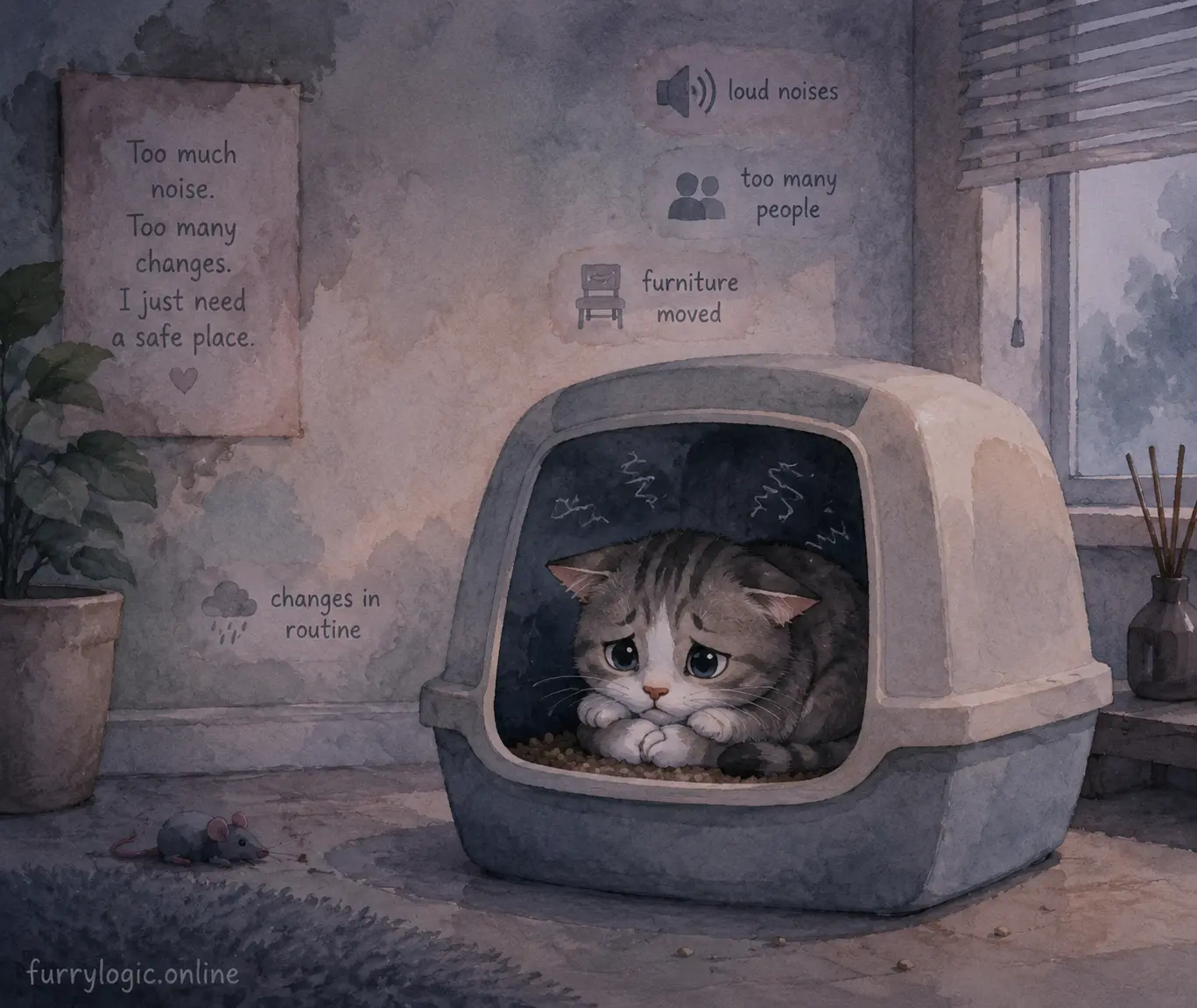
Cats are creatures of routine. They thrive on predictability the way humans thrive on stable Wi-Fi connections. When routines suddenly change, many cats struggle emotionally. Something as small as changing feeding times or moving the litter box location can create noticeable anxiety.
Stress-related litter box behavior is surprisingly common. Veterinary experts increasingly recognize stress as a major contributor to urinary and behavioral disorders in cats. Conditions like Feline Idiopathic Cystitis are strongly associated with stress exposure.
Here are some common stress triggers:
| Stress Trigger | Potential Cat Reaction |
|---|---|
| Moving homes | Hiding or litter box sleeping |
| New pet introduction | Territorial insecurity |
| Loud renovations | Anxiety and withdrawal |
| Owner schedule changes | Clinginess or avoidance |
| Travel or boarding | Stress urination |
| New baby in household | Behavioral regression |
Cats do not process stress the same way humans do. Instead of venting frustrations verbally, they often internalize anxiety physically. Their bodies can react through urinary inflammation, appetite changes, excessive grooming, or abnormal resting behaviors. A stressed cat may stay near the litter box because she feels uncertain about her surroundings and wants access to a familiar safe zone.
One fascinating aspect of feline stress is how subtle it can appear. A cat may continue eating normally while quietly developing anxiety-related behaviors. Owners sometimes miss the connection because the cat is not obviously panicking. But inside, the cat’s stress hormones may already be elevated.
Multi-Cat Households and Territorial Pressure
Living with multiple cats can feel like a polite political negotiation happening twenty-four hours a day. Even cats that seem friendly may compete silently for territory, resources, and emotional security. The litter box becomes part bathroom, part communication board, and part territorial marker.
If one cat feels bullied or intimidated, she may spend more time in the litter box because it carries her scent and feels protected. Some cats camp out near litter areas to maintain control over territory. Others retreat there because they fear crossing open spaces where another cat may confront them.
Veterinary behavior discussions often mention territorial stress as a hidden factor behind unusual litter box habits. Cats do not always fight openly. Many conflicts happen through silent staring, blocking pathways, or guarding food bowls. A nervous cat may choose the litter box simply because it feels like the least threatening location in the house.
#### Loud Noises and Environmental Fear
Construction sounds, fireworks, thunderstorms, vacuum cleaners, and crowded gatherings can overwhelm sensitive cats. Unlike humans, cats cannot rationalize that the noise is temporary or harmless. Their instincts interpret sudden loud sounds as possible danger.
A frightened cat may retreat into the litter box because it provides a confined hiding area with familiar scents. Some owners notice this behavior during holiday fireworks or when visitors stay overnight. The cat may not actually enjoy the litter box itself. Instead, she may view it as the safest available shelter in an overstimulating environment.
Medical Conditions Linked to This Behavior
Urinary Tract Problems and FIC
One of the most serious reasons a cat may lay in the litter box is urinary discomfort. Cats experiencing urinary pain often feel an urgent need to stay close to the place where elimination happens. Conditions such as urinary tract infections, bladder inflammation, urinary crystals, and urethral blockages can all trigger this behavior.
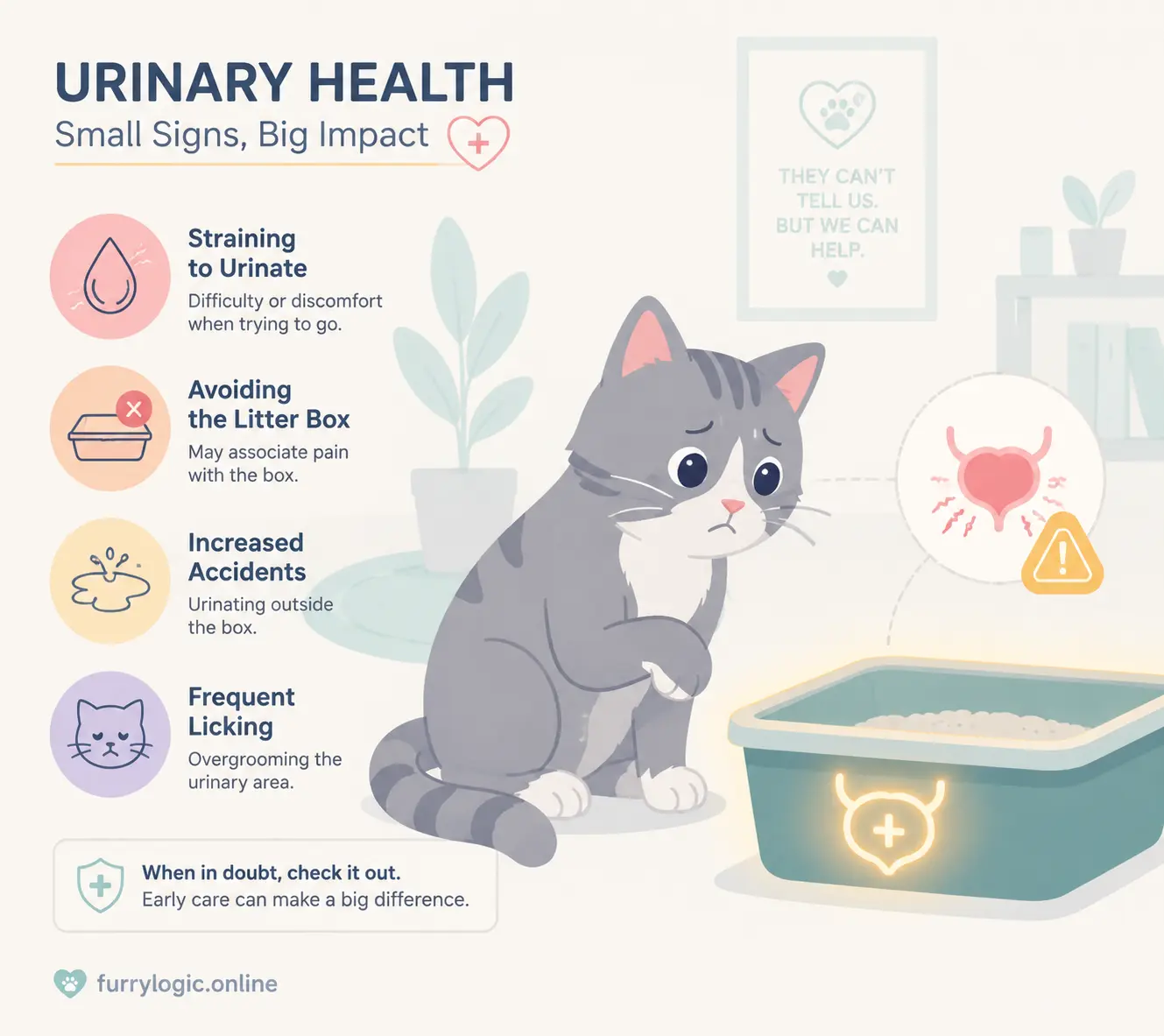
Feline Idiopathic Cystitis (FIC) is particularly important because it is extremely common and strongly connected to stress. Cats with FIC may repeatedly enter the litter box, strain to urinate, vocalize in pain, or rest there because they constantly feel the urge to pee. Veterinary sources describe FIC as one of the leading causes of lower urinary tract symptoms in cats.
Common urinary warning signs include:
- Frequent litter box trips
- Straining with little urine output
- Blood in urine
- Crying while urinating
- Excessive licking of genital area
- Urinating outside the box
- Restlessness or hiding
Male cats face especially dangerous risks from urinary blockages. A blocked urethra can become life-threatening very quickly. Emergency veterinary care is necessary if a cat repeatedly strains without producing urine.
Constipation and Digestive Discomfort
Not every litter box issue is urinary. Constipated cats may spend extra time in the box because they associate it with attempts to relieve discomfort. Digestive pain can also make cats lethargic and withdrawn, leading them to stay near elimination areas longer than usual.
Older cats are particularly vulnerable to constipation due to dehydration, arthritis, or reduced mobility. A cat with joint pain may also choose the litter box because climbing into soft litter feels easier than jumping onto furniture.
Digestive issues sometimes overlap with stress as well. Just as anxious humans may experience stomach discomfort, stressed cats can develop gastrointestinal problems that alter litter box behavior.
Pregnancy and Post-Surgical Recovery
Pregnant cats occasionally spend more time resting in litter areas because they seek quiet, secluded spaces. Similarly, cats recovering from surgery or illness may remain close to the litter box due to weakness or reduced mobility.
This behavior becomes more understandable when viewed through the lens of energy conservation. A recovering cat may not feel physically capable of walking long distances repeatedly. Staying near the litter box minimizes effort while recovering strength.
#### Kidney Disease and Diabetes
Chronic illnesses like kidney disease and diabetes can dramatically increase thirst and urination frequency. Cats with these conditions may appear glued to the litter box because they constantly feel the need to eliminate.
According to recent veterinary guidance, medical conditions causing increased urination can indirectly lead to litter box resting behavior because cats anticipate repeated bathroom trips.
Older cats deserve particular attention because chronic illnesses become more common with age. A senior cat suddenly lounging in the litter box should never be dismissed as “just weird behavior.”
Changes in the Home Environment That Matter
Moving to a New Home
Moving is stressful for humans, so imagine experiencing it without understanding why your entire world suddenly smells different. Cats often react strongly to relocation because their sense of territory becomes completely disrupted.
The litter box may become the one object carrying familiar personal scent into the new environment. Some cats temporarily sleep there because it reassures them emotionally. This behavior is especially common during the first few days after a move.
Experts frequently recommend confining newly relocated cats to a smaller safe room initially. This helps reduce environmental overwhelm while allowing gradual adjustment. The litter box can serve as part of that transition space.
New Pets, Babies, or Visitors
Cats notice every change in household dynamics. A new puppy may feel like an invading tornado. A crying baby introduces unfamiliar sounds and routines. Even overnight guests can create subtle tension.
Stress-related litter box behavior often spikes during these adjustment periods. Cats may retreat into familiar spaces while they assess new social dynamics. In multi-pet households, competition for safe resting zones may increase dramatically.
Environmental enrichment can help tremendously during transitions. Extra hiding spots, elevated cat trees, calming pheromone diffusers, and predictable routines all reduce emotional strain.
Signs That Help Differentiate Comfort From Illness
Normal Relaxation vs Concerning Symptoms
Not every cat resting briefly in a clean litter box is sick. Sometimes kittens explore unusual sleeping locations purely out of curiosity. The key is looking at the bigger behavioral picture.
Here is a helpful comparison:
| Potentially Harmless Behavior | Concerning Behavior |
|---|---|
| Brief resting after play | Constant litter box sleeping |
| Normal appetite | Refusing food |
| Normal urination | Straining or bloody urine |
| Active and playful | Lethargy or hiding |
| Temporary adjustment phase | Persistent behavior change |
| Relaxed posture | Signs of pain or vocalizing |
Healthy cats usually maintain normal grooming, eating, and social interaction. A sick cat often shows multiple behavior changes simultaneously.
Warning Signs That Require Fast Action
Certain symptoms should never be ignored because they may indicate emergency urinary obstruction or severe illness.
Watch closely for:
- Repeated straining without urine
- Crying during urination
- Bloody urine
- Vomiting
- Severe lethargy
- Swollen abdomen
- Refusal to eat
- Sudden aggression from pain
Veterinary organizations stress that inability to urinate is a medical emergency, especially in male cats.
Cats instinctively hide weakness, which means visible symptoms often appear later than the illness itself. By the time a cat openly acts uncomfortable, the problem may already be significant.
Steps You Can Take to Encourage Normal Habits
Improving the Litter Box Setup
Sometimes the solution begins with improving the litter environment itself. Cats can be incredibly particular about litter conditions. Think of them as tiny bathroom critics with impossibly high standards.
Here are practical improvements that often help:
- Scoop litter boxes daily
- Provide one box per cat plus one extra
- Avoid strong scented litter
- Place boxes in quiet areas
- Offer both covered and uncovered options
- Use large, easily accessible boxes
Cats dislike feeling trapped while eliminating. A litter box placed beside noisy appliances or high-traffic areas can create anxiety. Relocating boxes to calmer spaces often reduces stress-related behaviors.
Creating a Low-Stress Environment
Stress reduction is one of the most powerful tools for preventing abnormal litter box behavior. Environmental enrichment gives cats healthy outlets for emotional energy.
Helpful strategies include:
- Interactive play sessions
- Predictable feeding schedules
- Vertical climbing spaces
- Window perches
- Puzzle feeders
- Calming pheromone diffusers
One interesting point from veterinary discussions is that stress management alone can dramatically reduce urinary flare-ups in cats prone to FIC.
Cats crave a sense of control. Giving them safe retreat spaces and stable routines helps restore emotional balance.
Supporting Hydration and Health
Hydration plays a huge role in urinary health. Cats naturally have low thirst drives, which can contribute to concentrated urine and bladder irritation.
Encourage water intake by:
- Feeding wet food
- Adding water fountains
- Placing multiple water bowls around the home
- Mixing extra water into meals
Veterinary experts consistently emphasize hydration support for cats with urinary conditions. Proper hydration helps dilute urine and may reduce bladder irritation.
Situations That Warrant Veterinary Care
Emergency Symptoms You Should Never Ignore
There is a major difference between quirky behavior and a medical crisis. If your cat appears unable to urinate, veterinary attention should happen immediately. Hours matter in urinary obstruction cases.
Emergency signs include:
| Emergency Symptom | Why It Matters |
|---|---|
| No urine output | Possible urinary blockage |
| Crying in litter box | Severe pain |
| Bloody urine | Urinary tract injury or inflammation |
| Vomiting with straining | Systemic illness risk |
| Collapse or weakness | Advanced emergency state |
Many owners mistakenly assume the cat is constipated because the symptoms look similar. But urinary obstruction can become fatal quickly if untreated.
Long-Term Prevention and Monitoring
Cats with recurring stress-related urinary problems benefit from ongoing monitoring. Routine veterinary exams, weight management, hydration support, and environmental stability all contribute to prevention.
Pay attention to subtle changes in behavior because cats rarely communicate discomfort loudly. Sometimes a cat laying in the litter box is the earliest visible clue that something deeper needs attention.
Conclusion
A cat laying in her litter box is never a behavior that should be completely ignored. Sometimes it reflects emotional insecurity, environmental stress, or the need for comfort during overwhelming changes. Other times, it signals physical pain, urinary disease, or a developing medical emergency.
The important thing is to look beyond the behavior itself and focus on the bigger picture. Is your cat eating normally? Urinating comfortably? Acting relaxed and playful? Or is she showing signs of distress, lethargy, and repeated litter box visits?
Cats communicate through behavior far more than through sound. The litter box may seem like a strange place to rest, but for many cats it represents familiarity, scent security, and survival instinct all rolled into one. Understanding that perspective helps owners respond with compassion instead of confusion.
When in doubt, trust your instincts and consult a veterinarian. Cats are masters at hiding illness, and early intervention often makes a massive difference in both recovery and long-term health.
FAQs
1. Is it normal for a kitten to sleep in the litter box?
Yes, kittens sometimes rest in litter boxes temporarily while adjusting to new surroundings. The box smells familiar and feels enclosed, which can provide comfort. Persistent behavior should still be monitored carefully.
2. Why does my cat suddenly sit in the litter box for long periods?
Sudden litter box sitting may indicate stress, anxiety, urinary discomfort, constipation, or illness. Watch for additional symptoms such as straining, vocalizing, or appetite changes.
3. Can stress alone cause litter box sleeping behavior?
Absolutely. Stress is strongly linked to abnormal litter box behavior and urinary conditions like Feline Idiopathic Cystitis. Changes in routine, new pets, loud noises, or territorial conflict can all contribute.
4. When should I take my cat to the vet for this behavior?
Seek veterinary care immediately if your cat strains without producing urine, cries in pain, has bloody urine, vomits, or becomes lethargic. These symptoms may signal a medical emergency.
5. How can I help my cat feel safer outside the litter box?
Provide quiet hiding spaces, maintain consistent routines, reduce household stress, offer interactive play, and keep litter boxes clean and accessible. Creating a predictable environment helps many anxious cats regain confidence.

Dorian Keene is an American content writer and blogger based in Boise, Idaho. At 31 years old, he has spent several years researching and writing practical, well-sourced articles focused on consumer guides, digital trends, and lifestyle topics. His experience working with online publications has helped him develop a clear, trustworthy writing style that prioritizes accuracy and reader value. As a contributor to furrylogic.online, he is committed to creating informative content that reflects careful research, real-world insights, and dependable editorial standards.