
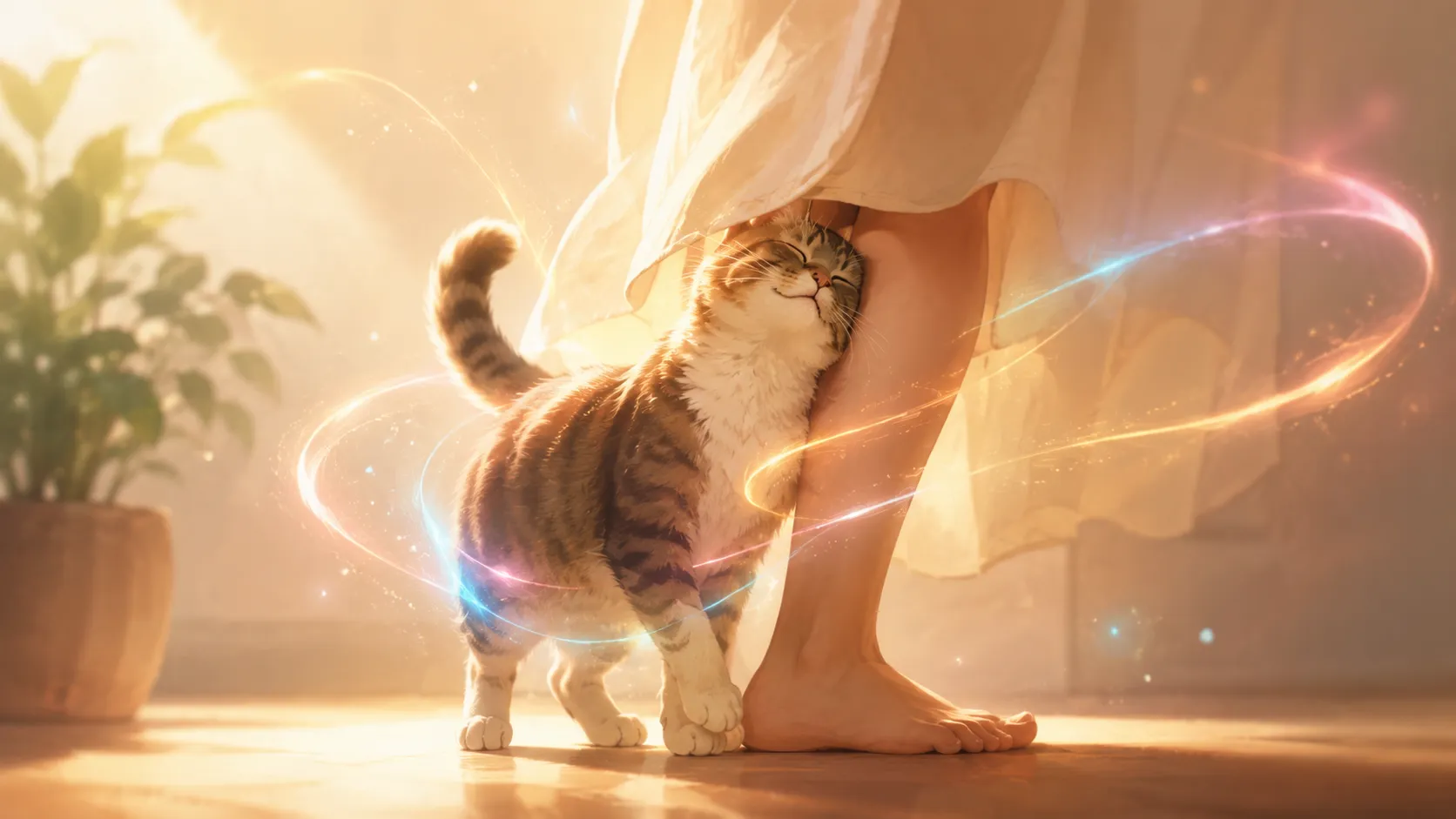
Anyone who has ever lived with a cat knows the feeling. You walk through the door after a long day, and suddenly a furry little creature wraps itself around your legs like a living scarf. Sometimes the cat gently bumps its forehead against your hand. Other times it drags its entire side across your ankle while purring like a tiny engine. At first glance, this behavior seems simple and adorable. But underneath that affectionate gesture is an incredibly sophisticated communication system that cats have refined for thousands of years.
Cats are masters of subtle communication. Unlike dogs, which often wear their emotions openly, cats prefer quieter methods of expression. Their body posture, scent glands, tail movement, and eye contact all work together like pieces of a puzzle. Rubbing behavior sits right at the center of this feline language system. Veterinary behavior experts explain that cats use rubbing both as a social signal and a form of scent marking. What feels like a cute greeting to humans is actually a layered message filled with trust, familiarity, emotional comfort, and even ownership.
The emotional impact of this behavior on humans is powerful because it feels personal. And honestly, it is personal. Cats do not casually rub against strangers the same way they might brush past furniture. When a cat repeatedly rubs against you, it often means you are accepted as part of its trusted environment or social group. That’s a huge deal in the feline world. Cats evolved as cautious, territorial animals, so allowing close physical interaction is not something they hand out freely.
Humans also tend to misunderstand cat communication because we naturally compare feline behavior to human emotions. We assume rubbing automatically equals affection. Sometimes it does, but sometimes it’s also about gathering information, reducing anxiety, or reinforcing territorial familiarity. That complexity is exactly what makes cats so endlessly fascinating.
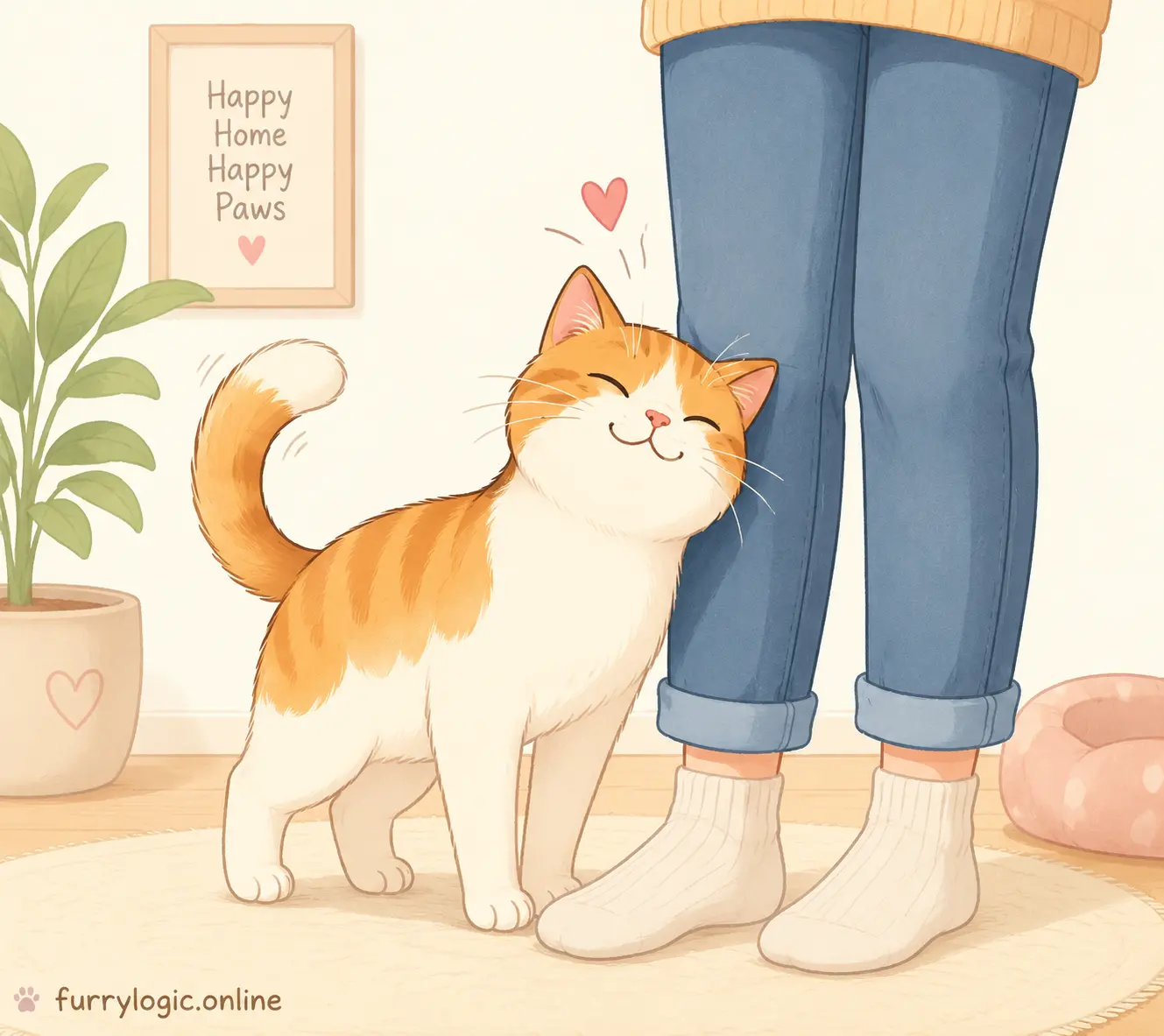
What It Means When Cats Rub Against You
At the heart of rubbing behavior is something called scent marking. Cats possess specialized scent glands around their cheeks, forehead, chin, sides, and tail base. When they rub these areas against people, furniture, or other animals, they leave behind invisible pheromones that communicate information to other cats. Humans cannot smell these pheromones, but to cats they are like social media updates written in scent.
Think of your cat’s rubbing behavior as the feline version of hanging a family photo on the wall. Your cat is essentially saying, “This belongs in my safe world.” When your cat rubs against you, it mixes your scent with its own, helping create a familiar and emotionally comforting environment. That’s one reason cats often rub more intensely after you return home. Outside smells temporarily “erase” their familiar scent signature from you, so your cat refreshes it the moment you walk in the door.
Behavior specialists often refer to this action as bunting when the head or face is involved. Bunting usually signals positive social intent. Cats commonly bunt other cats they trust, especially members of the same colony or household. When your cat bunts you, it may view you as part of its social circle rather than just a food provider. That distinction matters because cats are selective social animals.
There is another fascinating layer to this behavior: information gathering. Cats rely heavily on scent to understand the world. By rubbing and sniffing simultaneously, they learn where you have been, what other animals you encountered, and whether anything unfamiliar entered their environment. Some experts describe rubbing as both communication and investigation happening at the same time. It’s almost like your cat is scanning a security badge while also giving you a hug.
The Purpose Behind Feline Scent Marking
To understand why rubbing matters so much, you need to understand how cats experience the world. Humans are visually dominant creatures. Cats, on the other hand, live in a sensory universe heavily shaped by smell. Their sense of smell is dramatically more powerful than ours, and scent acts as a map, memory system, and social network all rolled into one.
When cats leave pheromones through rubbing, they create what scientists sometimes call a “scent landscape.” This invisible scent map tells them which places are safe, who belongs there, and whether unfamiliar animals have entered the territory. According to veterinary behavior references, scent marking serves both territorial and social functions. That means your cat is not just claiming space like a tiny furry landlord. It is also reinforcing relationships and emotional security.
Interestingly, not all scent marking is aggressive or defensive. Many people associate territorial behavior with hostility, but rubbing is usually considered one of the friendliest forms of feline marking. Urine spraying and aggressive scratching often signal stress or boundary enforcement. Face rubbing, however, is commonly linked to bonding and social comfort. It’s more like saying, “You’re one of us,” rather than, “Stay away.”
Researchers and animal behavior experts have also observed similar behaviors in multi-cat households and feral cat colonies. Cats that trust one another frequently engage in allorubbing, which involves rubbing bodies or faces together to exchange scent. This shared scent creates a group identity, almost like a family scent badge. When your cat rubs against your legs every morning, you are participating in that same social ritual.
Here’s where things get even more interesting. Cats often use scent marking to reduce uncertainty and anxiety. Familiar scents help stabilize their emotional state. That’s why moving furniture, introducing new pets, or traveling can trigger increased rubbing behavior. Your cat is trying to rebuild a familiar scent environment to regain a sense of control and safety. Some Reddit users describing excessive rubbing after moving homes echoed exactly this pattern.
Affection, Trust, and Social Connection in Cats
Many cat owners secretly wonder whether their cat truly loves them or simply tolerates them because they open cans of food. Rubbing behavior offers one of the clearest clues that genuine emotional trust exists. Cats rarely expose themselves physically to creatures they perceive as dangerous. So when a cat approaches voluntarily and presses its face or body against you, that action signals confidence and comfort.
Veterinary experts consistently describe rubbing as a sign of affection and social acceptance. The behavior resembles how cats interact with trusted feline companions. In nature, friendly cats within the same colony often rub faces, tails, and sides together to reinforce social bonds. Your cat may see you less as a giant human roommate and more as an oddly hairless member of the family unit.
One particularly sweet aspect of this behavior is its connection to kittenhood. Some experts believe bunting develops from early interactions between kittens and their mothers. Kittens knead, rub, and nuzzle for comfort, warmth, and reassurance. Elements of those behaviors remain in adulthood, especially toward individuals they trust deeply. That means your adult cat rubbing against you may carry echoes of early-life emotional security.
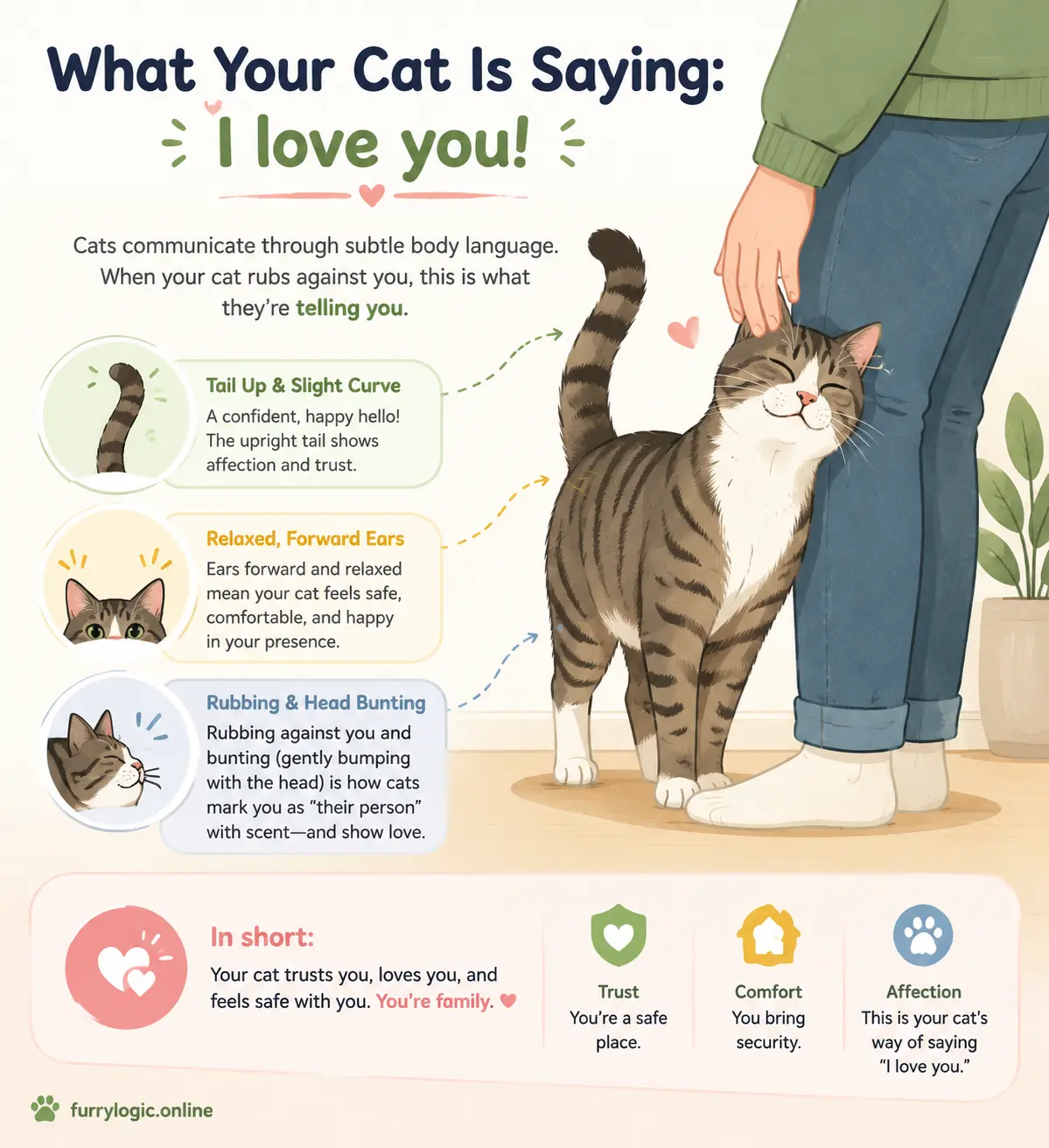
Body language also plays a huge role here. A relaxed cat that rubs against you while purring, slow blinking, or holding its tail upright is displaying multiple layers of trust simultaneously. The upright tail is especially important because cats often reserve that posture for friendly greetings. Combined with rubbing, it creates a powerful “safe person” signal.
People sometimes underestimate how meaningful trust is to cats because cats maintain stronger personal boundaries than many pets. Unlike dogs, which are generally social by default, cats decide carefully who enters their comfort zone. Winning that trust takes patience, predictability, and positive interaction. So when your cat suddenly headbutts your hand or curls around your legs, it’s not random. It’s the feline equivalent of opening the front door to someone and saying, “You belong here.”
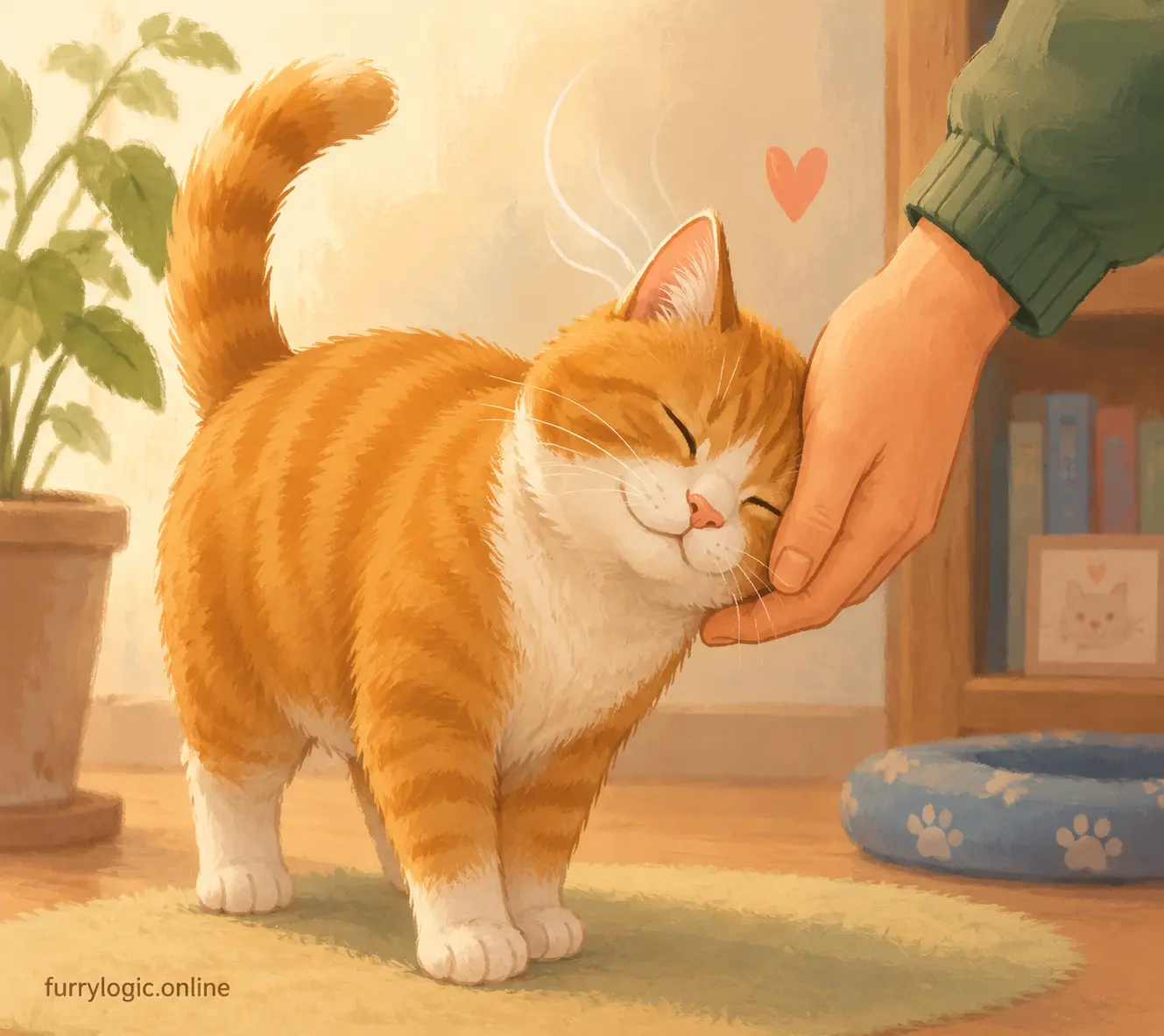
Areas Cats Prefer to Rub and Why
If you pay close attention, you’ll notice cats do not rub randomly. They target very specific body areas, and each location contains scent glands that release different pheromones. The cheeks, forehead, chin, lips, and base of the tail are especially important zones for feline scent communication.
The cheeks are probably the most recognizable rubbing area. When cats press their cheeks against furniture corners or your hand, they are activating facial scent glands that produce calming social pheromones. This type of rubbing often appears gentle and deliberate. It’s one reason many cats love rubbing against sharp edges like table corners. Those surfaces create perfect pressure for distributing scent.
Forehead bunting carries particularly strong social meaning. When a cat gently bumps its forehead into you, it often indicates affection, familiarity, and trust. This gesture usually happens only with individuals the cat feels emotionally safe around. Many owners interpret forehead bunts as “cat kisses,” and honestly, that description is not far off.
The tail base is another interesting area. Some cats rub the base of their tail or their entire side against people while walking past. This spreads scent over a larger surface area and may combine social marking with attention-seeking. Cats often repeat this behavior rhythmically, almost weaving around legs like flowing water. It looks theatrical because, in a sense, it is. Cats are broadcasting emotional information through movement and scent simultaneously.
Here’s a simple comparison table showing common rubbing zones and their likely meanings:
| Body Area | Purpose | Common Meaning |
|---|---|---|
| Cheeks | Social pheromone release | Affection and familiarity |
| Forehead | Strong social bonding | Trust and greeting |
| Chin | Territory and comfort marking | Ownership and reassurance |
| Side of body | Broad scent distribution | Group identification |
| Tail base | Social and territorial signaling | Excitement or attachment |
Some cats also combine rubbing with licking or gentle nibbling. While that can surprise owners, it often reflects heightened affection or overstimulation rather than aggression. Context matters enormously. Relaxed ears, soft eyes, and purring usually indicate positive intent.
How Rubbing Fits Into Feline Communication
Cats communicate in layers. Imagine an orchestra where every instrument plays part of the emotional message. Rubbing is just one instrument. Tail movement, vocalization, eye contact, posture, ear position, and scent all work together to create the full conversation.
For example, a cat rubbing your legs while meowing loudly near the food cabinet likely wants dinner. A cat rubbing quietly while purring and slow blinking probably wants affection or companionship. A tense cat rubbing frantically against objects with flattened ears may be stressed or anxious. The rubbing itself matters, but the surrounding signals provide the real translation.
One especially common moment for rubbing behavior happens when owners return home. Many cats greet humans at the door because departures temporarily disrupt the social scent environment. When you come back carrying unfamiliar smells from outside, your cat immediately begins re-establishing shared scent familiarity. It’s both a greeting ritual and a “welcome back into the group” ceremony.
Cats also use rubbing to communicate peacefully with one another. In multi-cat environments, mutual rubbing helps reduce conflict by reinforcing shared group identity. Experts note that scent sharing can function almost like a social contract among cats. If two cats consistently exchange scent through rubbing, they are often socially compatible.
What’s fascinating is how sophisticated these interactions become. Cats are not simply reacting instinctively. They adapt communication based on context, relationships, and environment. Some cats rub more intensely during stressful changes, while others increase rubbing during moments of excitement or affection. The behavior acts like emotional punctuation in the broader language of feline social life.
Friendly Rubbing vs Attention-Seeking Behavior
One reason cat owners sometimes feel confused is that rubbing serves multiple purposes simultaneously. A cat can genuinely love you and still be trying to manipulate you into opening a food can. Cats are clever like that.
Friendly rubbing usually appears calm, rhythmic, and relaxed. The cat’s body posture stays loose, the tail may remain upright, and the eyes often look soft or half-closed. Purring frequently accompanies this type of interaction. These signs suggest emotional comfort and social bonding.
Attention-seeking rubbing, however, tends to look more urgent or strategic. The cat may meow insistently, lead you toward a specific object, or repeatedly circle your legs with exaggerated intensity. Many cats combine rubbing with staring directly at food containers, toys, or doors. According to veterinary experts, cats commonly use rubbing to signal wants or needs.
Here’s the tricky part: the two behaviors overlap constantly. A cat can feel affectionate and still request something. Think of it like a friend hugging you while asking for a favor. The emotional bond is real, but there is also a practical goal involved.
Owners should also watch for sudden changes in rubbing behavior. Excessive rubbing, frantic face rubbing, or aggressive scent marking can sometimes indicate stress, allergies, fleas, infections, or neurological problems. Veterinary sources recommend monitoring for additional symptoms such as hair loss, confusion, overgrooming, or vocal changes. If rubbing suddenly becomes obsessive or abnormal, a veterinary evaluation may be necessary.
Reddit discussions from cat owners frequently describe phases of intense rubbing during environmental stress, including moving homes or introducing new pets. In those cases, the behavior often reflects emotional self-soothing rather than simple affection.
Other Body Language Signals That Add Meaning
If you truly want to understand your cat, never isolate one behavior from the rest of the body language package. Cats speak with their entire bodies, not just through rubbing.
A cat that rubs against you while giving slow blinks is usually expressing deep comfort and trust. Slow blinking is sometimes called a “cat smile” because it signals relaxation rather than vigilance. Pair that with a raised tail and relaxed whiskers, and you have the feline equivalent of a warm greeting.
Tail position matters enormously. An upright tail with a slight curve at the tip generally signals friendliness and confidence. A puffed tail, twitching tail, or low tucked tail changes the meaning entirely. If rubbing occurs alongside tense posture or flattened ears, the cat may feel conflicted or overstimulated rather than affectionate.
Vocalization also provides important clues. Some cats chatter happily while rubbing, creating a full social greeting ceremony. Others stay silent and communicate mostly through touch. Every cat develops its own communication style over time, shaped by personality, environment, and past experiences.
There are also moments when rubbing does not mean affection at all. A stressed or anxious cat may rub compulsively against furniture to spread calming pheromones. Cats in unfamiliar environments often increase scent marking to create emotional stability. In rare cases, excessive face rubbing can indicate skin irritation or medical issues requiring professional care.
The key is context. A relaxed cat with soft eyes and gentle rubbing is sending a completely different message than a frantic cat rubbing obsessively while vocalizing loudly. Reading feline communication is less like translating a single word and more like interpreting an entire sentence.
Strengthening Your Bond Through Positive Interaction
When a cat rubs against you, your response shapes future trust. Cats remember interactions remarkably well, especially emotional experiences tied to safety and comfort. Positive responses encourage deeper bonding, while rough handling or overstimulation can make cats more cautious.
The best response is usually calm, gentle interaction. Offer your hand for sniffing or light cheek scratches. Many cats prefer attention around the head, cheeks, and chin because those areas contain scent glands and are socially important. Watch your cat’s reactions carefully. If the cat leans into the touch, purrs, or rubs harder, you are probably hitting the sweet spot.
Avoid overwhelming the cat with aggressive petting. Cats often have lower tolerance for continuous physical contact than dogs. Some cats enjoy only a few seconds of petting before becoming overstimulated. Learning those boundaries is part of building genuine trust.
Consistency also matters more than people realize. Cats thrive on predictable routines and emotionally stable interactions. Feeding schedules, play sessions, and calm environments all contribute to a stronger relationship. When cats feel secure, rubbing and other affiliative behaviors often increase naturally.
Interactive play can strengthen the bond even further. Wand toys, puzzle feeders, and short daily play sessions help cats associate humans with positive experiences beyond food. That emotional enrichment creates deeper social connection and reduces stress-related behaviors.
One surprisingly effective trust-building technique is simply respecting a cat’s autonomy. Cats tend to trust people who allow them to initiate interaction. When a cat chooses to rub against you voluntarily, it is exercising social choice. Responding gently without forcing further contact tells the cat its communication is understood and respected.
Over time, these small interactions create something incredibly meaningful: mutual social trust between species that evolved very differently. That little head bump or leg rub becomes more than a quirky pet habit. It becomes a ritual of connection.
Conclusion
When cats rub against you, they are doing far more than seeking attention. They are communicating through scent, touch, memory, and social ritual all at once. Rubbing behavior reflects affection, territorial familiarity, emotional comfort, and trust. It allows cats to mark safe relationships while reinforcing their connection to the people and environments they value most.
Understanding this behavior transforms the way many people see their cats. That quick forehead bump or leg weave is not random. It is part greeting, part emotional reassurance, part social bonding ceremony. Cats live in a world shaped heavily by scent and subtle communication, and rubbing sits at the center of that world.
The next time your cat rubs against your legs when you walk through the door, pause for a second and appreciate what is really happening. Your cat is not just saying hello. In feline language, it is saying, “You are familiar. You are trusted. You belong with me.”
FAQs
1. Why does my cat rub against me and then walk away?
Cats often rub against people to leave scent markers or greet them socially. Walking away afterward does not mean rejection. In many cases, the cat has completed the interaction it wanted and simply moves on to its next activity.
2. Is it normal for cats to rub against furniture constantly?
Yes, moderate rubbing against furniture is normal scent-marking behavior. Cats use facial pheromones to make their environment feel familiar and safe. Excessive rubbing combined with scratching, hair loss, or agitation may require veterinary attention.
3. Why does my cat rub against me after I come home?
Your cat is likely re-establishing familiar scent connections after you return carrying outside smells. This behavior acts as both a greeting ritual and a way of reinforcing social bonding.
4. Do cats rub against people they do not like?
Usually, cats reserve repeated rubbing for individuals they trust or feel comfortable around. Some cats may briefly rub strangers while gathering scent information, but affectionate rubbing is generally associated with positive social feelings.
5. What should I do when my cat headbutts me?
Respond gently with calm petting or verbal reassurance if the cat seems relaxed. Headbutting, also called bunting, is commonly considered a sign of affection, trust, and social bonding.

Dorian Keene is an American content writer and blogger based in Boise, Idaho. At 31 years old, he has spent several years researching and writing practical, well-sourced articles focused on consumer guides, digital trends, and lifestyle topics. His experience working with online publications has helped him develop a clear, trustworthy writing style that prioritizes accuracy and reader value. As a contributor to furrylogic.online, he is committed to creating informative content that reflects careful research, real-world insights, and dependable editorial standards.