
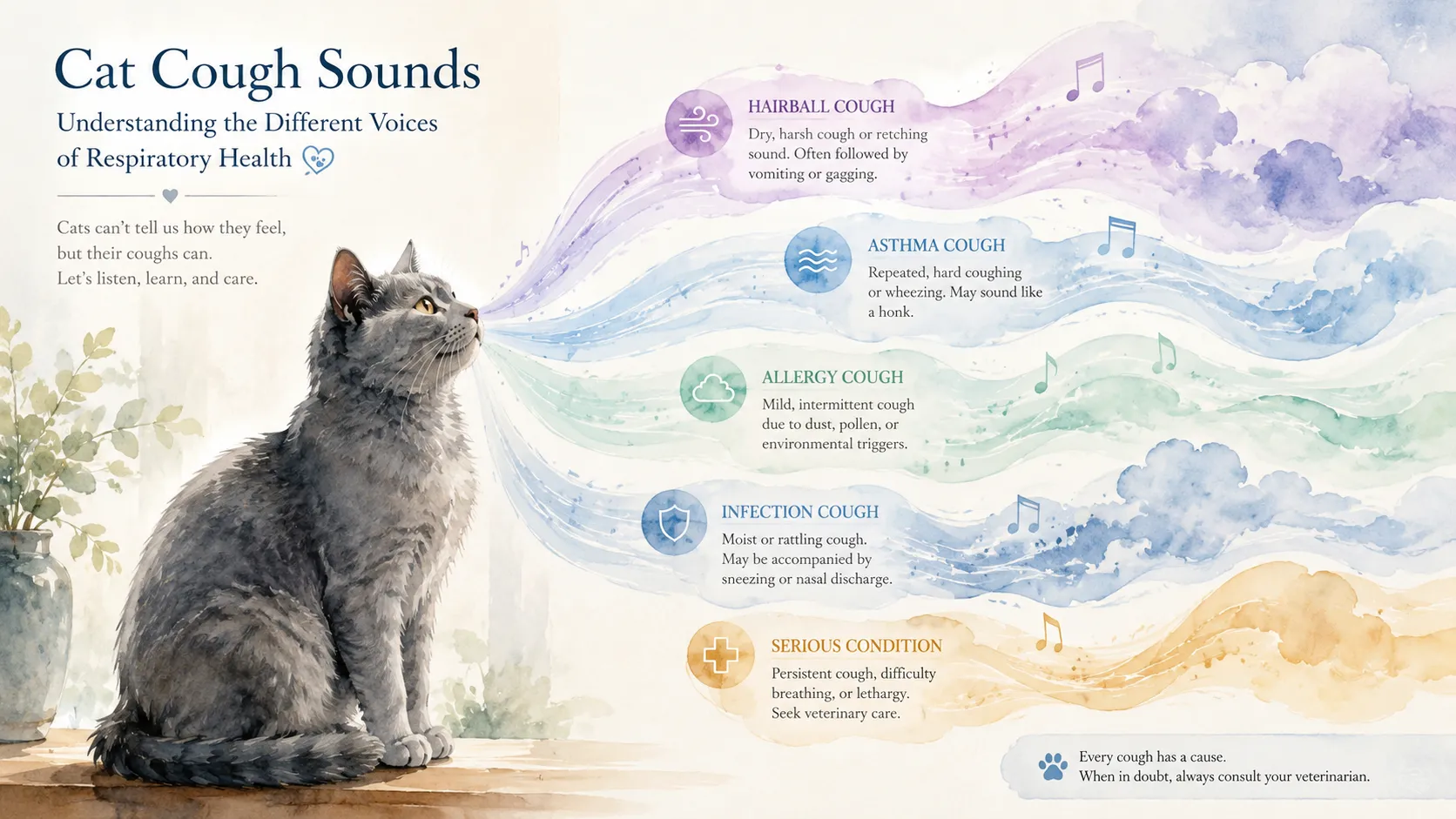
Cats are masters at hiding discomfort. One minute they are stretched across the couch looking perfectly relaxed, and the next they suddenly crouch low to the floor making a strange hacking sound that leaves you frozen in panic. Is it a hairball? Is your cat choking? Is it asthma? Many cat owners discover very quickly that feline coughing is one of the most confusing sounds to interpret. The trouble is that a real cough can sound alarmingly similar to gagging or hairball retching, especially if you have never witnessed the difference before.
Veterinarians say that repeated coughing in cats should never be casually ignored because true coughing often points to airway irritation or respiratory disease. Research from the notes that feline asthma affects roughly 1% to 5% of cats. What makes things even trickier is that many owners mistake asthma attacks for harmless hairball episodes for months before seeking veterinary care.
This guide breaks down exactly what cat coughing sounds like, how it differs from gagging and hairballs, what body language clues matter most, and when those strange sounds cross the line from mildly concerning to medically urgent.
Why Cat Coughing Confuses So Many Owners
Cats are surprisingly quiet animals when it comes to respiratory symptoms. Unlike dogs, who may bark, wheeze, and cough openly for attention, cats often conceal illness until it becomes difficult to ignore. That is exactly why feline coughing tends to catch owners off guard. A cat may suddenly lower its body, stretch its neck forward, and produce a repetitive hacking sound that looks dramatic yet strangely brief. Most people instantly assume it is a hairball because hairballs are common and familiar. The problem is that real coughing in cats frequently imitates the same body posture.
Veterinary sources explain that asthma, bronchitis, and airway inflammation can create coughing episodes that sound nearly identical to unsuccessful hairball attempts. A genuine cough often sounds dry, repetitive, and forceful, almost like the cat is trying to expel air from deep within its chest. Some owners compare it to a smoker’s cough in humans. Others describe it as a rapid “hack-hack-hack” followed by swallowing motions. Since cats do occasionally gag during coughing fits, distinguishing between respiratory and digestive problems becomes incredibly difficult without observing the full episode.
The confusion grows worse because some coughing cats return to normal immediately afterward. One moment they appear distressed, and ten seconds later they are grooming themselves like nothing happened. This sudden switch tricks many owners into dismissing the episode entirely. Yet repeated coughing without an actual hairball can be one of the earliest clues of feline asthma or chronic airway disease.
What a True Cat Cough Actually Sounds Like
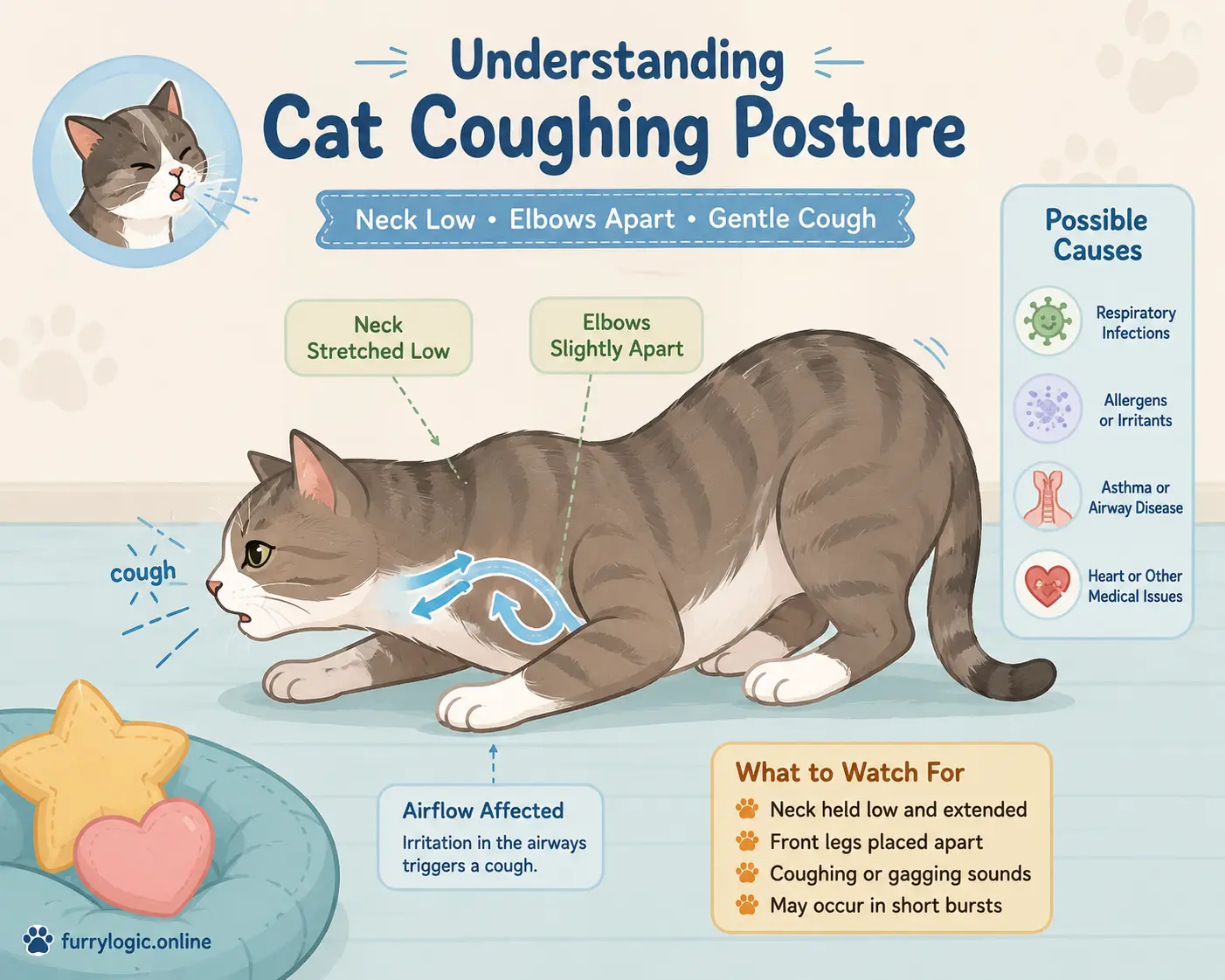
A true cat cough usually sounds harsh, repetitive, and chest-driven rather than stomach-driven. Imagine a tiny engine sputtering or someone repeatedly clearing their throat with force. The sound often comes in short bursts instead of one single gag. Some cats produce dry hacking noises while others wheeze or make raspy crackling sounds between breaths. The exact sound varies depending on what is irritating the airways.
Dry coughing is the most commonly reported type associated with feline asthma and bronchitis. Owners often describe it as a short, compressed hacking sound with little or no mucus production. According to veterinary sources, asthmatic cats frequently crouch low while extending their necks forward during these episodes. The cough may sound repetitive and rhythmic, almost mechanical. It is not unusual for owners to wait for a hairball to appear, only for nothing to come out.
Some cats develop wheezing alongside coughing. Wheezing creates a faint whistling noise as narrowed airways struggle to move air efficiently. This can happen during inhalation or exhalation and may become more noticeable after exercise, stress, or exposure to dust. Wet-sounding coughs can also occur if mucus is present in the airways. These coughs may sound bubbly or congested, similar to a person coughing during bronchitis.
One important distinction is that true coughing usually seems to originate from the chest rather than the throat or stomach. The abdomen may contract sharply as the cat forces air outward. That forceful abdominal movement is one reason many owners mistake coughing for vomiting. The body mechanics overlap enough to create real confusion even among experienced cat owners.
Sounds That Are Often Mistaken for Coughing
Not every strange sound coming from a cat is technically a cough. Hairballs, gagging, choking, and reverse sneezing can all create noises that mimic respiratory distress. Learning the subtle differences matters because each condition points toward very different health concerns.
Hairball retching is the most common source of confusion. During a hairball episode, the cat often makes deep gagging or retching noises accompanied by exaggerated stomach contractions. The sound may seem wetter and more productive than a dry cough. Many cats hunch their backs dramatically and continue retching until fur, foam, or mucus eventually appears. If something actually comes up, the odds strongly favor a digestive issue rather than respiratory disease.
Reverse sneezing is another behavior that alarms owners. Although more common in dogs, cats can occasionally experience sudden snorting or inhalation spasms. Instead of forcefully pushing air outward like a cough, the cat rapidly pulls air inward through the nose. The sound resembles snorting, honking, or rapid nasal gasping. These episodes are usually brief and may occur after excitement or irritation.
Choking sounds are typically more frantic and urgent. A choking cat may paw at its mouth, panic, drool excessively, or struggle to inhale properly. Unlike coughing, choking often involves obvious distress and difficulty moving air at all. If a cat suddenly collapses, develops blue gums, or cannot breathe normally, emergency veterinary care is needed immediately.
The overlap among these sounds explains why online videos about “cat coughing vs hairballs” have become so popular. Many owners discover only after a veterinary visit that their cat’s “hairballs” were actually asthma attacks happening repeatedly for months.
Key Differences Between Coughing, Gagging, and Hairball Episodes
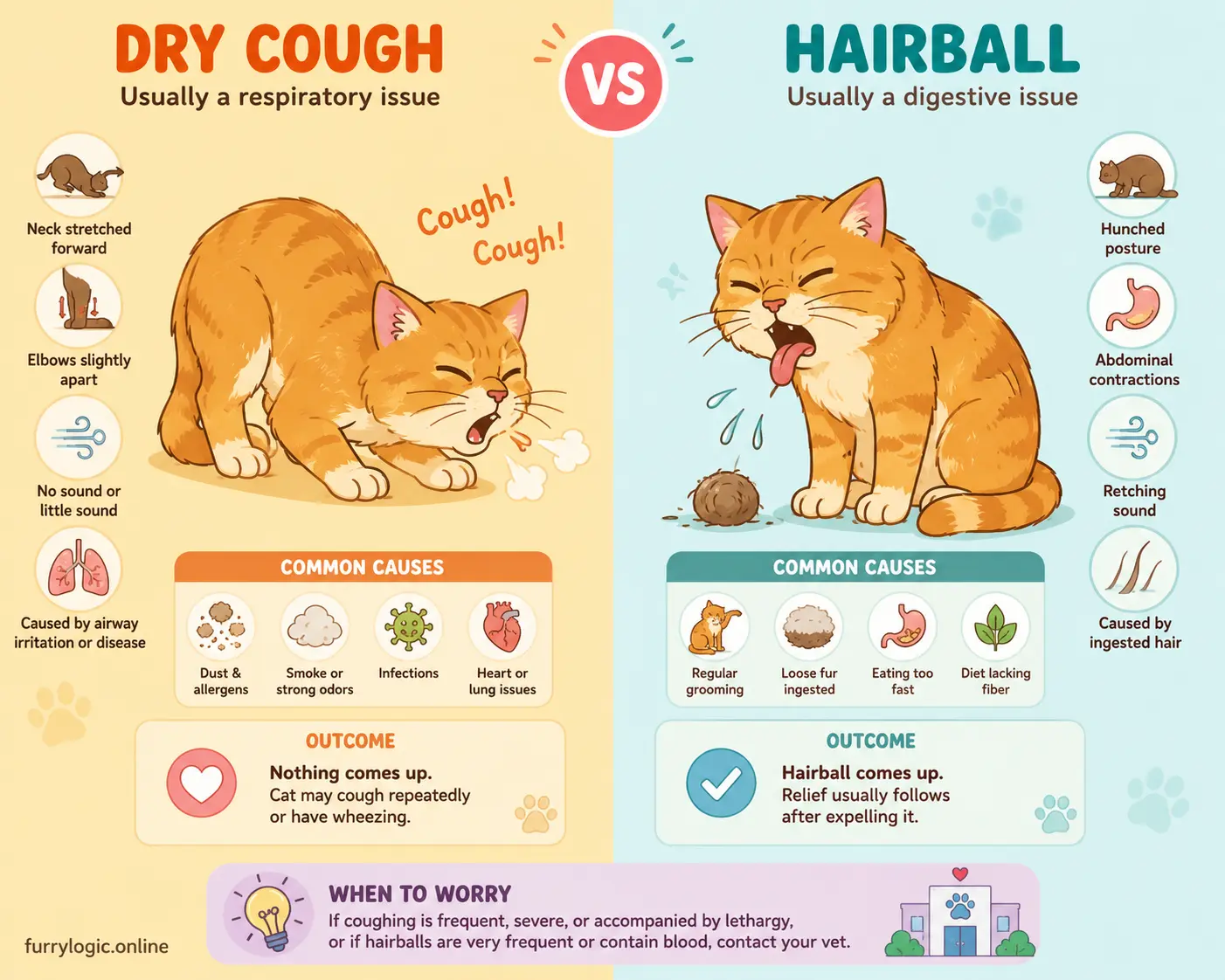
One of the easiest ways to distinguish coughing from hairballs is to focus on what happens at the end of the episode. Hairball events usually produce something tangible. A tube of fur, mucus, bile, or foam often appears eventually. True coughing episodes usually end empty-handed. The cat coughs repeatedly, swallows, regains composure, and walks away without expelling anything.
Body movement also provides useful clues. Cats trying to expel hairballs often arch their backs and perform deep retching motions that look almost identical to vomiting. The motion starts lower in the abdomen and stomach. In contrast, coughing cats frequently remain crouched lower to the ground with their neck extended straight outward. The contractions seem sharper and more chest-focused than stomach-focused.
The timing and frequency of episodes matter too. Hairballs usually happen sporadically, especially in long-haired cats or heavy groomers. A cat producing hairballs every once in a while may not raise concern. Repeated dry coughing several times per week, however, deserves attention. Persistent coughing without visible hairballs strongly suggests a respiratory issue rather than a digestive one. Veterinary experts repeatedly warn that “chronic hairballs” sometimes turn out to be undiagnosed asthma.
The following table summarizes the differences:
| Symptom | True Cough | Hairball Episode | Gagging/Choking |
|---|---|---|---|
| Sound | Dry hacking or wheezing | Wet retching | Panicked gagging |
| Outcome | Usually nothing comes up | Fur or foam expelled | May involve saliva or obstruction |
| Body Posture | Crouched with neck extended | Arched back and retching | Distressed, pawing at mouth |
| Frequency | Can become repetitive | Occasional | Usually sudden |
| Breathing Changes | Wheezing or labored breathing possible | Usually normal afterward | Breathing difficulty common |
Body Language Clues That Accompany a Coughing Cat
Cats communicate discomfort through posture almost as much as sound. Watching body language during a coughing episode can reveal critical information about whether the issue is minor irritation or something more serious.
One of the hallmark postures of a coughing cat is the extended-neck crouch. The cat lowers its body close to the floor while stretching its head and neck outward. Veterinarians often associate this posture with feline asthma because it helps maximize airflow during airway restriction. Some cats keep their elbows slightly away from the body as they try to breathe more efficiently.
Open-mouth breathing is a much more alarming sign. Cats are not natural mouth breathers the way dogs are. If a coughing cat begins panting, breathing through its mouth, or visibly struggling to inhale, immediate veterinary evaluation is necessary. These signs may indicate severe respiratory distress or oxygen deprivation.
Another clue is abdominal effort during breathing. Watch the sides of the chest and belly carefully. A cat experiencing respiratory difficulty may show exaggerated side movements or rapid breathing even after the coughing stops. Wheezing, lethargy, hiding behavior, or refusal to play can also suggest the problem extends beyond a harmless hairball.
Some cats also display behavioral changes before episodes occur. They may become restless, suddenly stop activity, crouch quietly, or swallow repeatedly. These subtle warning signs often go unnoticed because the actual coughing fit lasts only a few seconds. Observant owners who learn these patterns can provide veterinarians with extremely valuable diagnostic information.
Common Triggers Behind Respiratory Irritation
Respiratory irritation in cats can develop from surprisingly ordinary household conditions. A home that smells pleasantly fresh to humans may feel like an irritating cloud of chemicals to sensitive feline airways. Cats possess delicate respiratory systems, and even minor irritants can trigger coughing episodes in susceptible animals.
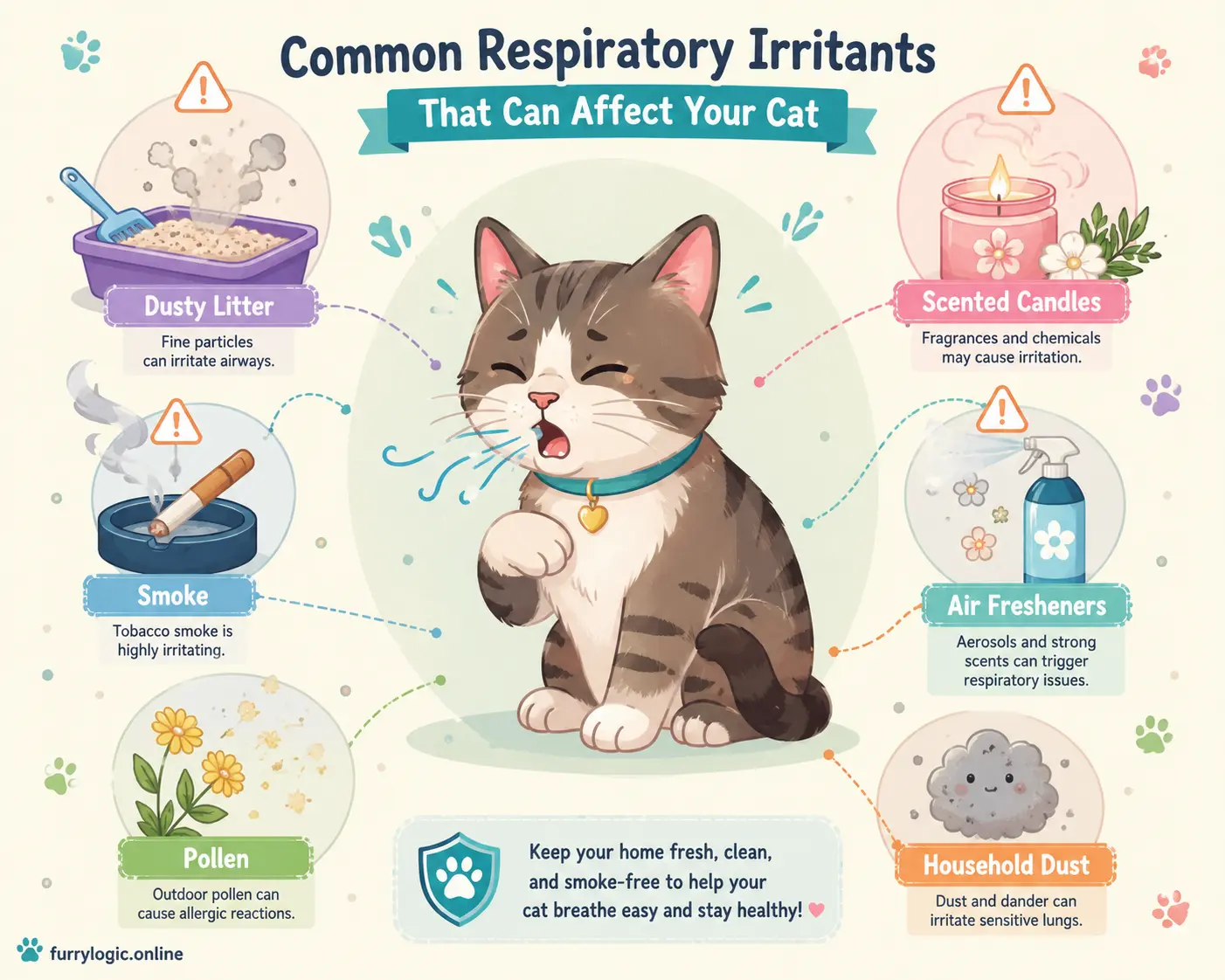
Dusty litter is one of the biggest offenders. Clay-based litters can release fine particles into the air every time a cat digs or covers waste. Over time, inhaling these particles may aggravate airway inflammation. Smoke exposure is another major trigger. Cigarette smoke, vaping residue, fireplace smoke, and even cooking fumes can irritate feline lungs significantly.
Fragrances deserve special attention too. Air fresheners, scented candles, perfumes, essential oils, and cleaning sprays frequently appear in discussions about feline asthma triggers. While humans may enjoy strongly scented environments, cats can react negatively because of their heightened sensitivity to airborne chemicals.
Allergies also play a major role in feline asthma. According to the , asthma in cats is often linked to allergic reactions triggered by inhaled allergens. Pollen, mold spores, household dust, and even seasonal environmental changes can contribute. Respiratory infections may create similar coughing symptoms, especially when accompanied by sneezing, nasal discharge, or fever.
Sometimes the trigger is exercise or excitement. A cat may cough after sprinting, rough play, or stress. That pattern can point toward underlying airway narrowing that only becomes obvious during increased respiratory demand. Owners often notice these episodes more during warm weather or intense activity.
When an Occasional Cough Becomes a Concern
An isolated cough is not always an emergency. Just like humans, cats can occasionally inhale dust, swallow awkwardly, or experience temporary throat irritation. The real concern begins when coughing becomes repetitive, predictable, or increasingly intense over time.
Veterinarians generally consider repeated dry coughing abnormal in cats. If episodes occur weekly, several times per month, or repeatedly without hairball production, further evaluation is wise. Persistent coughing suggests that something is repeatedly irritating the respiratory tract rather than causing a one-time reaction.
Pay attention to progression patterns. Does the cough sound harsher than before? Are episodes lasting longer? Is your cat starting to wheeze between episodes? These changes may indicate worsening inflammation or narrowing airways. Asthma in cats can progress gradually, which means owners sometimes normalize symptoms that have slowly intensified over months.
Coughing after exercise deserves special attention. A cat that pants heavily or coughs after short bursts of activity may be struggling with respiratory efficiency. Several owners discussing feline asthma online mention discovering problems only after noticing post-play coughing fits or exaggerated breathing during exertion.
Another important red flag is coughing without any hairball outcome. Many veterinarians emphasize a simple principle: if repeated “hairballs” never actually produce hairballs, the episodes are likely not hairballs at all. That observation alone has prompted many owners to seek testing that ultimately revealed asthma or bronchitis.
Warning Signs That Need Prompt Veterinary Attention
Some respiratory symptoms move beyond “monitor at home” territory and require immediate veterinary care. Cats can deteriorate quickly when breathing becomes compromised, so recognizing emergency warning signs matters enormously.
Open-mouth breathing is one of the most urgent symptoms. Cats do not normally pant unless severely stressed, overheated, or experiencing respiratory distress. If your cat breathes through an open mouth while resting, seek emergency veterinary attention immediately. Blue, gray, or pale gums also indicate inadequate oxygen levels and should never be ignored.
Rapid breathing at rest is another concern. A calm cat should breathe quietly and smoothly. If the chest and abdomen are moving dramatically or breathing appears labored, something is wrong. Some veterinary resources warn that respiratory rates above 60 breaths per minute may indicate an emergency situation.
Loss of appetite, lethargy, hiding behavior, or sudden weakness alongside coughing can point toward infection, severe inflammation, or systemic illness. Wheezing that becomes constant rather than occasional also deserves prompt evaluation. Even if the cat seems fine between episodes, repeated coughing fits can gradually damage airway tissue if left untreated.
Emergency symptoms include:
- Open-mouth breathing
- Blue or pale gums
- Collapse or extreme weakness
- Persistent wheezing
- Severe respiratory effort
- Sudden inability to settle comfortably
- Coughing accompanied by choking distress
Cats experiencing these signs need veterinary attention immediately rather than watchful waiting.
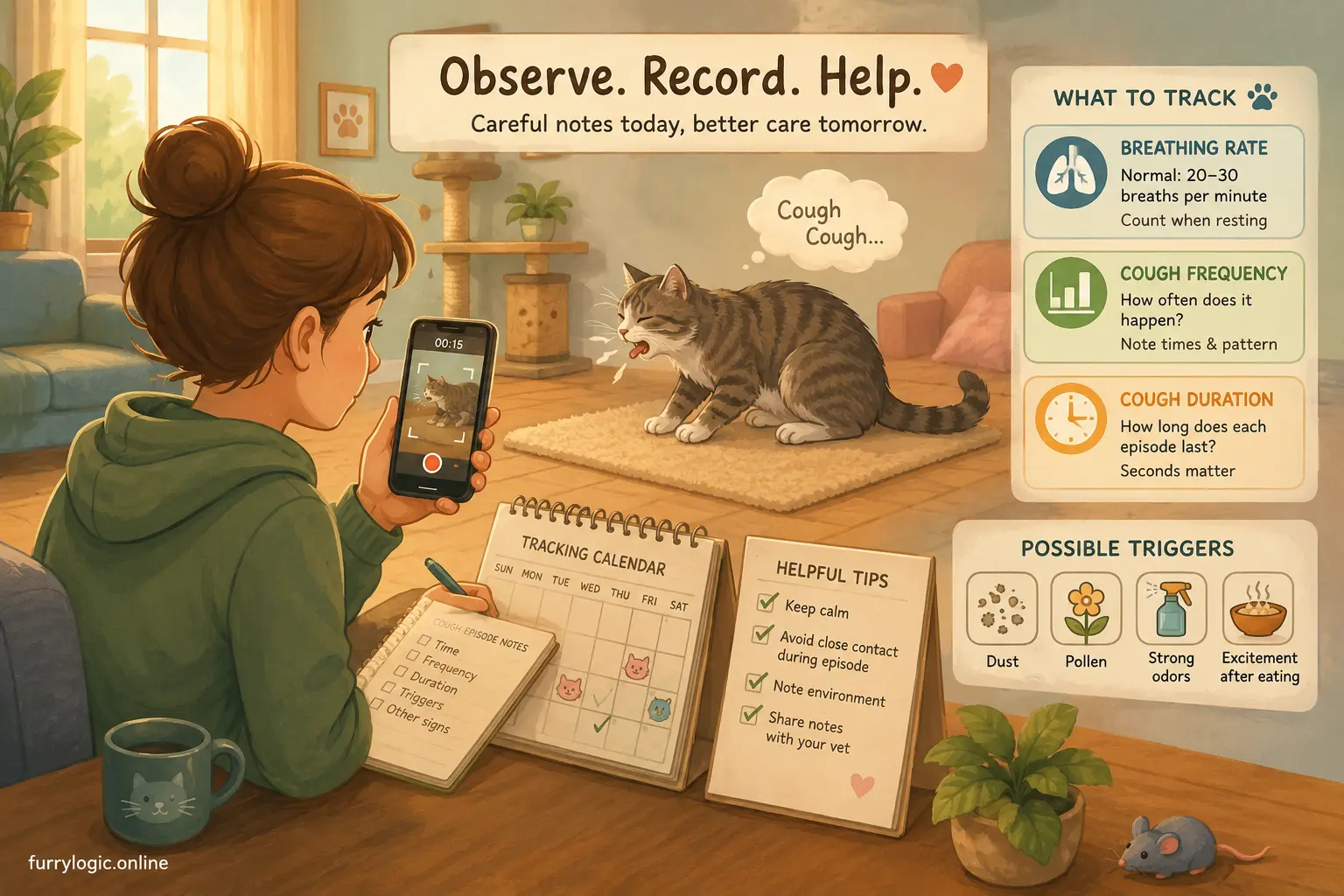
What to Observe Before Seeking Help
One of the most helpful things a cat owner can do is gather accurate observations before visiting the veterinarian. Since coughing episodes are often brief and unpredictable, veterinarians rely heavily on owner descriptions and video evidence.
Recording a video can make an enormous difference. Many respiratory conditions are diagnosed faster when veterinarians can directly observe posture, sound, duration, and breathing effort. A short smartphone video may reveal subtle details impossible to describe verbally. This is especially valuable because cats frequently stop coughing by the time they arrive at the clinic.
Track environmental conditions too. Did the episode happen after vacuuming? After lighting candles? During litter box use? Seasonal allergies, smoke exposure, or airborne irritants may help explain patterns. Some owners discover dramatic improvement simply by switching litter types or removing scented products from the home.
Monitoring breathing rate at rest is another useful habit. Count how many breaths your cat takes in one minute while sleeping peacefully. Normal resting respiratory rates are typically lower and steady. Rapid resting breathing may indicate respiratory compromise even when the cat appears outwardly calm.
Keep notes about:
- Frequency of coughing
- Duration of episodes
- Whether anything comes up
- Presence of wheezing
- Appetite and energy levels
- Environmental triggers
- Changes after exercise
These observations help veterinarians narrow possibilities much faster and may reduce delays in diagnosis.
Conclusion
A cat coughing sound can range from a harmless one-time irritation to a serious sign of respiratory disease. The challenge is that feline coughing often disguises itself as something much less concerning, especially hairballs. Dry hacking sounds, repeated crouching episodes, wheezing, and coughing without fur production all deserve closer attention. Cats are incredibly skilled at masking illness, which means subtle symptoms often matter more than dramatic ones.
Learning the difference between coughing, gagging, and hairball retching can help owners react appropriately rather than dismiss warning signs too early. Body posture, breathing effort, sound quality, and episode frequency all provide important clues. While an occasional cough may not signal disaster, persistent respiratory symptoms should always be evaluated carefully.
The most important takeaway is simple: if your cat repeatedly “tries to cough up a hairball” and nothing ever appears, it is time to think beyond hairballs. Early veterinary intervention can dramatically improve outcomes for conditions like feline asthma and chronic bronchitis. A few seconds of strange coughing may seem small, but in the feline world, subtle clues often carry the biggest message.
FAQs
1. What does cat coughing usually sound like?
Cat coughing often sounds like dry hacking, wheezing, or repetitive throat-clearing noises. Many owners describe it as a forceful “hack-hack” sound coming from the chest rather than the throat.
2. How can I tell if my cat is coughing or trying to pass a hairball?
Hairball episodes usually end with fur, mucus, or foam being expelled. True coughing often produces nothing and may involve wheezing or breathing changes afterward.
3. Is occasional coughing normal in cats?
A single isolated cough may not be serious, but repeated coughing is considered abnormal in cats and should be evaluated, especially if it happens regularly.
4. What are common causes of coughing in cats?
Common causes include asthma, allergies, respiratory infections, smoke exposure, dusty litter, bronchitis, and airway irritation from fragrances or chemicals.
5. When should I take my coughing cat to the vet?
Seek veterinary care if coughing becomes frequent, involves wheezing, causes breathing difficulty, occurs after exercise, or is accompanied by lethargy, open-mouth breathing, or blue gums.

Briggs Hollis is an American blogger and content specialist living in Savannah, Georgia. At 36 years old, he brings years of experience creating informative web content covering technology, home improvement, and consumer resources. His writing combines careful fact-checking with approachable language, making complex information accessible to a broad audience. As part of furrylogic.online, Briggs focuses on producing reliable, experience-driven content that readers can trust.