

If you have ever walked through your house only to be ambushed by a furry ankle assassin, you are definitely not alone. One second you are carrying laundry or heading to the kitchen, and the next your cat launches from behind the couch like a miniature jungle predator targeting your feet. It feels random, confusing, and sometimes honestly a little personal. But cats are not secretly plotting revenge against your toes. In most cases, foot biting is deeply tied to instinct, play behavior, attention-seeking, or stress responses that are hardwired into feline psychology.
Animal behavior experts consistently point toward play aggression as one of the most common reasons cats attack moving feet indoors. According to the , cats often stalk, chase, pounce, and bite feet because the movement triggers hunting behaviors that would normally be used against prey outdoors. The behavior becomes even more common among indoor cats, young cats, or kittens with limited stimulation. Imagine a tiny athlete trapped inside a studio apartment with endless energy and almost no outlet. Eventually, your socks become the entertainment.
The good news is that most foot-biting behavior can be improved once you understand what your cat is trying to communicate. Cats rarely do things “for no reason.” Their actions are usually tied to survival instincts, emotional needs, or learned patterns. The challenge is that humans interpret the attacks emotionally while cats experience them biologically. Your cat is not thinking, “I will ruin this person’s evening.” Instead, the brain lights up with excitement when something wriggles, runs, or darts past like prey.
Understanding the difference between playful hunting and true aggression is essential because the solution changes completely depending on the cause. Some cats simply need more exercise and stimulation. Others accidentally learn that attacking feet gets instant attention. In more serious cases, biting may point toward pain, anxiety, fear, or overstimulation. Once you decode the behavior, you can stop treating the symptom and start addressing the real trigger underneath.
Why Moving Feet Trigger a Cat’s Hunting Brain
The Predator Instinct Hidden Inside House Cats
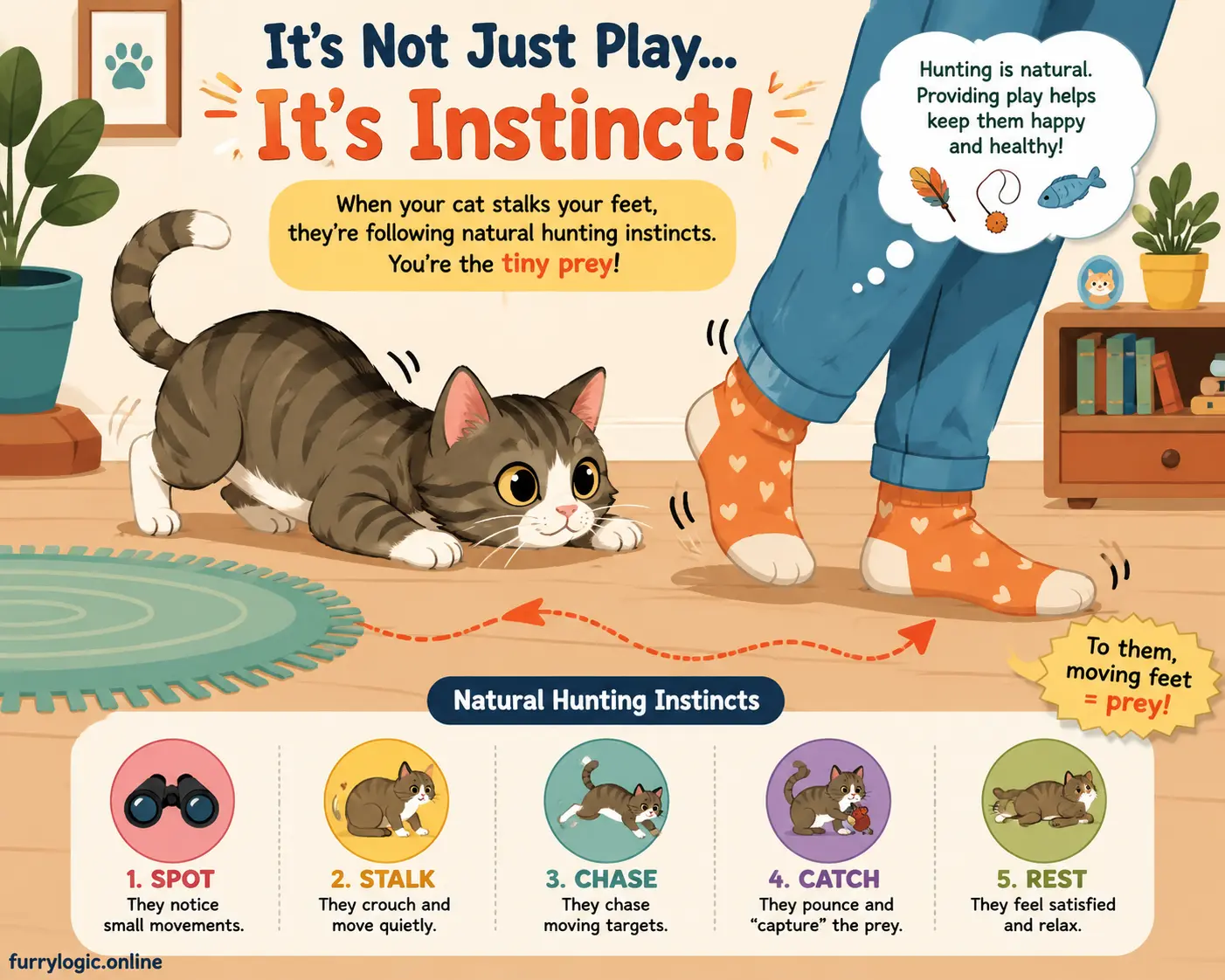
Your fluffy couch companion may sleep eighteen hours a day, but beneath that sleepy exterior lives a highly specialized predator. Domestic cats evolved as hunters, and even though they now live indoors surrounded by blankets and food bowls, their brains still respond to movement exactly like wild cats do. This is why your cat can instantly switch from relaxed loaf mode to full attack mode the moment your feet move under a blanket. To them, motion equals opportunity.
Cats are biologically wired to chase quick, unpredictable movements. In nature, prey animals rarely sit still. Rodents dart across the ground, birds flutter unexpectedly, and insects zigzag in strange patterns. Feet moving through a hallway create similar visual stimulation. Your ankles suddenly become mysterious moving targets that awaken your cat’s chase instinct. Experts from explain that play aggression often includes stalking, ambushing, leaping, grasping, and biting because these behaviors mimic real hunting sequences.
This is especially noticeable at night. Ever wonder why your cat attacks your feet under the blankets while you are trying to sleep? Movement beneath fabric resembles hidden prey rustling in grass or leaves. To your cat’s instincts, it is practically an invitation. Many cat owners online describe their pets becoming obsessed with moving toes under blankets despite having plenty of toys available.
Another important detail is timing. Cats are crepuscular animals, meaning they are naturally most active around dawn and dusk. Unfortunately, those are also times humans are usually waking up or settling into bed. Your morning walk to the bathroom may perfectly overlap with your cat’s peak hunting energy. That sudden ankle ambush is not random chaos. It is biology colliding with modern indoor life.
Why Ankles and Toes Mimic Prey Movements
Feet are irresistible because they move unpredictably. Unlike your hands, which usually move in controlled ways, feet dart quickly, disappear around corners, shuffle under blankets, and pass close to the ground. To a cat’s visual system, that resembles prey behavior almost perfectly. The rapid changes in speed and direction create excitement and trigger chase responses automatically.
Cats also prefer low-moving targets. In the wild, most prey stays near the ground. Feet naturally occupy that same hunting zone. Add dangling socks, loose pajama pants, or quick stair movement, and suddenly your cat feels like a tiny lion on safari. It sounds ridiculous, but from their perspective, your household becomes a giant moving hunting simulation.
The environment inside your home can intensify the temptation too. Hallways, corners, and furniture create ideal ambush locations. Cats love hiding before pouncing because stalking behavior is deeply rewarding for them psychologically. According to experts at , aggressive or overstimulated cats frequently display stalking, tail flicking, and sudden attacks when triggered by movement. Your feet simply happen to be the easiest moving target available most of the time.
Ironically, the stronger your reaction, the more exciting the game becomes. Jumping, squealing, running, or kicking away can imitate prey escaping after capture. From the cat’s perspective, the hunt just became interactive. This is one reason accidental reinforcement becomes such a powerful factor in ongoing foot attacks.
Play Hunting Instincts at Work Indoors
Indoor Cats and Pent-Up Energy
Indoor cats live safer lives than outdoor cats, but safety comes with a hidden tradeoff: boredom. In nature, cats spend enormous amounts of mental and physical energy hunting, exploring territory, climbing, stalking, and patrolling environments. Indoor life removes most of those challenges. Food arrives automatically, predators are absent, and territory rarely changes. That unused hunting energy has to go somewhere, and unfortunately, human feet often become the substitute prey.
Behavior specialists regularly identify boredom and lack of stimulation as major contributors to play aggression. The notes that cats lacking opportunities for appropriate play are more likely to direct aggression toward humans. Imagine being an athlete forced to sit in one room all day with nothing stimulating except a pair of moving slippers. Eventually, even the slippers start looking entertaining.
Young cats and kittens are especially vulnerable to this issue because they have massive energy reserves and underdeveloped impulse control. A kitten does not think strategically before launching at your ankles. Excitement simply overrides restraint. Cats that grew up without littermates may also struggle to learn bite inhibition. Normally, kittens teach each other boundaries during rough play. Bite too hard, and the other kitten stops playing or fights back. Cats raised alone sometimes miss those social lessons entirely.
Modern indoor lifestyles can unintentionally worsen the problem. Many owners provide food, litter, and affection but underestimate how much structured interactive play cats truly need. Tossing a toy mouse across the room once a day is rarely enough for energetic breeds or younger cats. Without regular outlets for stalking and chasing behaviors, frustration builds like steam inside a pressure cooker.
Why Young Cats Attack More Often
Age matters tremendously when it comes to foot attacks. Cats under two years old tend to show significantly more play aggression because their brains are still developing socially and behaviorally. Young cats are curious, impulsive, energetic, and constantly practicing survival skills through play. Every moving object becomes an opportunity for experimentation.
Think of young cats like toddlers with claws. They are learning coordination, boundaries, confidence, and environmental responses simultaneously. Unfortunately, their lessons often involve your ankles. Many online cat owners describe their younger cats obsessively targeting feet during “crazy energy bursts” around the house. These episodes usually happen when the cat feels under-stimulated or suddenly energized.
Breed differences can contribute as well. Highly active breeds like Bengals, Abyssinians, and Siamese cats generally need more stimulation than laid-back breeds. Intelligent cats crave engagement, and if their environment feels repetitive, they may invent games that humans absolutely did not approve beforehand.
Hormones can also influence behavior. Unneutered cats sometimes display stronger territorial or aggressive tendencies. Even after neutering, learned behaviors may persist if they became rewarding previously. This is why consistency matters so much when modifying behavior patterns.
Attention-Seeking Behaviors You Might Accidentally Reinforce
How Human Reactions Encourage Repeat Attacks
One of the most surprising truths about cat behavior is that negative attention can still feel rewarding to a cat. When your cat bites your feet and you instantly yell, move, chase them away, or react dramatically, the cat receives stimulation, interaction, and excitement all at once. To humans, the reaction means “stop.” To many cats, it means “game on.”
Cats are incredibly skilled at learning behavioral patterns. If attacking your ankles consistently produces movement, noise, or interaction, the behavior becomes reinforced over time. Several cat owners discussing foot attacks online noticed the behavior worsened when they reacted emotionally or physically during attacks. The cat learns that feet equal fun, excitement, and engagement.
This creates a difficult cycle. The more annoying the attacks become, the bigger the human reaction becomes. Bigger reactions create more stimulation, which increases the cat’s excitement. Suddenly the cat begins escalating bites because previous levels no longer produce the same exciting response. It resembles a person repeatedly pressing an elevator button harder when the door does not open quickly enough.
Punishment also tends to backfire with cats. Spraying water, yelling, or physical corrections may increase fear, anxiety, or defensive aggression instead of teaching calm behavior. Experts from both and warn against physically punishing aggressive cats because it can damage trust and worsen aggression.
Common Mistakes Cat Owners Make
Many owners accidentally train foot attacks without realizing it. One of the biggest mistakes is using hands or feet as play objects during kittenhood. Tiny kitten bites feel cute at first, so owners wiggle toes under blankets or play wrestle with fingers. The kitten learns that human body parts belong in the play category. Months later, the same cat is now twenty times stronger and still following the original rules it learned.
Another common issue is inconsistency. Sometimes owners laugh at ankle attacks, sometimes they yell, and sometimes they play back. Mixed signals confuse cats. Consistent responses matter because cats learn through repetition and predictable outcomes.
Lack of scheduled play is another major factor. Cats thrive when hunting instincts follow a routine. Random bursts of attention throughout the day rarely satisfy predatory instincts properly. Interactive wand play that mimics hunting sequences works far better than passive toys scattered around the house.
Here is a quick comparison of behaviors that help versus behaviors that worsen the problem:
| Helpful Responses | Harmful Responses |
|---|---|
| Redirecting to toys | Chasing the cat |
| Scheduled play sessions | Using feet as toys |
| Calmly disengaging | Yelling or hitting |
| Rewarding calm behavior | Inconsistent reactions |
| Creating enrichment | Ignoring boredom signs |
Recognizing the Difference Between Play and Aggression
Signs Your Cat Is Playing
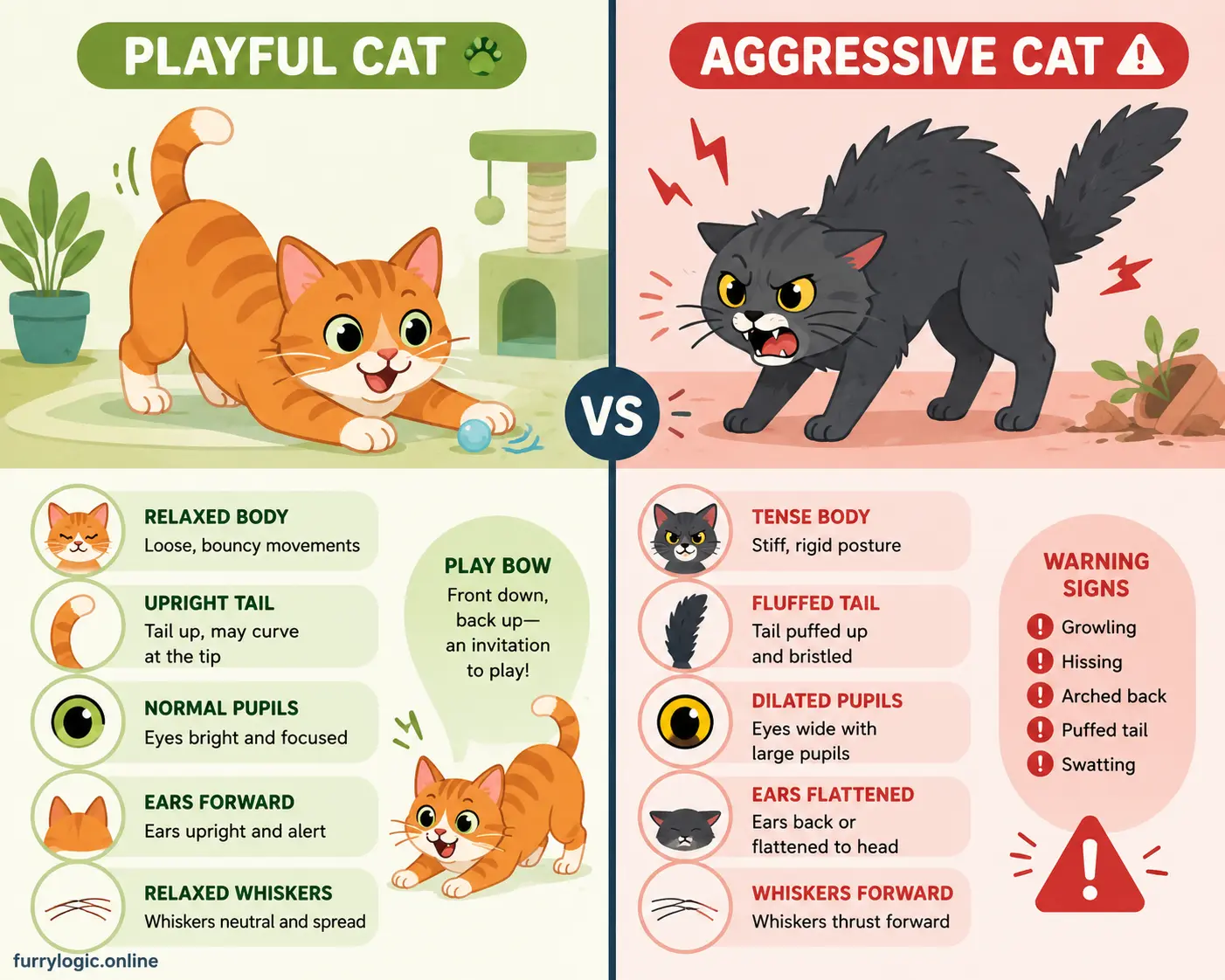
Not all biting is dangerous aggression. Playful cats usually appear excited, energetic, and curious rather than fearful or enraged. Their bodies remain relatively loose, and they often alternate between attacking and retreating. Play aggression frequently includes stalking, pouncing, batting, and light biting without prolonged hostile intent.
According to experts at , playful biting is often quieter and more interactive, while truly aggressive behavior involves stronger defensive signals and attempts to escape or dominate. Cats engaged in playful attacks may quickly redirect attention to toys or become distracted by movement elsewhere.
Another clue is recovery speed. Playful cats often calm down relatively quickly after stimulation ends. Aggressive cats stay tense, alert, and reactive longer. If your cat attacks your foot, then immediately rolls around or resumes normal behavior, play is more likely than true hostility.
Signs the Behavior Is Becoming Aggressive
Aggression becomes more concerning when attacks intensify, become unpredictable, or include fear-related body language. Hard bites that break skin repeatedly, persistent ambushing, prolonged fixation, growling, hissing, or attacks without obvious triggers may point toward stress or deeper behavioral issues.
Cats experiencing true aggression often display defensive postures. Experts from describe warning signs including flattened ears, puffed fur, direct staring, crouching, hissing, and stiff body posture. These signs suggest the cat is emotionally overwhelmed rather than simply playful.
A sudden behavioral change also deserves attention. If a previously calm cat suddenly begins aggressively attacking feet, medical pain or stress could be involved. Arthritis, injuries, neurological conditions, dental pain, or anxiety sometimes appear behaviorally before physical symptoms become obvious.
Body Language Warnings You Should Never Ignore
Cats communicate heavily through body language, and learning those signals can prevent many surprise attacks. Watch carefully for these warning signs:
- Rapid tail flicking
- Dilated pupils
- Flattened “airplane” ears
- Intense staring
- Crouched stalking posture
- Sudden silence before pouncing
- Skin twitching along the back
- Growling or low vocalizations
These signals act like emotional subtitles for your cat’s internal state. Once you learn to recognize them, you can redirect or disengage before the attack even happens.
Redirecting Energy Into Appropriate Activities
Interactive Toys That Actually Work
Cats need outlets for their hunting instincts. The key is not eliminating the instinct but redirecting it toward acceptable targets. Interactive toys work best because they simulate unpredictable prey movement. Wand toys, feather teasers, motorized mice, and puzzle feeders engage the cat’s brain far more effectively than stationary toys lying untouched in a corner.
The most successful play sessions mimic real hunting sequences. Start with slow stalking movement, increase speed gradually, allow chasing and pouncing, then end with a “capture.” This satisfies the cat’s instinctual cycle in a psychologically fulfilling way. Many behaviorists recommend two or three structured play sessions daily for energetic cats.
Toy rotation matters too. Cats become bored with repetitive stimulation. Rotating toys every few days keeps novelty high and maintains engagement. Think of it like changing television channels for a bored predator brain.
Environmental enrichment also reduces foot attacks significantly. Cat trees, climbing shelves, scratching posts, window perches, and treat puzzles create mental stimulation throughout the day. A stimulated cat is usually a calmer cat.
Creating Daily Hunting Routines Indoors
Routine is incredibly important for feline emotional stability. Cats thrive when activities happen predictably. Feeding after active play can be especially effective because it mimics the natural hunt-catch-eat sequence cats evolved around.
Try creating a consistent daily rhythm:
- Interactive play
- Small meal or treat
- Rest period
This routine satisfies instinctual expectations and reduces random bursts of predatory energy. Cats that lack predictable stimulation often create their own entertainment, which usually involves attacking moving human body parts.
Timing also matters. Schedule intense play before your cat’s most active periods, especially early morning and evening. A tired cat is far less likely to launch surprise attacks at your ankles while you carry groceries through the hallway.
Preventing Surprise Attacks Around the House

Managing Triggers and Ambush Zones
Cats love ambush points because stalking behavior feels rewarding. Pay attention to where attacks happen most often. Common hotspots include hallways, staircases, doorways, bed corners, and spaces under furniture. Once you identify patterns, you can reduce opportunities for surprise attacks.
Blocking access to certain hiding spots temporarily may help during training periods. Some owners also use hallway toys or scratching posts strategically near attack zones to redirect attention away from feet.
Movement style can influence attacks too. Fast shuffling steps, dangling clothing, or wiggling toes under blankets intensify prey-like stimulation. While you should not need to walk like a robot inside your own house, reducing exaggerated foot movement during retraining periods may help break behavioral habits.
Training Better Household Habits
Consistency is the foundation of behavioral change. Every household member should respond to foot attacks the same way. Calm disengagement paired with immediate redirection toward toys tends to work better than emotional reactions.
Rewarding calm behavior matters just as much as interrupting unwanted behavior. Cats repeat actions that produce positive outcomes. Treats, praise, or play offered during calm moments help reinforce desirable alternatives.
Avoid roughhousing games involving hands or feet entirely. Even occasional participation sends mixed signals. If human body parts are sometimes toys and sometimes forbidden, the cat cannot clearly understand the boundary.
When Foot Biting Signals a Deeper Issue
Stress, Anxiety, and Overstimulation
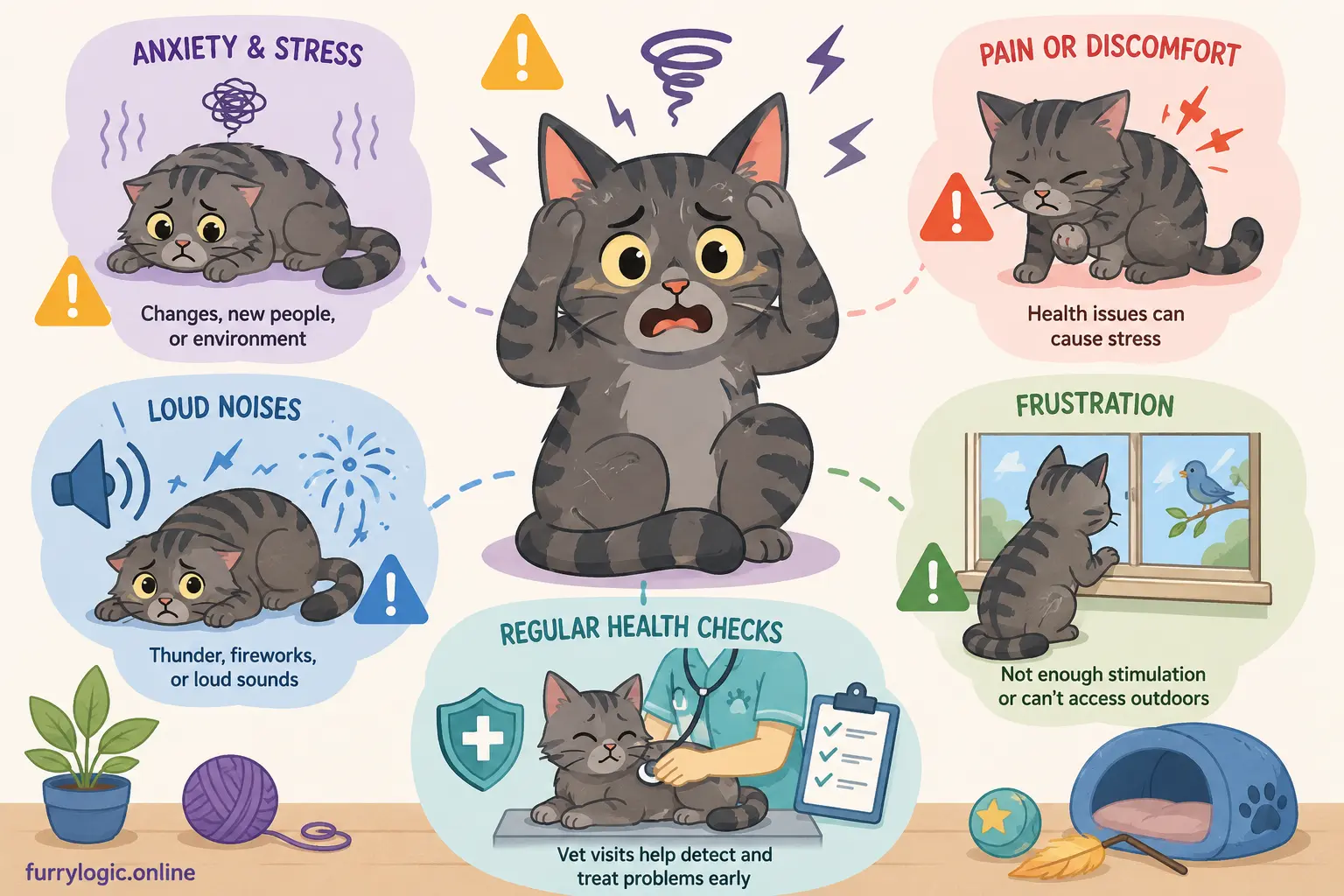
Not all foot attacks are playful. Stress can dramatically change feline behavior. Environmental disruptions like moving homes, new pets, loud noises, visitors, or schedule changes may increase aggression. Cats are creatures of habit, and instability often creates emotional overflow that emerges behaviorally.
Overstimulation is another overlooked factor. Some cats become overwhelmed after too much petting, noise, or excitement. According to , overstimulated cats often display tail flicking, skin twitching, and reactive biting before escalating further. In these cases, the biting is less about hunting and more about emotional overload.
Window frustration can also trigger redirected aggression. Cats seeing outdoor animals but unable to interact physically may redirect excitement toward nearby humans. A calm walk past the window suddenly becomes the perfect outlet for pent-up emotional energy.
Pain or Medical Conditions Behind Aggression
Sudden aggression always deserves medical consideration. Pain changes behavior dramatically in animals because they cannot verbally explain discomfort. Arthritis, injuries, neurological problems, dental disease, hyperthyroidism, or skin irritation can all contribute to irritability and biting.
The specifically warns that pain-induced aggression may appear when cats anticipate discomfort from movement or touch. If attacks begin suddenly, worsen rapidly, or appear alongside appetite changes, hiding, limping, or altered grooming habits, a veterinary evaluation becomes extremely important.
Behavior is communication. When cats cannot express discomfort verbally, they often communicate physically instead.
Conclusion
Cats bite feet for many reasons, but the behavior usually traces back to instinct, stimulation, communication, or emotional needs rather than spite. Moving feet activate deeply ingrained hunting responses that remain alive even inside the most pampered house cat. Indoor boredom, inconsistent boundaries, attention reinforcement, and lack of structured play often intensify the behavior over time.
The most effective solutions focus on understanding rather than punishment. Redirecting energy into healthy play, creating predictable routines, enriching the environment, and recognizing body language can dramatically reduce ankle ambushes. Cats are intelligent pattern learners, which means consistent responses gradually reshape behavior when paired with appropriate outlets.
At the same time, owners should stay alert for warning signs suggesting stress, fear, overstimulation, or pain. A cat’s behavior often acts like an emotional dashboard revealing needs humans cannot immediately see. When you stop viewing the attacks as random bad behavior and start viewing them as communication, the relationship becomes far easier to improve.
FAQs
1. Why does my cat attack my feet only at night?
Cats are naturally more active during dawn and dusk hours. Nighttime movement under blankets also resembles hidden prey, triggering hunting instincts more intensely.
2. Is foot biting always a sign of aggression?
No. Most foot biting comes from playful hunting behavior rather than true aggression. Body language, bite intensity, and context help determine the difference.
3. Should I punish my cat for biting my feet?
Experts generally advise against punishment because it can increase fear and worsen aggression. Redirection and consistent play-based training work better long term.
4. What toys help reduce ankle attacks?
Interactive wand toys, motorized prey toys, climbing structures, and puzzle feeders are especially effective because they satisfy stalking and chasing instincts.
5. When should I take my cat to the vet for aggressive behavior?
Seek veterinary help if aggression appears suddenly, becomes severe, breaks skin frequently, or occurs alongside symptoms like hiding, limping, appetite changes, or unusual vocalization.

Dorian Keene is an American content writer and blogger based in Boise, Idaho. At 31 years old, he has spent several years researching and writing practical, well-sourced articles focused on consumer guides, digital trends, and lifestyle topics. His experience working with online publications has helped him develop a clear, trustworthy writing style that prioritizes accuracy and reader value. As a contributor to furrylogic.online, he is committed to creating informative content that reflects careful research, real-world insights, and dependable editorial standards.