

Cats and fish seem to go together like thunder and lightning. The image is everywhere; cartoons, commercials, pet food labels, and funny internet videos all reinforce the idea that cats are absolutely obsessed with fish. Toss a piece of tuna near many felines, and suddenly they transform into furry detectives with laser-focused attention. But have you ever stopped to wonder why this fascination exists in the first place? After all, most domestic cats did not evolve as ocean hunters.
The truth is far more interesting than simple stereotypes. A cat’s attraction to fish involves biology, smell, nutrition, instinct, and even modern pet food marketing. Some cats adore seafood with passionate enthusiasm, while others sniff it once and walk away as if deeply offended. That contrast alone reveals something important: fish preference is not universal, even among obligate carnivores.
Recent veterinary and behavioral research suggests that cats are especially sensitive to strong umami flavors and powerful seafood aromas. Tuna, salmon, sardines, and mackerel trigger sensory responses that many cats find irresistible. Scientists also discovered that feline taste receptors react strongly to amino acids and nucleotides commonly found in fish.
At the same time, feeding too much fish can create nutritional problems if owners are not careful. Fish may be tempting, but temptation and balanced nutrition are not always the same thing. Understanding the difference helps cat owners create healthier feeding habits without taking away the foods their pets genuinely enjoy.
The Historical Connection Between Cats and Fish
Ancient Opportunistic Hunting Behaviors
One of the biggest myths about cats is that they naturally evolved as dedicated fish hunters. In reality, the ancestors of domestic cats mainly hunted rodents, birds, reptiles, and small mammals in dry environments across North Africa and the Middle East. Fish was not their primary food source. Yet cats are opportunistic predators, which means they rarely ignore easy meals when opportunities appear. If a cat lived near rivers, coastlines, or fishing villages, fish could become part of its occasional diet.
This opportunistic behavior explains why some felines developed comfort around seafood. Cats are survival experts. They adapt quickly to whatever protein source is available nearby. Ancient port cities likely exposed cats to scraps from fishing markets and docks, slowly building an association between fish and easy nutrition. Over generations, that exposure probably reinforced positive reactions to seafood smells and flavors.
Interestingly, many wild cats today still catch aquatic prey if conditions allow. Large felines like fishing cats in Asia are excellent swimmers and skilled fish hunters. Domestic cats are less aquatic by nature, but their hunting instincts remain powerful. Movement, scent, and texture all trigger prey-drive responses, which may explain why some cats become fascinated by aquariums or darting fish in ponds.
How Modern Culture Reinforced the Fish Association
Modern culture amplified the “cats love fish” idea far beyond biological reality. Cartoons, advertisements, and commercial pet foods constantly portray cats stealing fish bones or begging for tuna. This branding became especially strong during the twentieth century when fish-based cat foods became commercially convenient and affordable.
During wartime shortages and industrial food production shifts, fish products became common ingredients in pet food manufacturing. Over time, consumers began associating seafood flavors with feline happiness. Pet companies noticed strong reactions from cats toward pungent fish aromas and leaned heavily into fish marketing. Suddenly tuna dinners, salmon pâtés, and sardine treats dominated supermarket shelves.
This cultural reinforcement matters because many cats today grow up exposed to seafood-flavored foods from kittenhood. Early exposure shapes preference. A kitten consistently fed tuna-based meals may later reject chicken simply because fish became familiar comfort food. Human perception also plays a role. Owners often offer fish treats enthusiastically because they expect cats to love them, accidentally strengthening the behavior even further.
The Appeal of Fish From a Cat’s Perspective
Why Fish Smells So Powerful to Cats
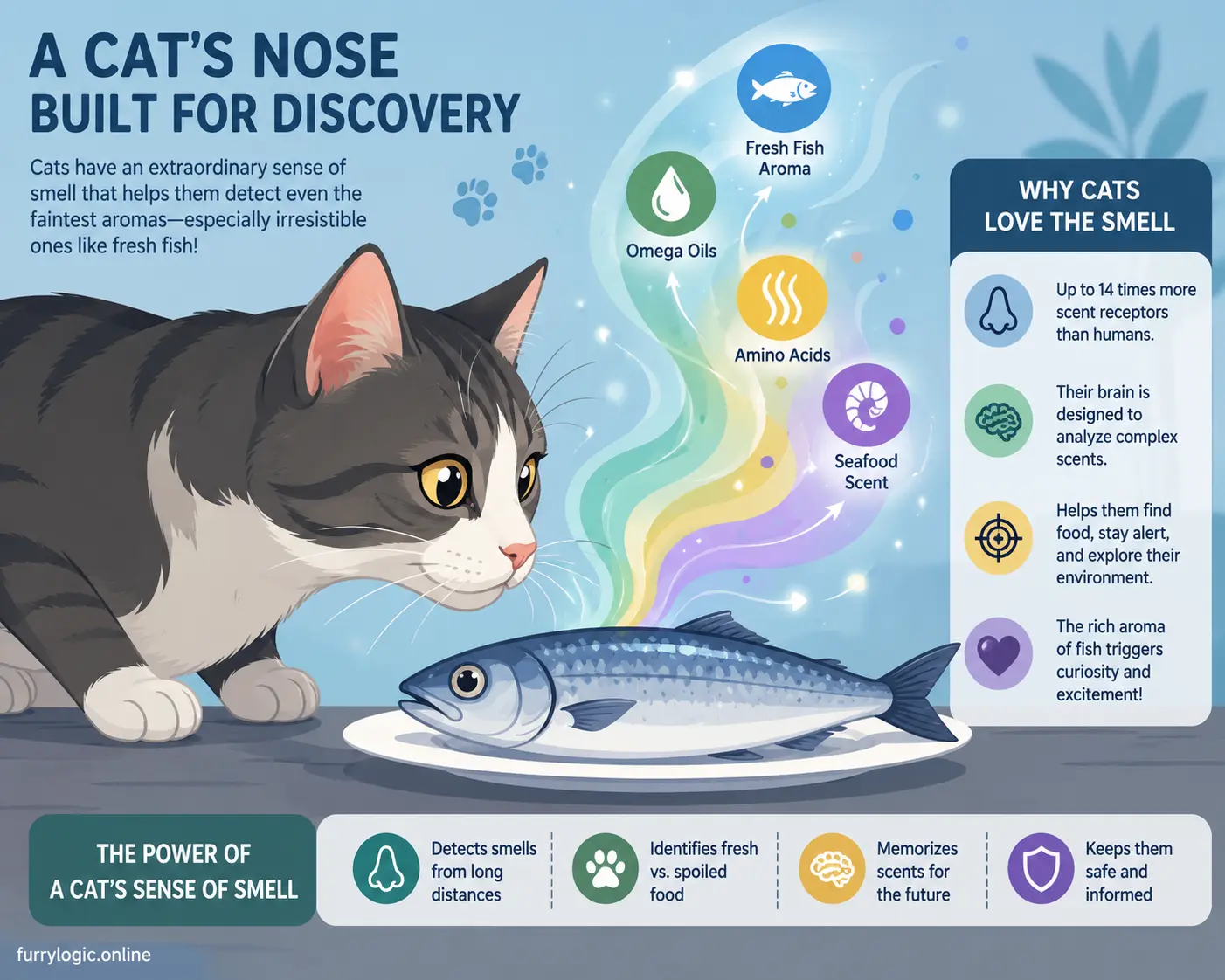
Humans often underestimate just how extraordinary a cat’s nose really is. Cats rely heavily on smell to judge safety, nutrition, freshness, and desirability. Compared to people, felines possess a dramatically stronger olfactory system, which allows them to detect subtle scent compounds we barely notice. Fish happens to release especially strong aromatic molecules, particularly oily fish like tuna, salmon, and mackerel.
That scent intensity grabs feline attention almost immediately. Imagine walking into a bakery while starving and smelling warm bread from across the street. That sensory pull is similar to what many cats experience around fish. The oils and amino acids in seafood create volatile compounds that stimulate feline curiosity and appetite.
What makes fish especially interesting is that the scent spreads quickly through the air. Dry kibble has a mild smell, but warm fish practically announces its presence to every cat in the house. Many veterinarians even recommend gently warming wet cat food for elderly or sick cats because stronger aromas encourage eating. Fish-based foods become particularly effective in these situations because their scent profile intensifies with warmth.
The Role of Umami Taste Receptors
Cats experience food differently than humans because their taste biology evolved for carnivorous survival. Unlike people, cats cannot properly taste sweetness. Instead, they respond strongly to savory compounds linked to animal protein. Scientists recently identified specialized feline umami receptors that react intensely to amino acids and nucleotides found in meat and fish, especially tuna.
This discovery helps explain why fish feels almost magical to some cats. Umami signals protein richness and nutritional value. Since cats are obligate carnivores, their bodies are programmed to seek foods that provide essential amino acids like taurine. Fish contains many of these compounds in concentrated forms, making it highly appealing from a biological standpoint.
Think of umami as nature’s flashing neon sign saying, “This food contains valuable nutrients.” Humans crave sweet foods because sugar once represented survival energy in nature. Cats crave umami-rich foods because protein meant survival for predators. Tuna simply happens to hit those sensory buttons exceptionally well.
Powerful Scents That Capture Feline Attention
Cats Depend More on Smell Than Taste
People often assume taste drives feline food preferences, but smell actually dominates the experience. Cats possess far fewer taste buds than humans, which means aroma becomes the primary decision-maker during meals. If food smells exciting, a cat becomes interested. If it smells dull, many felines refuse it regardless of nutritional quality.
Fish excels in this department. Seafood aromas are bold, oily, and persistent. Even picky cats often react to fish because the smell cuts through environmental distractions. That reaction can look dramatic. Suddenly ears perk up, tails twitch, and paws appear out of nowhere like furry little food detectives investigating a suspiciously delicious crime scene.
Behavioral observations from cat owners support this strongly. Online discussions show huge variation among feline preferences, but fish consistently stands out as a scent-driven trigger for many cats. Some cats even reject non-fish foods entirely after developing strong associations with seafood aromas.
Why Warm Fish Becomes Even More Attractive
Temperature changes scent release dramatically. Warm fish produces stronger aromatic compounds than cold fish, which explains why cats often go wild when seafood is freshly cooked or slightly heated. This is one reason canned tuna seems irresistible compared to plain refrigerated meat.
From a survival perspective, warmth may also signal freshness. In nature, freshly caught prey would still carry body heat and strong scent signatures. Cats evolved to recognize those sensory cues quickly. A steaming bowl of salmon pâté therefore feels more biologically relevant than dry pellets sitting in a bowl all day.
Owners sometimes unintentionally reinforce fish obsession by offering tuna during stressful moments. Cats recovering from illness or refusing food may suddenly eat tuna enthusiastically, teaching owners that fish equals guaranteed success. Over time, repeated emotional reinforcement strengthens preference patterns even more.
Nutritional Factors That May Influence Preferences
Protein and Essential Amino Acids
Cats are obligate carnivores, meaning they require nutrients found primarily in animal tissue. Protein is not optional for them; it is foundational for survival. Fish offers concentrated protein along with amino acids like taurine, which supports heart health, vision, and muscle function.
Because fish is nutritionally dense, cats may instinctively respond positively to it. Their bodies recognize the presence of valuable nutrients through both smell and taste receptor activity. Fish also contains healthy fats that enhance mouthfeel and aroma, making meals richer and more satisfying.
Here is a quick comparison of common protein sources for cats:
| Food Source | Protein Quality | Aroma Strength | Omega-3 Content | Common Cat Reaction |
|---|---|---|---|---|
| Tuna | Very High | Extremely Strong | High | Often highly appealing |
| Salmon | Very High | Strong | Very High | Usually attractive |
| Chicken | High | Moderate | Low | Widely accepted |
| Turkey | High | Moderate | Low | Commonly enjoyed |
| Beef | High | Mild to Moderate | Low | Varies by cat |
Fish also contains omega-3 fatty acids, which support skin, coat, and brain health. These oils contribute to the glossy texture and scent profile that many cats find appealing.
Omega-3 Fatty Acids and Texture Appeal
Texture matters more than many owners realize. Some cats prefer flaky fish textures over dense meats because seafood breaks apart easily and releases oils rapidly during chewing. Wet fish-based foods also tend to have stronger moisture content, which improves palatability.
Omega-3 fats may indirectly reinforce preference because they create richer aromas and smoother mouthfeel. Oily fish varieties like sardines and salmon are especially potent in this regard. A cat encountering these textures may experience stronger sensory stimulation compared to dry chicken kibble.
Still, attraction does not necessarily mean nutritional perfection. Cats can love foods that should only be eaten occasionally, much like humans adore desserts that are not ideal for every meal.
Why Not Every Cat Is Equally Enthusiastic About Fish
Genetics and Individual Personality
Despite stereotypes, not every cat worships seafood. Some completely ignore tuna while enthusiastically devouring chicken or turkey instead. Genetics, personality, and sensory sensitivity all influence food preference.
Certain cats naturally gravitate toward stronger smells, while others prefer milder proteins. Breed tendencies may also play small roles, although individual experience matters more overall. One cat may scream dramatically for salmon treats, while another behaves as though seafood personally insulted its ancestors.
Reddit discussions and owner experiences reveal enormous variation in feline tastes. Some cats refuse fish entirely, while others reject everything except seafood flavors.
This diversity proves an important point: there is no universal feline menu. Cats are individuals with unique sensory experiences and learned associations.
Early Feeding Experiences
Kittens form strong food impressions during early development. A cat raised on seafood-flavored foods may associate fish aromas with safety, comfort, and satisfaction. Another kitten raised primarily on poultry might prefer chicken throughout adulthood.
Cats can also become imprint eaters. If owners repeatedly offer only fish products, felines may become resistant to variety later. This is one reason veterinarians often recommend rotating protein sources early in life. Variety reduces the risk of extreme pickiness and broadens nutritional exposure.
Environmental experiences shape these behaviors too. Rescue cats, stray cats, and multi-cat households often develop unique feeding patterns depending on what foods were consistently available during stressful periods.
The Difference Between Preference and Dietary Need
What Cats Actually Require Nutritionally
Cats need animal protein, taurine, vitamins, minerals, fats, and balanced amino acid profiles. They do not specifically require fish. This distinction is extremely important because preference can easily be mistaken for necessity.
Many owners assume fish-heavy diets are automatically healthier simply because cats seem excited about them. Yet veterinary nutritionists consistently emphasize balanced commercial cat food rather than relying heavily on any single protein source.
A cat loving tuna does not mean tuna alone provides complete nutrition. Think of it this way: children may love candy, but excitement does not equal balanced nourishment. Cats can become emotionally attached to fish flavors while still needing broader nutritional variety.
Fish Versus Complete Balanced Cat Food
Commercial cat foods are formulated carefully to meet feline nutritional standards. Many fish-based foods include additional nutrients precisely because fish alone may not provide everything cats need consistently.
Owners sometimes feed canned tuna meant for humans as a primary meal source. That approach can create deficiencies over time because human tuna products are not nutritionally balanced for cats. Seafood should usually function as part of a complete feeding plan rather than the entire plan itself.
Balanced feeding routines work best when they prioritize nutritional completeness first and preference second. Fortunately, most cats can enjoy fish safely in moderation without sacrificing health.
Potential Drawbacks of Too Much Fish in the Diet
Mercury, Vitamin Deficiencies, and Allergies
Too much fish may create several health concerns. Certain fish accumulate mercury and heavy metals over time, especially larger predatory species. Repeated excessive exposure can potentially create toxicity risks.
Some fish also contain thiaminase, an enzyme capable of breaking down vitamin B1. Without proper balance, deficiencies may develop and lead to neurological problems. Veterinary sources additionally warn about vitamin E deficiencies associated with excessive fish-heavy diets.
Fish allergies are another overlooked issue. Ironically, a food many cats love can also trigger itching, digestive upset, or skin irritation in sensitive animals. Owners often assume fish-based foods are gentle because they are popular, but sensitivities vary widely.
The Risk of Creating Picky Eaters
Fish can unintentionally create stubborn eating habits. Strong aromas condition cats to expect intense sensory stimulation at every meal. Once that happens, milder foods like turkey or rabbit may seem boring by comparison.
Anyone who has opened tuna around a cat understands this problem instantly. A feline exposed regularly to pungent seafood may suddenly treat ordinary food with visible contempt. Owners then feel trapped because switching diets becomes difficult.
Gradual protein rotation helps prevent this issue. Mixing different textures and proteins teaches cats flexibility, reducing dependence on one flavor profile.
Other Foods Cats Often Find Equally Appealing
Chicken, Turkey, and Red Meat Options
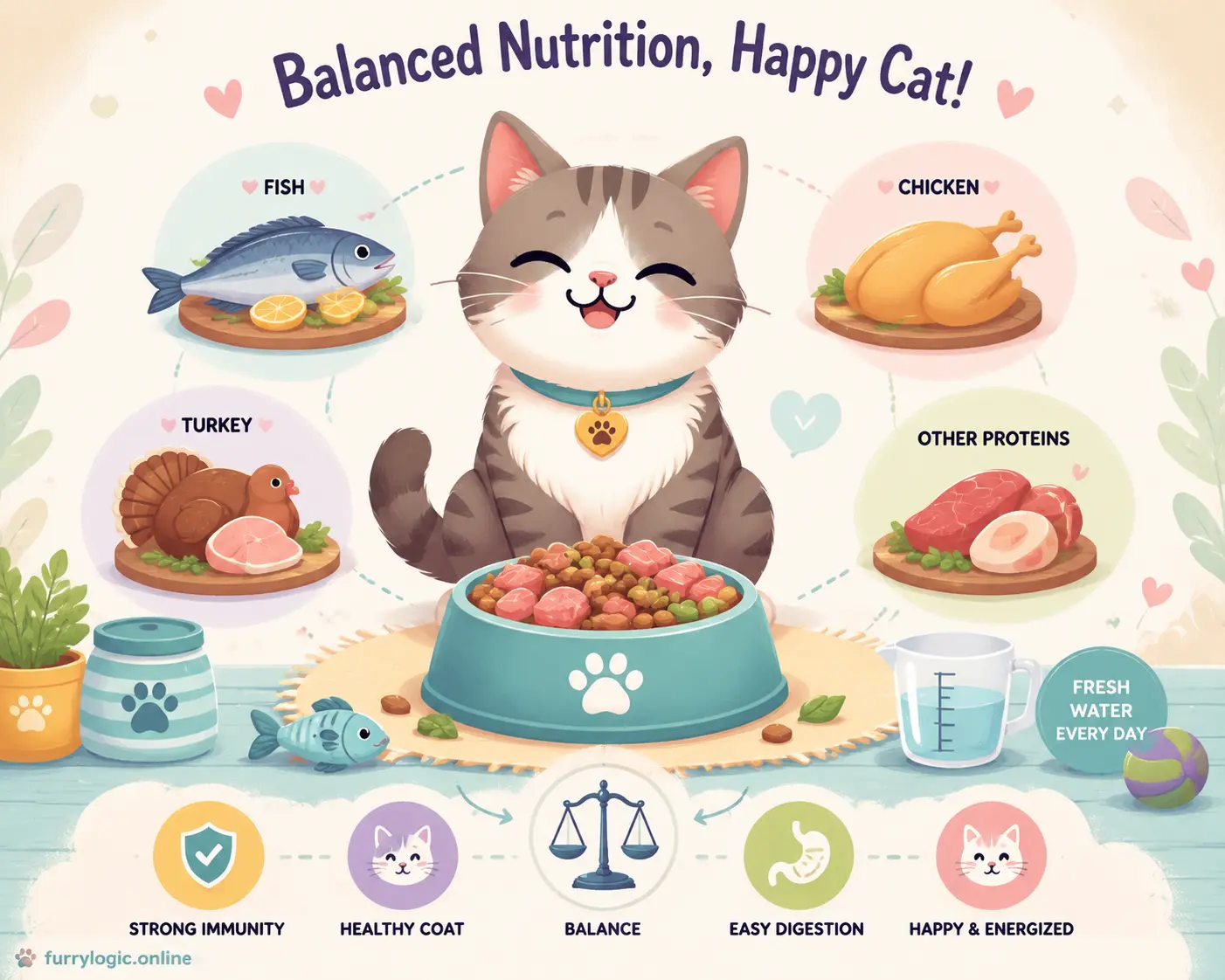
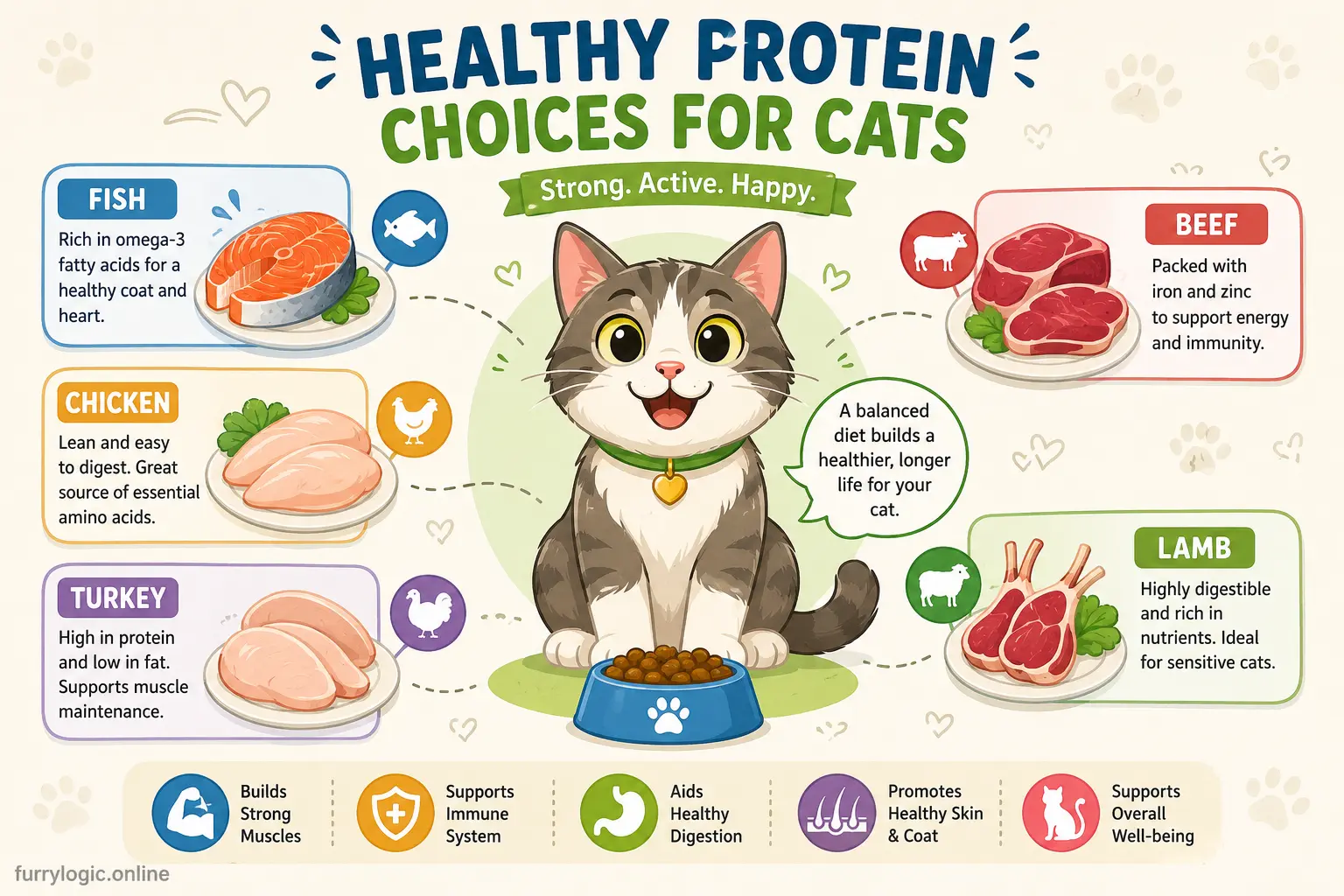
Fish may dominate cat stereotypes, but many felines adore poultry and red meats just as much. Chicken remains one of the most widely accepted proteins because it offers excellent digestibility and balanced amino acid content. Turkey also performs well due to its mild flavor and lean texture.
Some cats prefer beef or lamb because richer red meats provide deeper savory flavors. Others enjoy rabbit or duck for novelty and texture variety. Preference often depends on upbringing, aroma sensitivity, and feeding routine consistency.
Veterinary nutrition experts generally encourage protein diversity rather than relying excessively on seafood alone. Rotating proteins creates broader nutritional coverage while preventing obsessive food fixation.
Why Variety Matters
Variety helps maintain both physical and behavioral health. Cats exposed to multiple proteins early in life usually adapt better to dietary changes later. This flexibility becomes valuable if allergies, illnesses, or prescription diets ever become necessary.
A varied diet also keeps meals mentally stimulating. Cats are hunters by nature. Novel scents and textures mimic the unpredictability of natural feeding experiences, enriching their environment while supporting nutritional balance.
Think of variety like cross-training at a gym. Different exercises strengthen different muscles. Different proteins support different nutrient balances and sensory experiences.
Creating a Balanced Feeding Routine
Smart Ways to Include Fish Safely
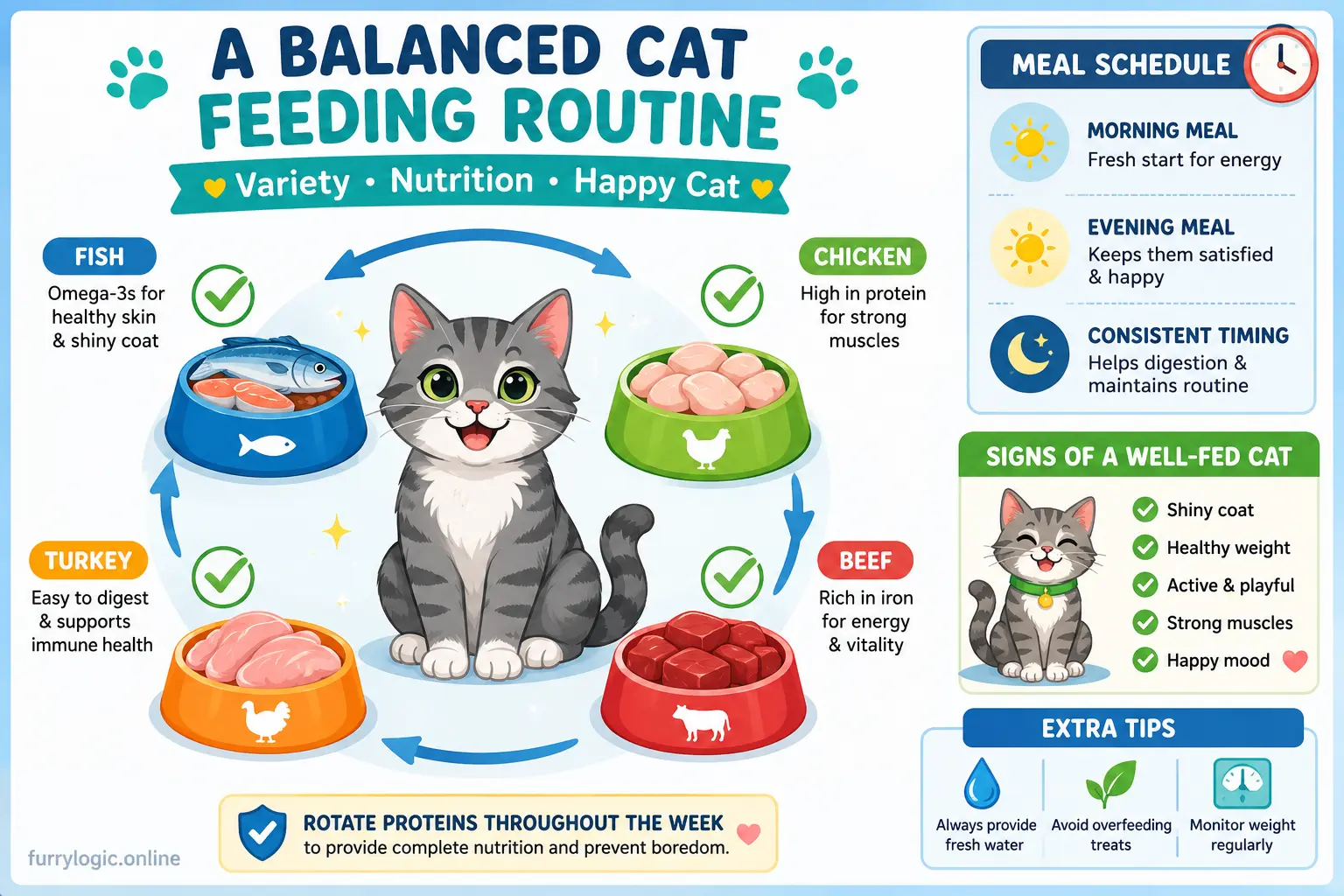
Fish can absolutely be part of a healthy feline diet when handled thoughtfully. Moderation is the key. Rather than feeding tuna daily, many veterinarians recommend using seafood as one component within a rotation of proteins.
Helpful strategies include:
- Choosing complete and balanced commercial cat foods
- Rotating fish with chicken, turkey, or beef options
- Limiting human tuna products as occasional treats
- Avoiding heavily salted or seasoned seafood
- Watching for digestive or skin reactions
Cats often benefit most from diversity rather than dietary extremes. A balanced plan allows them to enjoy fish without depending on it entirely.
Signs Your Cat’s Diet Needs Adjustment
Healthy cats generally maintain steady energy, clean coats, healthy weight, and consistent digestion. Warning signs of dietary imbalance may include:
| Possible Symptom | Potential Cause |
|---|---|
| Dull coat | Nutritional deficiency |
| Excessive itching | Food sensitivity |
| Refusing non-fish foods | Overdependence on seafood flavors |
| Digestive upset | Ingredient intolerance |
| Weight fluctuation | Imbalanced feeding routine |
Owners should monitor changes carefully and consult veterinarians if unusual symptoms appear. Feeding habits may look harmless initially but slowly create long-term complications if balance disappears.
Conclusion
Cats love fish for a fascinating mix of biological, sensory, and learned reasons. Powerful seafood aromas stimulate their incredibly sensitive noses, while umami-rich proteins activate deeply rooted carnivorous instincts. Fish also contains nutrients and fatty acids that many felines naturally find appealing. Yet attraction alone does not mean fish should dominate the entire diet.
Some cats become obsessed with tuna, salmon, or sardines, while others prefer chicken, turkey, or beef. That variation proves feline preference is highly individual. Genetics, early experiences, environment, and feeding habits all shape what a cat considers irresistible.
The healthiest approach combines enjoyment with nutritional balance. Fish can absolutely enrich a cat’s meals, especially when used in moderation within a varied feeding routine. Owners who understand the difference between preference and dietary necessity can provide meals that satisfy both feline instincts and long-term health needs.
FAQs
1. Is fish actually good for cats?
Yes, fish can be beneficial for cats because it provides protein and omega-3 fatty acids. However, it should usually be part of a balanced diet rather than the only food source.
2. Why do cats react so strongly to tuna?
Tuna contains powerful aromas and umami compounds that strongly stimulate feline smell and taste receptors. Many cats find these sensory signals extremely attractive.
3. Can cats eat fish every day?
Most veterinarians recommend moderation. Excessive fish consumption may contribute to nutritional imbalances, mercury exposure, or picky eating behaviors.
4. Why does my cat hate fish?
Not all cats enjoy seafood. Genetics, early feeding experiences, and individual personality all influence food preferences.
5. What is the healthiest protein for cats?
There is no single perfect protein. Balanced commercial cat foods containing quality animal proteins like chicken, turkey, beef, or fish generally provide the best nutritional support.

Briggs Hollis is an American blogger and content specialist living in Savannah, Georgia. At 36 years old, he brings years of experience creating informative web content covering technology, home improvement, and consumer resources. His writing combines careful fact-checking with approachable language, making complex information accessible to a broad audience. As part of furrylogic.online, Briggs focuses on producing reliable, experience-driven content that readers can trust.